There is a business opportunity I see more clearly every day
Hello,
There are things that start out as a small detail, then they happen again, and one day you realize they may no longer be an anecdote, but a trend.
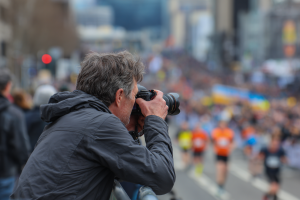
That is what has been happening to me lately with a type of photography that, for years, may not have received all the attention it deserved as a business opportunity: sports and event photography.
And when I talk about events, I am not only referring to major sporting competitions. I am also talking about local festivals, community celebrations, cultural events, conferences, parties, nightclubs… places where hundreds or thousands of photos are taken and where, until not so long ago, turning that work into revenue in an organized and profitable way was quite difficult.
Because the problem was never taking the photos.
The problem came afterwards
How do you get those images to a huge number of people?
How do you help each person find the ones that are actually theirs?
How do you turn that volume into real sales without overwhelming the photographer or making things complicated for the client?
For a long time, that was the bottleneck. The volume was huge, the manual work was too, and sales often ended up being slow, uncomfortable, or simply unworkable.
A trend that no longer feels accidental
But I feel that this is changing.
At Arcadina, we have been watching it closely for some time with clients who work in this kind of photography, and we keep seeing the same pattern more clearly: when delivery and sales rely on well-designed online tools, and the help of artificial intelligence is added on top, a new way appears to turn these shoots into a much more serious business.
We see it especially in sports photography, where finding one specific image among hundreds or thousands used to be an exhausting process. Now, in many cases, the client can open their gallery on a mobile phone, take a selfie or search by bib number, find their photos in seconds, and buy them in a much more natural way.
And there is something else that feels especially revealing to me: we are not seeing this movement only in Spain. More and more clients are coming to us from countries such as Argentina, Italy, Uruguay, and Mexico, and they are also starting to use online photo sales powered by AI.
And to me, that is a clear sign that this is not a local or temporary opportunity, but a global business opportunity.
That small shift changes everything.
Because suddenly, a large part of the friction disappears:
• clients find their photos sooner
• buying becomes much easier
• photographers save time
• and what once seemed almost impossible to manage starts to make economic sense
What is interesting, moreover, is that this logic does not apply only to sports.
It also fits many other situations where there is volume, emotion, and people who want to find their images quickly: town festivals, social events, celebrations, concerts, conferences, graduations, nightlife…
In all of those settings, event photography can have far more potential than many people imagine, as long as it is supported by a truly convenient experience for searching, selecting, and buying.
And there is something about this that really stands out to me.
In photography, we often talk about creativity, style, vision, and sensitivity — and that makes sense, because all of that matters a great deal — but sometimes a business opportunity comes from something much simpler: removing friction from the process.
It is not always about doing something radically new.
Sometimes it is about making something that already existed much easier.
Helping someone find their photo.
Letting them download or buy it without complications.
Making everything happen in just a few steps.
Avoiding impossible amounts of manual work for the photographer.
When that happens, the numbers change.
And so does the way that photographic specialty is perceived.
That is why I have the feeling that sports and event photography will continue to grow as a business line for many professionals. Not because there was no demand before, but because now a realistic way to serve that demand well is beginning to exist.
And I think this leaves an interesting reflection for any photographer, even if they do not cover races, festivals, or conferences.
Every time a tool makes it easier to find, choose, buy, or download an image, the value of the photographer’s work grows.
Sometimes not because they take more photos.
But because they manage to get those photos to the right people more effectively.
And there, I think, is an important clue about where part of the industry is heading.
Until next time,
Félix Mezcua
Free trial · No card · No lock-in
Build your photography business online
Sales with no commission · Everything in one plan · 30-day free trial, no card