9 product photographers whose portfolios will inspire you
Product photography has a very clear objective: to make an object look appealing, convey quality and spark the interest of the viewer. Behind every image lies much more than just a good camera. Lighting, composition, colour, retouching and creativity are fundamental elements in transforming an everyday product into a photograph capable of selling.
In this article, we’ve put together a selection of product photographers with very different styles. Some work for major brands, others specialise in food, cosmetics, jewellery or e-commerce, but they all have one thing in common: they use their photography website to showcase their work professionally and instil confidence in potential clients.
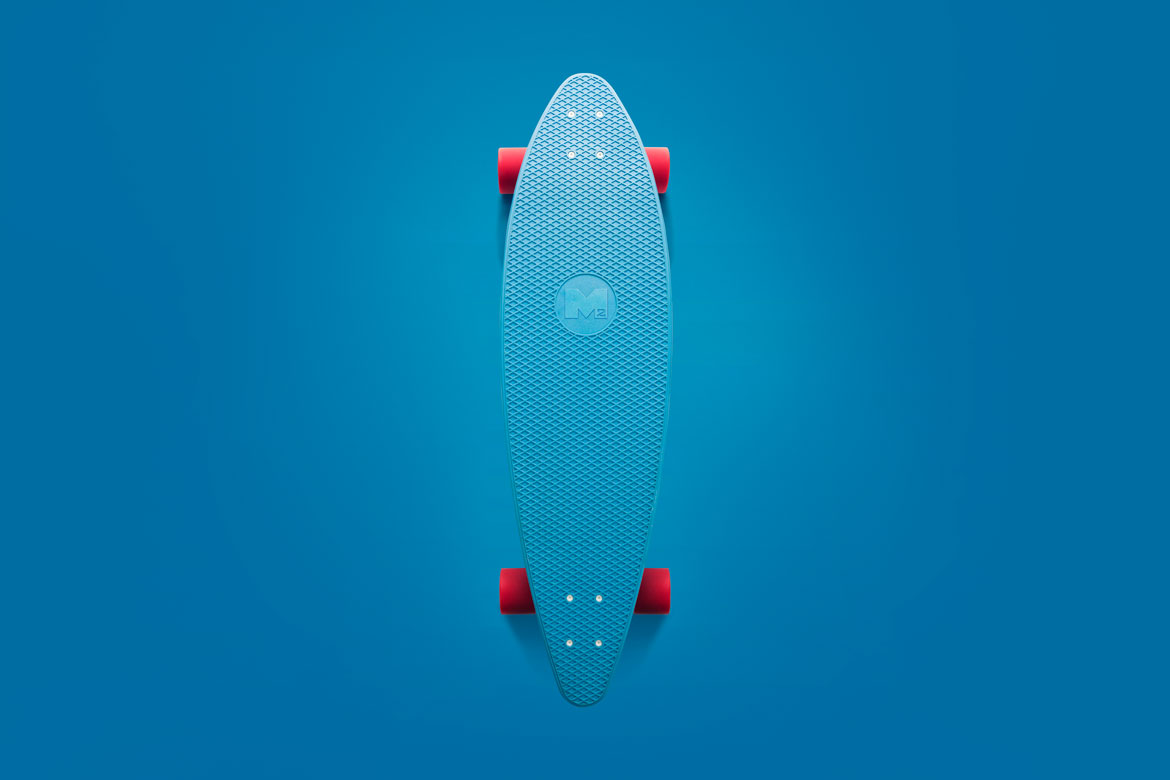
A good portfolio doesn’t just display photographs; it demonstrates the experience, style and value that a product photographer can bring to each brand.
What does a product photographer do?
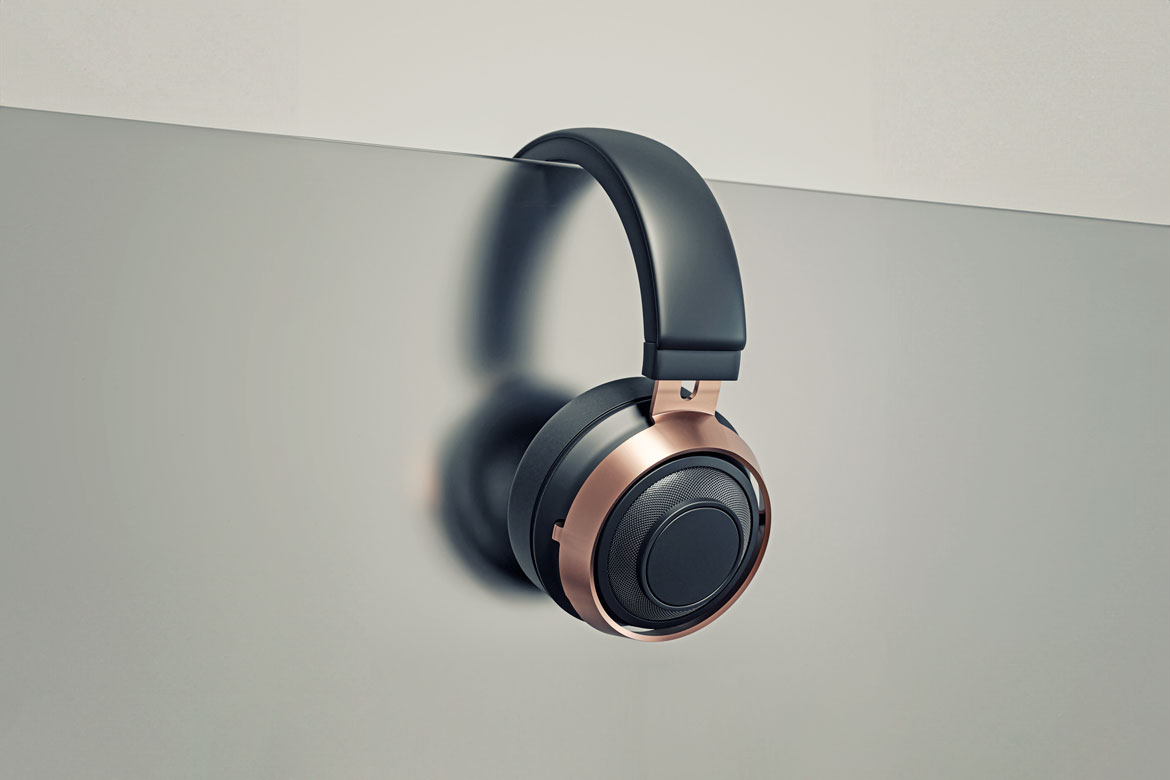
A product photographer specialises in creating images designed to present and promote items for companies, retailers or brands. Their work can be used in online shops, catalogues, advertising campaigns, social media, marketplaces or any medium where imagery plays a key role in the purchasing decision.
Although it may seem like a simple discipline, product photography requires mastery of numerous technical aspects. Every material reflects light differently, every object requires specific treatment, and every client seeks to convey different values. The aim is not merely to document a product, but to make it stand out from the competition.
What should a good product photography portfolio include?

The portfolio is usually the first point of contact between a photographer and a potential client. Before requesting a quote or getting in touch, most companies want to assess the photographer’s style, quality and experience. That is why it is essential that the portfolio conveys professionalism from the outset and allows viewers to quickly discover the type of work the photographer produces.
Beyond simply bringing together a collection of good images, a product photography portfolio should tell a story about the photographer’s working style. The selection of photographs, the organisation of the galleries, the page design and ease of navigation all directly influence the perception of the visitor. A well-structured portfolio helps to build trust, reinforces the brand image and makes it easier for a potential client to visualise what the photographs of their own products would look like.
Below, we’ll look at some of the key elements that should feature in a product photography portfolio to turn it into a genuine tool for attracting clients.
A selection of your best work
One of the most common mistakes when creating a portfolio is to think that the more photographs there are, the better the impression it will make. However, the opposite is true. Potential clients prefer to browse through a selection of carefully chosen images rather than having to sift through dozens or even hundreds of photographs of varying quality. Every image must have a reason for being included in the portfolio and help to reinforce the photographer’s visual identity.
It is best to showcase only those pieces of work that represent the standard of quality you wish to offer to future clients. If a photograph does not add value or does not fit with the style you wish to convey, it is better to leave it out. A well-curated portfolio reflects good judgement, experience and attention to detail – three qualities highly valued by any brand or company.
Furthermore, keeping your selection up to date allows you to showcase your development as a photographer and highlight your most recent projects. Regularly updating your portfolio conveys that you are an active professional, constantly growing and capable of adapting to new trends in product photography.
Photographs organised by specialism
Not all clients are looking for the same type of product photography. A cosmetics company will have very different needs to those of a food brand, a jewellery firm or a technology manufacturer. For this reason, organising the portfolio into galleries by specialism or sector makes it easier for each visitor to quickly find work similar to what they need.
This organisation also allows the photographer’s versatility to be showcased without the portfolio becoming confusing. Each gallery can focus on a specific type of product and reflect the style, lighting and visual treatment best suited to that field. In this way, visitors can gain a much clearer idea of the professional’s expertise in their sector.
As well as improving the browsing experience, a good structure conveys order and professionalism. When a potential client visits a website and finds the photographs perfectly categorised, it is much easier to browse the portfolio, discover new projects and spend more time at getting to know the photographer’s work. Clear navigation can make the difference between a quick visit and a future business enquiry.
A clean design that puts the images centre stage
In a product photography portfolio, the website design must serve the images, not the other way round. An excess of decorative elements, unnecessary animations or overly garish colours can distract the visitor’s attention and detract from what really matters: the photographs. A clean and balanced design ensures that each image stands out and that the whole conveys a sense of quality and professionalism.
Loading speed also plays a crucial role. Potential clients expect quick access to the photographer’s work, and a slow website may cause them to leave the page before they’ve even viewed the portfolio. Optimising images without compromising quality and ensuring smooth navigation improves both the user experience and search engine rankings.
Finally, it is important that the website is easy to browse on any device. Many visitors access the site via mobile phones or tablets, so a responsive design and a simple structure make it easy to navigate the galleries. The more enjoyable the browsing experience, the longer visitors will spend discovering the photographer’s work, and the greater the chances that they will end up requesting information or a quote.
Information that builds trust
Although the portfolio is the main feature of a product photography website, the accompanying information also influences a potential client’s decision. A brief introduction to the photographer, explaining their experience, working style or specialism, helps to put the images into context and create a closer connection with website visitors.
It is also advisable to dedicate some space to describing the services on offer. Not all product photographers undertake the same type of work: some specialise in e-commerce photography, others in advertising campaigns, food photography, cosmetics, jewellery or social media content. Clearly explaining these services makes it easier for each business to quickly identify whether the photographer can meet their needs.
Finally, including clearly visible contact details, client testimonials or references to brands you have worked with adds an extra layer of credibility. These elements build trust, reinforce your professional image and help allay any doubts before the first point of contact. The more useful information visitors find, the easier it will be for them to take the step of requesting a quote or starting a conversation to discuss their next project.
Why is it important to have a website to showcase your portfolio?
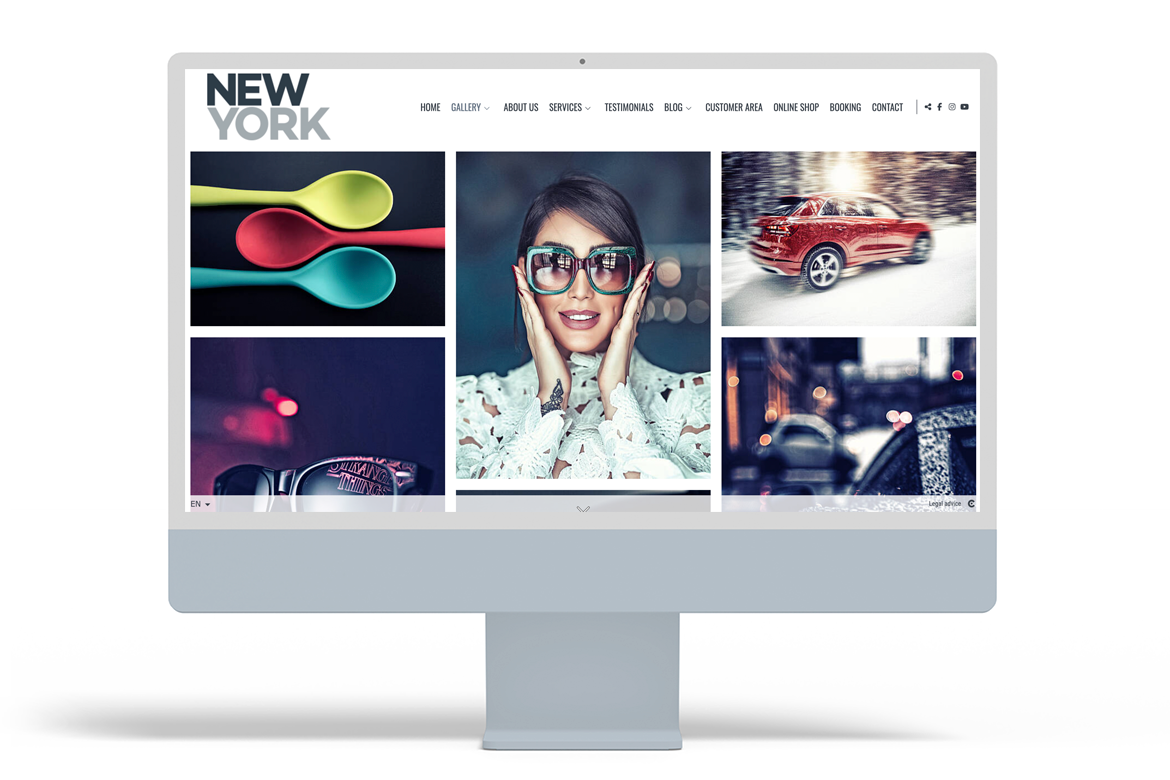
Nowadays, many photographers use Instagram, LinkedIn or Pinterest to showcase their work and connect with potential clients. Social media is undoubtedly a very useful tool for gaining visibility and sharing recent projects. However, it relies on algorithms that are constantly changing, meaning posts have a very limited lifespan. A photograph that receives hundreds of views today may be all but forgotten within a matter of days.
A professional photography website offers exactly the opposite: a dedicated space where the photographer has complete control over the content, the design and how their work is presented. It allows you to organise your portfolio by specialism, highlight your most important projects, explain the services you offer and display all the information a potential client needs before getting in touch. Furthermore, a well-optimised website can rank highly on Google for searches related to product photography, becoming a constant source of new business opportunities.
Another major advantage is that a website conveys a much more solid and professional image. Whilst on social media visitors can easily be distracted by other content, on a website all attention is focused on the photographer and the quality of their work. It is the ideal place to showcase complete projects, publish blog posts, incorporate contact forms or even include client testimonials that build trust.
For a product photographer, a website ends up becoming much more than just a showcase for images. It is their calling card, their marketing tool and one of the best resources for standing out from the competition, attracting new clients and building a professional brand in the long term.
9 product photographers with portfolios worth discovering
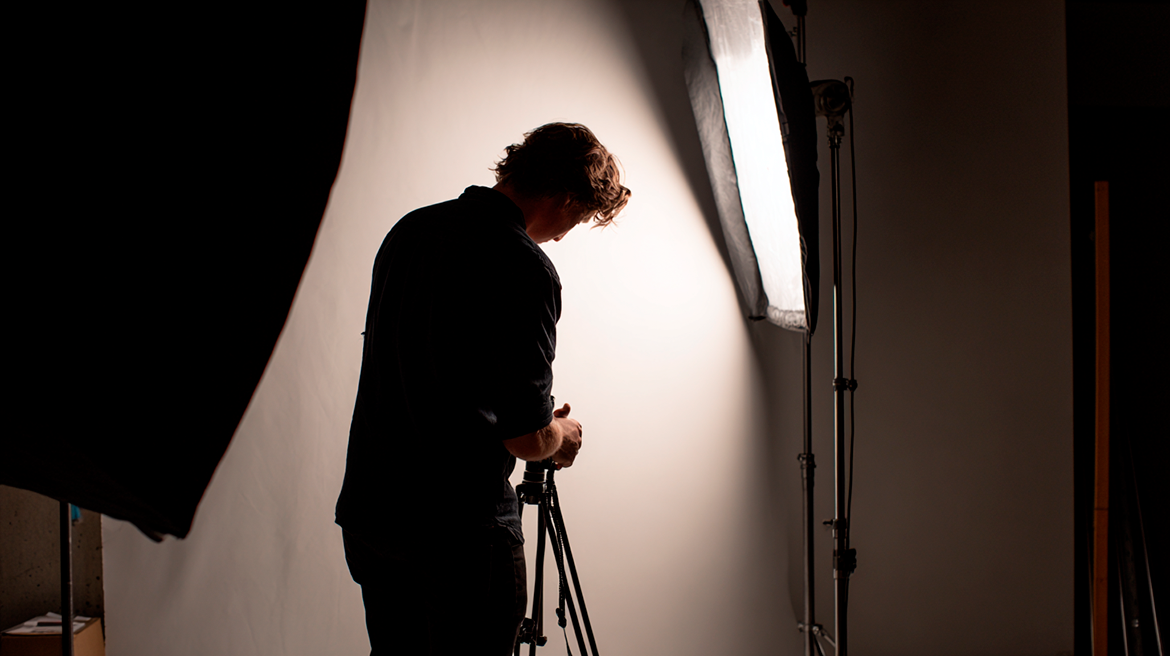
Every photographer develops their own style to convey the personality of the products they work with. Some opt for minimalist compositions, whilst others create much more elaborate scenes where creativity takes centre stage.
Below you’ll find a selection of photographers specialising in product photography whose portfolios stand out for the quality of their images, the presentation of their work and the care with which they showcase each project.
1# Stelart
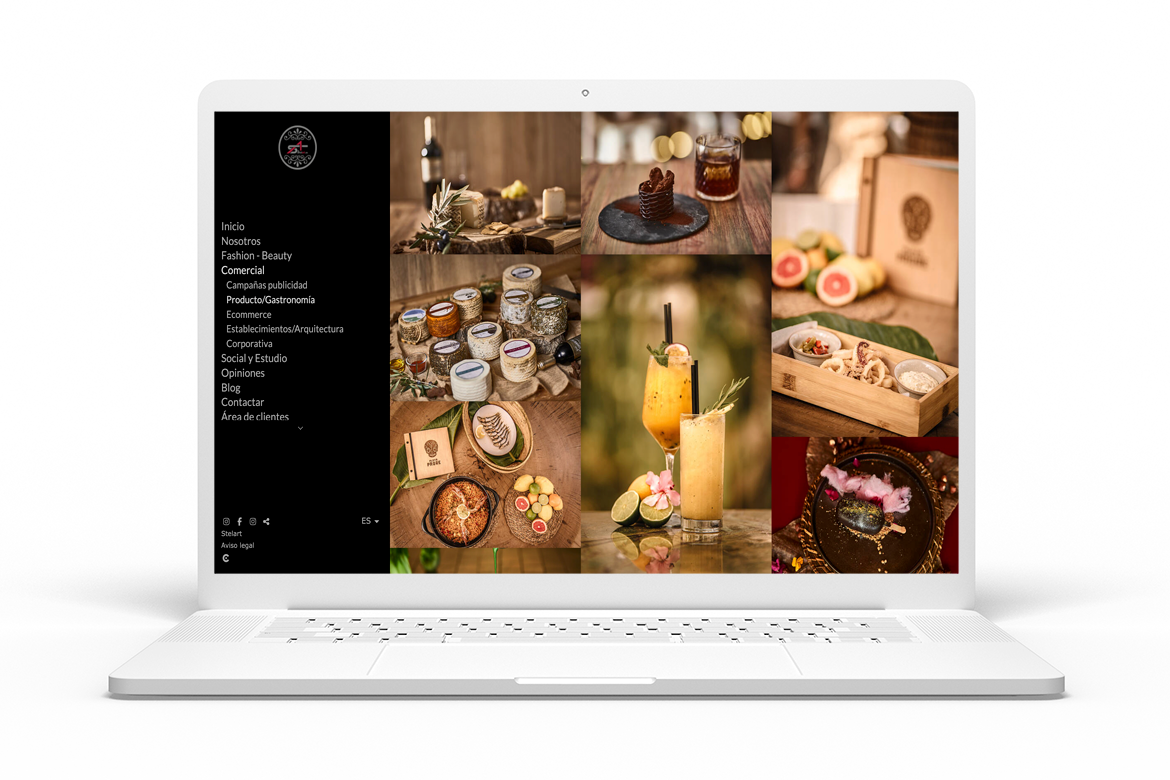
Based in Barcelona, Stelart is a studio specialising in advertising and product photography, working for brands across sectors as varied as food, cosmetics, fashion and drinks. Its portfolio stands out for its meticulous art direction, mastery of lighting and great attention to detail, resulting in elegant, creative images with a strong commercial focus. Each project is designed to enhance the brand’s identity and capture the consumer’s attention at first glance.
On their website, created with Arcadina, the photographs take centre stage. The galleries are clearly organised, allowing visitors to easily browse through the different projects and appreciate the quality of each one without distractions. This type of presentation helps convey a professional image and enables potential clients to quickly discover the studio’s style, making the portfolio an effective tool for showcasing their expertise in product and advertising photography.
2# Rafa P Carpio
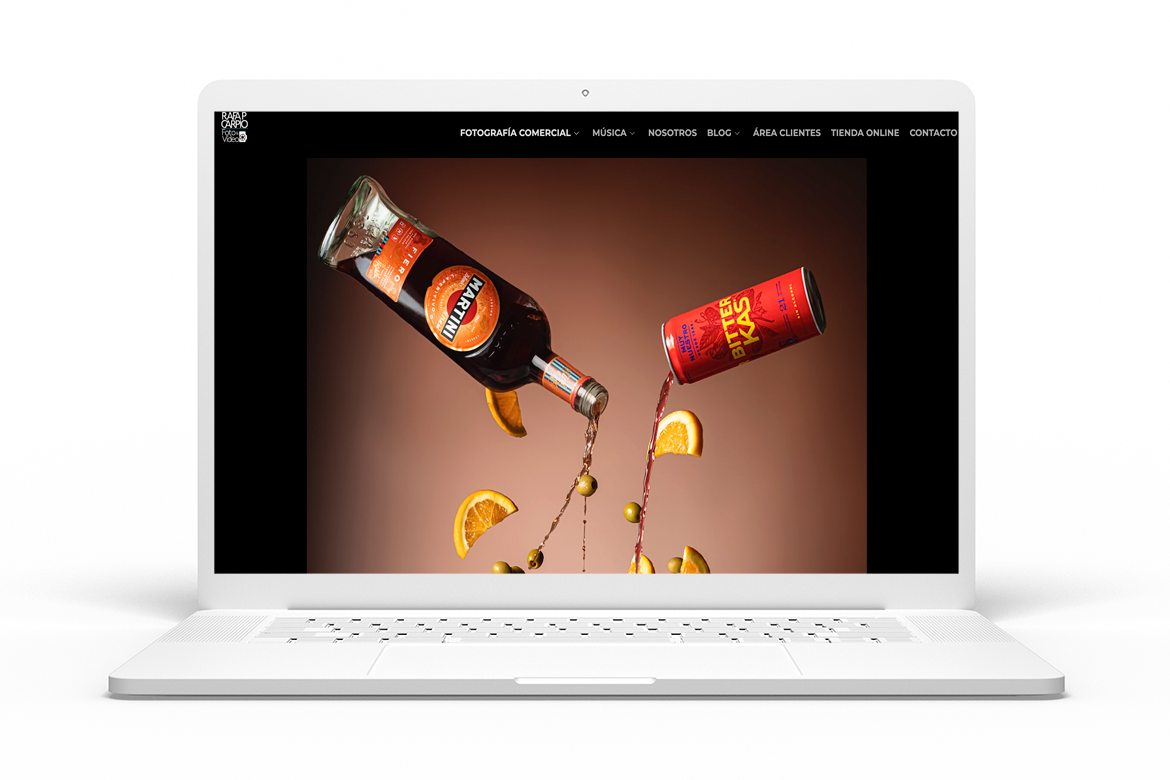
Based in Madrid, Rafa P. Carpio works as a photographer specialising in advertising, product and food photography. Throughout his career, he has worked for companies and brands seeking images capable of conveying the quality and value of their products. His style is characterised by meticulous lighting, clean compositions and a great ability to highlight textures, colours and small details that turn each photograph into a powerful tool for visual communication.
His website, developed with Arcadina, brings together his main projects in a perfectly structured portfolio that invites visitors to explore each of his galleries. Navigation is intuitive and allows quick access to the different types of work, offering a comprehensive overview of his expertise and versatility. Thanks to this organisation, her portfolio functions not only as a showcase of images, but also as a professional introduction that makes it easier for companies and agencies to find examples relevant to the type of photography they require.
3# María Muñoz Photo Studio
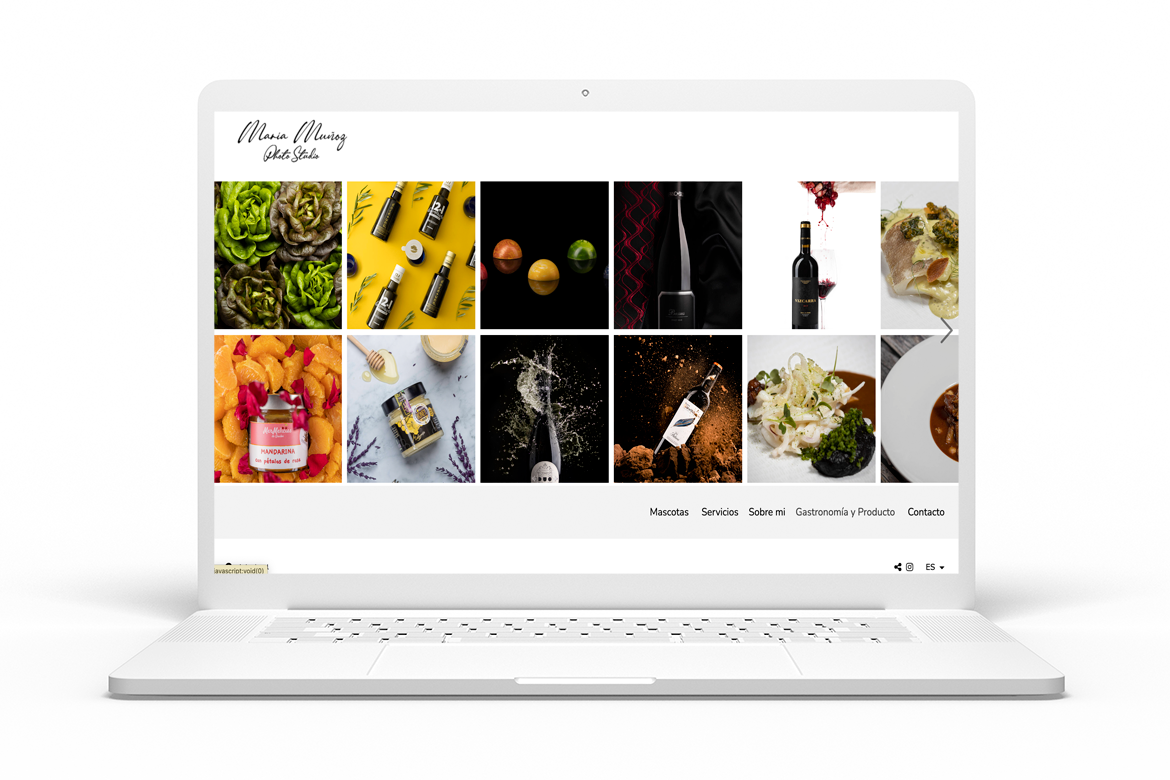
Based in Madrid, María Muñoz Photo Studio specialises in advertising photography, product photography and visual communication projects for brands. Her portfolio features work from sectors such as cosmetics, food, jewellery and lifestyle, where each image is carefully planned to convey the personality of each product. The combination of creativity, art direction and lighting results in elegant compositions that go beyond traditional commercial photography.
To showcase all this work, he relies on a website created with Arcadina, where each project has the space it needs to demonstrate its potential. The clean design and organisation of the portfolio allow the images to stand out without any elements that might distract the visitor’s attention. Furthermore, the ease with which the galleries can be kept up to date enables him to add new projects on an ongoing basis, always offering a representative sample of his studio’s development and the quality of his most recent work.
4# SC Photo Profesional
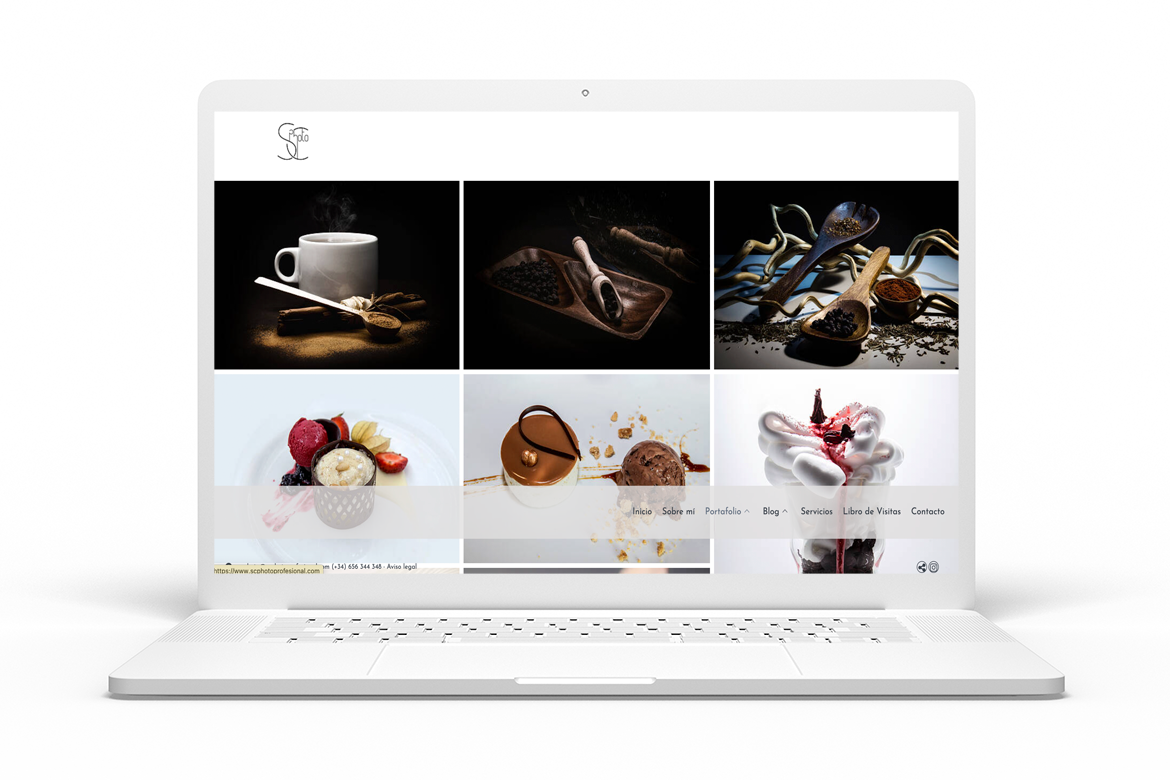
With extensive experience in the field of commercial photography, SC Photo Profesional undertakes product photography, advertising and corporate photography projects for companies across various sectors. Their work is characterised by a focus on clean, carefully crafted and technically flawless images, where lighting and composition are tailored to each product. The result is a varied portfolio that demonstrates their ability to adapt to each client’s needs and enhance their brands’ image.
Their website, created with Arcadina, is designed to allow visitors to easily discover their different specialisms and browse their work via simple, intuitive navigation. The portfolio’s structure makes it easy to find examples of each type of project and offers a very smooth viewing experience on both computers and mobile devices. In this way, the website becomes a marketing tool that reinforces their professional image and helps to instil confidence from the very first point of contact.
5# Orozco Art
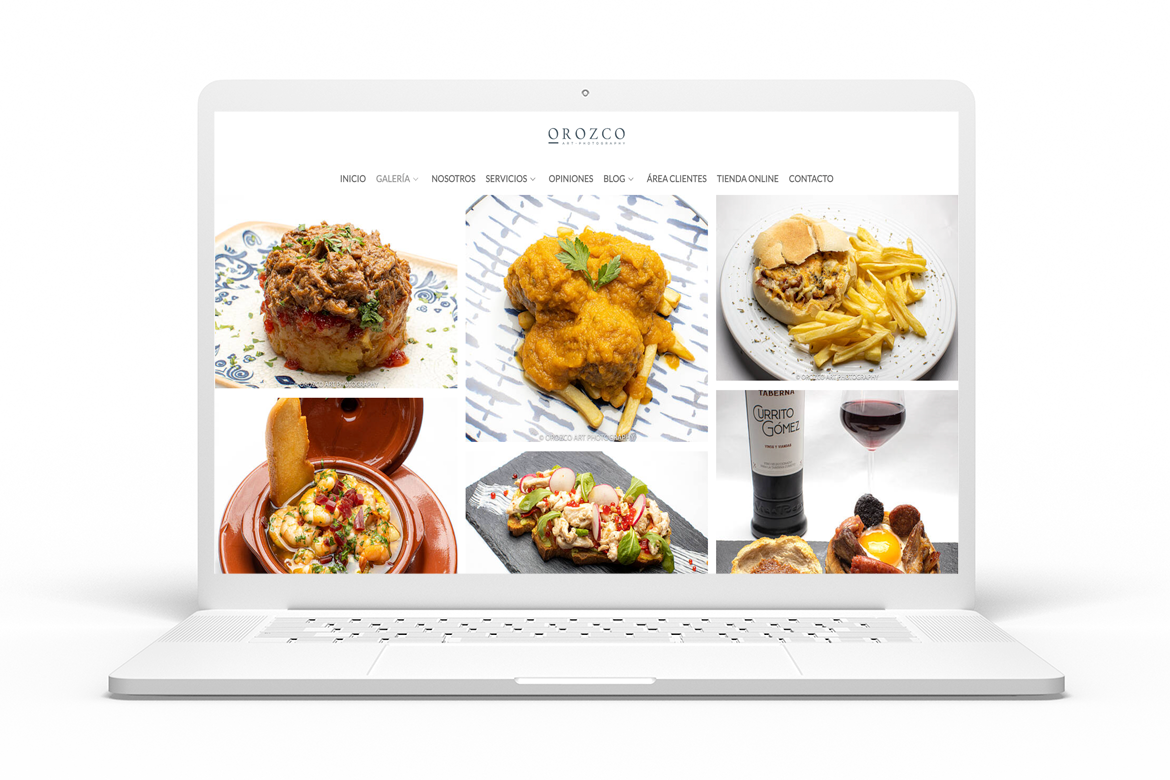
Based in Zaragoza, Orozco Art specialises in advertising and product photography for companies and brands seeking to highlight the quality of their products through striking images. Its portfolio features work in the food, drink, cosmetics and other commercial sectors, combining meticulous studio lighting with creative compositions and a highly personal artistic vision. Each photograph is designed to capture the consumer’s attention and reinforce the brand’s visual identity.
To give these projects the prominence they deserve, Orozco Art uses a website created with Arcadina, where the images are presented in high quality against a clean visual backdrop. The way the galleries are organised makes it easy to browse the different areas of specialisation and discover the variety of work produced. This presentation not only enhances the visitor’s experience but also helps convey the high standards and professionalism with which the studio approaches every new product photography project.
6# Miguel Sarti
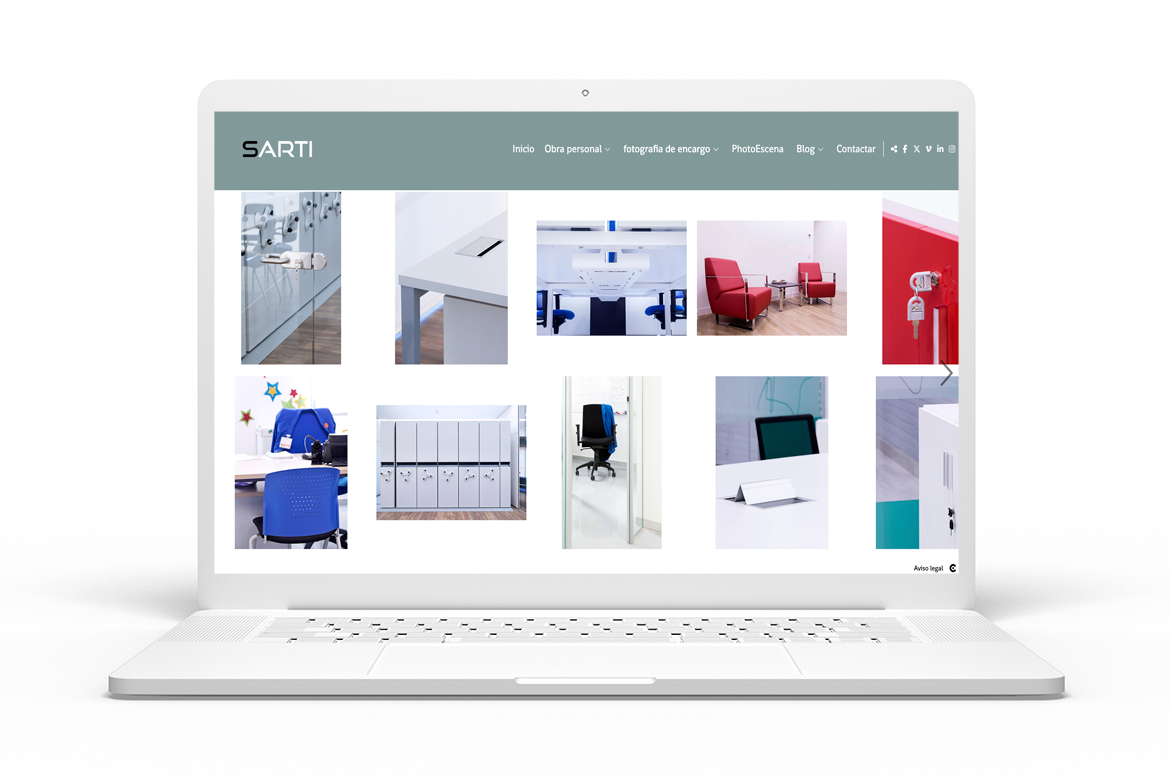
Based in Valencia, Miguel Sarti undertakes projects in advertising photography, product photography and visual content for brands seeking to stand out through high-quality images. His style combines technical precision and creativity to craft compositions where every element is carefully considered. His portfolio features work for a wide range of sectors, demonstrating a great ability to adapt to each client’s identity and needs.
His website, created with Arcadina, allows him to present these projects in an organised and attractive way, making it easy for companies and agencies to quickly discover his approach to work. The galleries showcase each photographic series with excellent visual quality, offering an immersive experience that highlights every detail of his images. Thanks to this presentation, his portfolio becomes a key tool for strengthening his personal brand and attracting new professional opportunities.
7# Tiziano De Stefano
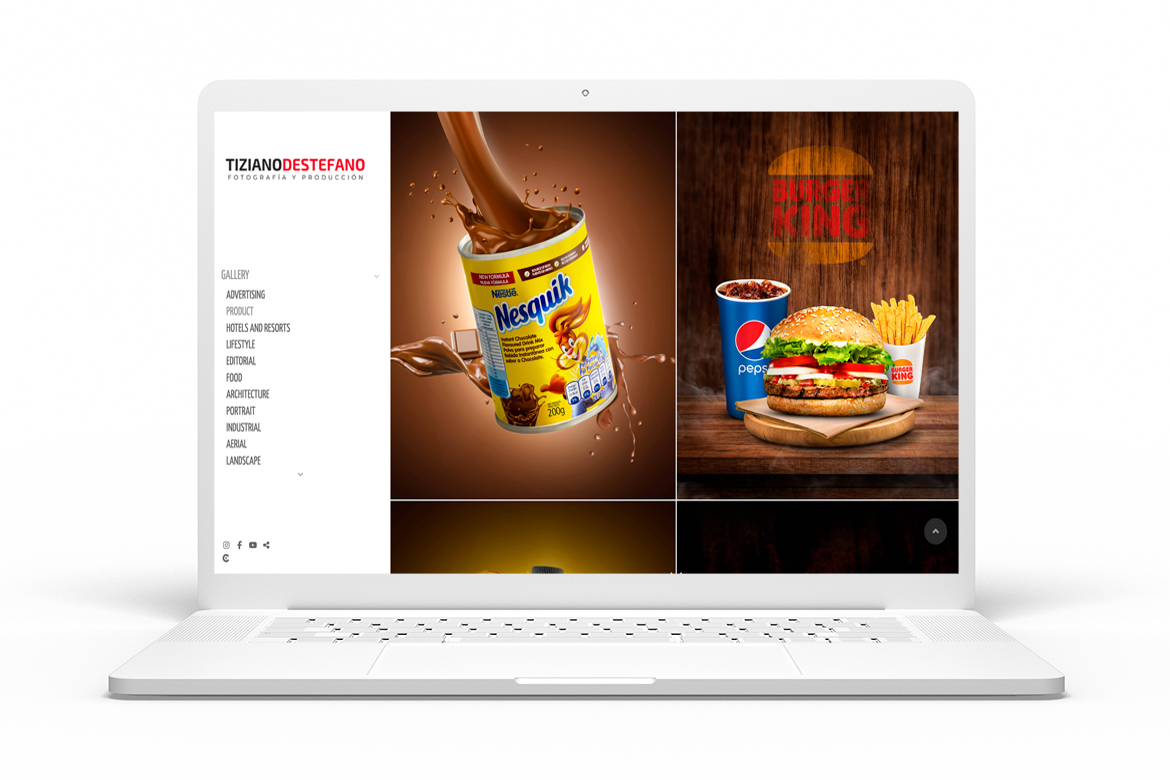
Based in Italy, Tiziano De Stefano specialises in advertising and product photography, developing projects for companies seeking images with a strong creative element. His work stands out for its careful attention to lighting, use of colour and highly elaborate compositions that successfully highlight the qualities of each product. Through an elegant and contemporary style, he creates photographs capable of conveying both the essence of a brand and the value of the items it represents.
His website, developed with Arcadina, reflects that same attention to detail and offers a visual journey where each project is given the space it needs to showcase its full potential. The portfolio’s structure allows visitors to navigate naturally between the different galleries and discover the variety of work he has produced, without detracting from the images themselves. This combination of design and functionality makes the website an excellent showcase for presenting his work to clients from all over the world.
8# Rob Car Foto
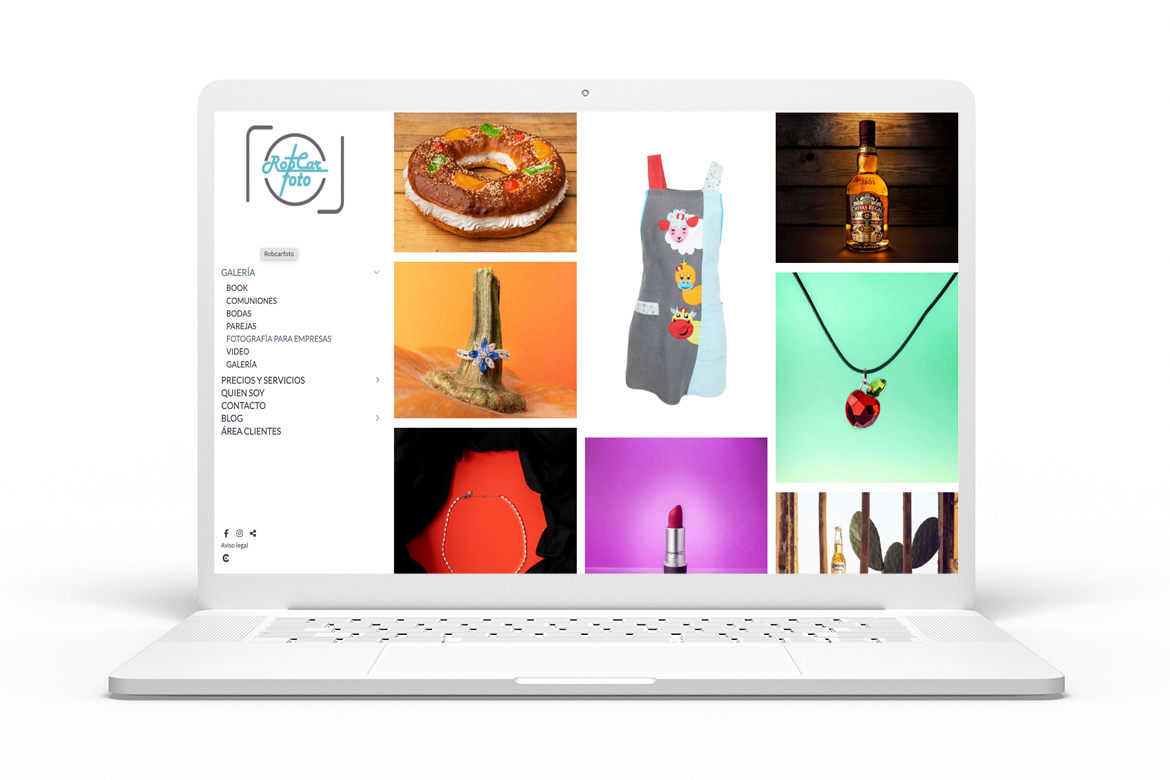
Rob Car Foto specialises in advertising photography, product photography and visual communication projects for companies seeking to enhance their brand image. His portfolio brings together work from various sectors, demonstrating a mastery of studio lighting and a particular focus on finishes, textures and composition. The result is clean, balanced images designed to capture attention in advertising campaigns, catalogues and online shops alike.
To showcase this work, they use a website created with Arcadina that combines simple navigation with a highly visual presentation of their projects. The galleries allow visitors to browse their portfolio seamlessly and quickly discover the range of services they offer. Furthermore, the ability to customise the website’s design helps them maintain an image consistent with their professional identity, reinforcing the trust of companies and brands seeking a photographer specialising in product photography.
9# MrZ Culinary Photo
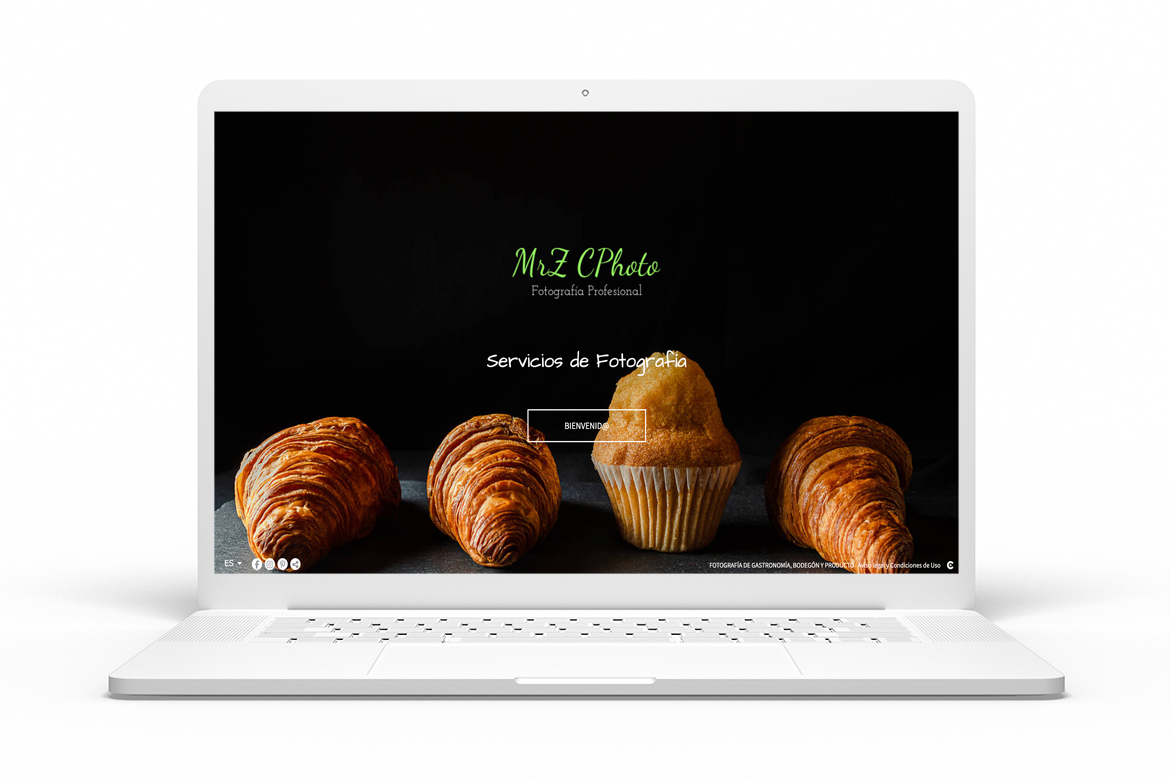
Specialising in food photography and culinary photography, MRZ Culinary Photography focuses on creating images that whet the appetite and convey the essence of each dish. Its portfolio features projects for restaurants, producers, wineries and food brands, where lighting, composition and food styling come together to produce highly appealing photographs. Each image reflects exceptional attention to detail and a clear focus on the visual communication of food-related products.
Their website, developed with Arcadina, allows them to organise their work into themed galleries, making it easy for visitors to explore the different strands of their portfolio. This structure helps visitors navigate their projects in an orderly manner and appreciate the evolution of their work over time. Furthermore, having a dedicated space where he can showcase his photographs with complete freedom enables him to build a solid professional image and offer potential clients a clear indication of the quality and style that characterise his photographic work.
What can we learn from these product photographers?
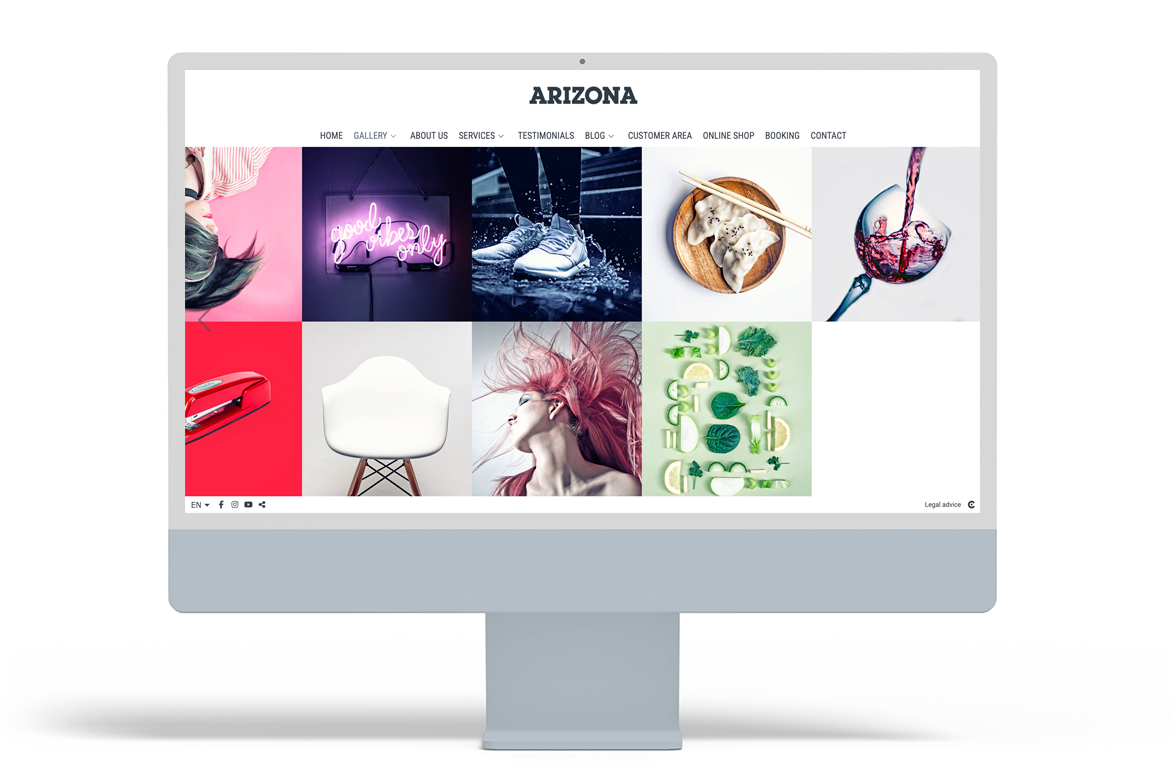
Analysing the work of other professionals is one of the best ways to continue growing as a photographer. Beyond the technical quality of their images, the product photographers featured in this selection stand out for the way they present their work, communicate their style and build a professional brand capable of instilling confidence from the very first moment.
Each portfolio reflects a different approach to product photography. Some opt for minimalist compositions where the product is the sole focus, whilst others use more elaborate settings, lighting effects or meticulous artistic direction to tell a story around each object. Observing these differences can help you discover new ideas and find inspiration to develop your own style.
As well as looking at the photographs, it’s worth paying attention to other aspects such as the organisation of the galleries, the website design, the information provided about their services, and the user experience. All these elements form part of the professional image perceived by a potential client and can be just as influential as the photographs themselves when it comes to securing a new project.
Below, we’ll look at some of the characteristics shared by many of these photographers, which can serve as a guide to help you improve your own portfolio and boost your online presence.
Specialising helps you stand out
One of the most common traits among product photographers with the best portfolios is specialisation. Rather than trying to cover every type of job, many have chosen to focus their work on specific sectors such as food, cosmetics, jewellery, fashion, technology or e-commerce photography. This decision allows them to develop their own style and position themselves as leaders within a specific market.
Specialisation also makes it easier for potential clients to relate to your portfolio right from the start. When a company sees examples of work very similar to what they need, their confidence increases and it becomes easier for them to visualise how their own products would look in front of the camera. In many cases, this factor can be decisive when it comes to requesting a quote.
Furthermore, working consistently within the same sector helps the photographer gain a better understanding of their clients’ needs. They learn what sort of images work best, how to highlight the features of each product, and what the visual trends are within that market. All this knowledge ultimately results in a more robust, coherent and compelling portfolio, capable of conveying expertise and offering a unique selling point compared to other, more generalist professionals.
Quality is more important than quantity
One of the most common mistakes when creating a portfolio is trying to include all the work produced over the years. However, a portfolio is not a photographic archive, but a strategic selection of the projects that best represent the photographer’s standard, style and experience. For this reason, quality must always take precedence over quantity.
Every photograph in the portfolio must contribute something to the whole. If an image does not meet the same standard as the rest or does not reflect the kind of work you hope to secure in the future, it is probably best to leave it out. A carefully curated selection conveys professional judgement and allows the viewer to remember the quality of the images, rather than feeling overwhelmed by an excess of content.
It is also advisable to tailor the portfolio to the type of client you wish to attract. If the photographer wants to specialise in food photography, for example, it makes more sense to highlight this type of project rather than including a wide variety of work without a clear focus. A coherent portfolio helps to reinforce professional identity and makes it easier for companies to quickly identify the photographer’s profile.
Finally, it is a good idea to review the portfolio regularly to replace older work with more recent or higher-quality projects. Keeping the website up to date demonstrates growth, experience and a constant commitment to improvement – aspects that make an excellent impression on potential clients.
The browsing experience also conveys a message
The quality of a portfolio does not depend solely on the photographs it contains. The way the images are presented, how easy it is to navigate the site and how quickly each gallery loads also convey an image of professionalism. A well-designed website creates a pleasant experience from the very start and encourages visitors to continue exploring the photographer’s work.
Intuitive navigation allows users to easily access different specialisms, locate important information and find contact details effortlessly. When everything is clearly organised, users spend more time viewing the photographs and less time trying to find their way around the website. This improves the user experience and increases the likelihood that they will end up requesting information or a quote.
Loading speed is another aspect that should not be overlooked. A portfolio featuring high-quality images must be optimised so that the galleries load quickly on any device. Excessive waiting times may cause visitors to leave the page before discovering the photographer’s work, whilst smooth navigation conveys confidence and professionalism.
Ultimately, a good browsing experience enhances the value of the portfolio. When design, content and usability work together, the result is a website that not only showcases excellent product photographs, but also offers an experience that matches the quality of the service the photographer wishes to convey.
Keeping the portfolio up to date
A portfolio should not be a static space that remains unchanged for years. Regularly adding new projects demonstrates that the photographer is still active, gaining experience and continuing to evolve both technically and creatively. For a potential client, seeing recent work instils a greater sense of confidence than visiting a website where the latest posts are several years old.
Updating your portfolio is also an excellent opportunity to showcase new specialisms, standout projects or collaborations with brands. As a photographer gains more experience, their website should reflect that development. Replacing old images with higher-quality ones or reorganising galleries according to the type of client you wish to attract helps to keep your portfolio appealing and aligned with your professional goals.
Furthermore, a website that adds new content on a regular basis is generally more likely to improve its ranking on Google. Search engines value sites that are kept up to date and provide relevant information for users. If these updates are complemented by a blog where you can share projects, tips or success stories, the chances of attracting organic traffic increase even further.
Finally, keeping the portfolio up to date encourages former visitors to return to discover the latest published work. In this way, the website ceases to be a mere showcase and becomes a living tool that reflects the photographer’s constant evolution and helps to strengthen their professional image.
Create a product photography portfolio with Arcadina
If you’re a product photographer, your website should convey the same quality as your photographs. A well-organised portfolio can make all the difference when it comes to attracting new clients and presenting your services professionally.
With Arcadina, you can create a fully customised photography website, organise your work into galleries, optimise your Google ranking, manage your blog and offer a browsing experience tailored to any device. All this without the need for technical knowledge and using tools designed specifically for professional photographers.
Start building a portfolio that showcases the full value of your work and turns your photographs into your best tool for securing new projects.
Do you know any product photographers whose portfolios deserve to be included in this selection? Leave your suggestions in the comments and help us discover new professionals who can inspire the whole photography community.
Arcadina goes with you
Fulfil your dreams and develop your career with us. We offer you to try our web service free for 30 days. And with no commitment of permanence.
Arcadina is much more than a website, it is business solutions for photographers.
If you have any queries, our Customer Service Team is always ready to help you 24 hours a day, 7 days a week. We listen to you.
Free trial · No card · No lock-in
Build your photography business online
Sales with no commission · Everything in one plan · 30-day free trial, no card