Delivering Photos to Clients: Turn the End of a Session into a Sales Opportunity
Delivering photos to clients is much more than just the final step of a photo shoot. It’s one of those moments when you can reinforce all the work you’ve done during the session and ensure the client leaves with an excellent impression of your service. Plus, it can become an opportunity to build client loyalty and increase sales. Think about everything you’ve done to get to this point. You’ve earned that person’s trust, organized the session, taken the photos, selected the best images, and spent time editing them. When the client finally receives the results, they reconnect emotionally with the experience they had with you.
That’s why delivery shouldn’t be limited to simply sending some files and calling it a day. If you use a private gallery where the client can browse their photos at their own pace, share them, select their favorites, or purchase additional images and products, you’re naturally extending the shopping experience. Furthermore, a well-planned delivery can help you achieve something even more important: ensuring that client comes back to you in the future and recommends your work.
In this article, we’ll focus on exactly that: how to make the most of the moment you deliver photos to clients to enhance the customer experience, strengthen your brand, and generate new business opportunities.
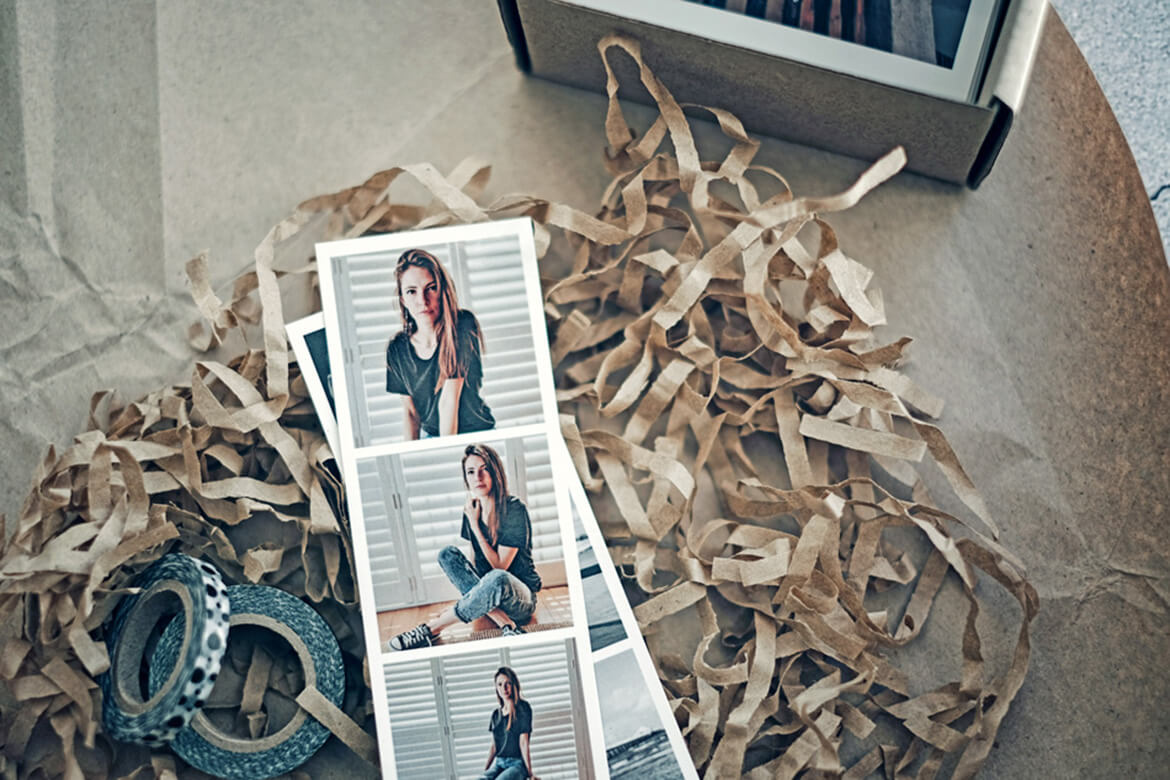
Delivering photos to clients doesn’t have to be the end of a session. It can be the beginning of your next sale.
Delivering photos is also part of the client experience

When a client books a photo session, they aren’t just buying a set of images. They’re having an experience that begins long before they step in front of the camera and continues until they receive the final result. The way you deliver photos to clients is also part of that experience.
Imagine two scenarios. In the first, the client receives a generic link from which they must download a folder containing dozens of files. In the second, they access a private, personalized gallery featuring your brand where they can leisurely enjoy their photos, select their favorites, share them with family, and decide whether to purchase any additional images or products. The photos may be exactly the same, but the perception of the service will be very different.
That’s why it’s important to pay as much attention to this final point of contact as to the rest of the process. The presentation, ease of access, organization of the images, and the options you offer within the gallery can help you project a much more professional image. At Arcadina, client galleries are designed precisely so you can create this experience within your own online business.
And if you’d like to delve deeper into the more operational aspects of the process, we recommend our article on how to deliver photos to clients using private galleries, where we explain the different delivery options in greater detail.
Before delivering the photos, think about what you want to achieve
One of the mistakes you can make when finishing a session is to treat the delivery as a mere formality: upload the images, send a link, and move on to the next job. Before doing so, it’s worth asking yourself a simple question: What do I want to happen when my client receives their photos?
Depending on the type of photo shoot, the answer can vary greatly.
Perhaps you only need to deliver the files that are already included in the package they purchased. But you might also want the client to select the photos that will go into an album, offer them additional images, allow their family members to purchase prints, or showcase different photo products.
You can also use this moment to remind them of other services you offer. A family photographer, for example, can use the delivery of a newborn session to maintain a relationship with that family and encourage them to return months later for a children’s session. A wedding photographer can make it easy for family members and guests to purchase additional photos. And a sports photographer can allow each participant to find and purchase their own images.
That’s why, before setting up a gallery, it’s a good idea to define its purpose. When you know what you want to achieve, it’s much easier to decide which images to display, what options to offer, and what call to action to use. The delivery process then ceases to be an administrative task and becomes part of your business’s sales strategy.
Capitalize on the client’s excitement when they discover their photos

There are moments when a customer is especially receptive to making a purchase. One such moment occurs when they see the results of a session they’ve been eagerly awaiting for the first time. This is especially true in social photography.
A couple reliving certain moments from their wedding, parents discovering photos of their baby, or a family seeing the results of a Christmas photo session for the first time—they’re all connecting emotionally with those images. That moment is incredibly valuable.
This doesn’t mean you have to push a sale aggressively. Quite the opposite. It’s about making it easy for the client to expand their order if they truly find photos or products they’d like to keep. For example, if a package includes 20 images but you present a wider selection, the client may discover additional photos they also want to have. If they can also purchase them directly from their gallery, the process becomes much simpler. You can also offer enlargements, printed copies, albums, canvases, or other products related to the photo shoot.
The key is to integrate these possibilities into the experience without turning the presentation into a showcase cluttered with offers. Your photographs are the stars of the show. Products and additional options should simply be available for anyone who wants to take it a step further. This way, the excitement your work generates can naturally translate into new sales.
Don’t just show the photos they’ve already purchased
If your business model allows it, an interesting strategy is to show the client a wider selection than the photos initially included in their package. Imagine a session includes 15 edited images. Instead of asking the client to choose those 15 photos via messages or lists, you can offer them a gallery with a larger selection so they can mark their favorites.
During this process, something very common may happen: the client may like more images than they initially purchased. At that point, you have an additional sales opportunity without having to do a new shoot, invest in advertising, or attract another client. The photography work is already done, and the client is already familiar with the results.
You can offer additional photos individually, create bundles with different quantities, or even allow them to purchase the entire gallery.
The strategy will depend on your type of photography and how you’ve set up your pricing. The important thing is that the process is simple and transparent. The client should know how many images are included in their session, how much the additional photos cost, and what options they have if they want to expand their selection.
In this way, selecting photos is no longer just a necessary step before final delivery—it can also become an opportunity to increase the average value of each photo shoot.
Turn Family Members and Guests into New Buyers

In certain types of photography, your client doesn’t have to be the only person interested in the images. Weddings are a prime example. The bride and groom are the ones who hired the photographer, but parents, siblings, friends, and guests may also want to keep certain photos.
Something similar happens with First Communions, baptisms, sporting events, graduations, school photography, or any project involving multiple people. That’s why sharing photos with clients can open up a second sales channel.
If you allow family members or guests to access the gallery—always respecting privacy and the permissions you’ve established—these people can discover images that interest them and place their own orders. This also prevents the main client from having to act as an intermediary. Instead of a family member asking the bride and groom for a photo, which then requires them to request it from you and you to manage the order afterward, each person can handle the process directly.
In addition to saving time, you’re expanding the commercial reach of work you’ve already completed. And there’s another interesting benefit: many of these people are discovering your photography for the first time. A positive experience with the gallery can help them remember your name when they need to hire a photographer. In this way, a simple delivery can generate immediate sales and, at the same time, help you attract future clients.
Use the delivery to increase the value of each photo shoot

Attracting a new client usually takes time and effort: improving your online visibility, keeping your social media active, investing in advertising, responding to inquiries, or preparing quotes. However, by the time you get to the stage of delivering photos to clients through private galleries, you’ve already overcome all those hurdles.
The client already knows you, has placed their trust in you, and has seen how you work. That’s why it’s much easier to suggest complementary services or products related to the photo shoot they’ve just completed. In addition to additional photos, you can offer printed products that add unique value to the images: prints, enlargements, albums, canvases, acrylic prints, or other formats that suit your client’s preferences.
It’s important to choose your options carefully here. You don’t need to offer dozens of different products. In many cases, it works better to have a small selection that’s closely tied to the type of session. A newborn photographer might offer albums and enlargements for the baby’s room. At a wedding, additional albums for the parents might be a good fit. In family photography, prints and enlargements to give as gifts can be appealing.
The goal is to ensure that each product makes sense within the experience the client has just had. If you’d like to delve deeper into this strategy, check out our article on how to sell photos online—you’ll find more ideas for turning your galleries into a new source of revenue.
Create bundles that make the purchase decision easier
When a customer wants to purchase additional photos, offering too many combinations can unnecessarily complicate the decision. That’s why a good strategy is to create simple options. You can, for example, set a price for individual photos and then create different bundles with 5, 10, or 20 additional images. You can also offer an option to purchase the entire gallery. This way, each customer can choose the option that best suits their needs.
Packages also allow you to gradually increase the value of the purchase. If buying several images together is more appealing than buying them individually, some customers will prefer to expand their order. This same logic can be applied to printed products. Instead of displaying a huge catalog, you can create combinations designed specifically for each type of session: an album plus a large print, multiple copies for family members, or specific print formats. The key is to ensure the options are easy to understand.
When someone is enjoying their photos, they shouldn’t have to figure out complex pricing, constantly ask questions on WhatsApp, or wait for a quote to find out how much it costs to expand their order. The clearer the process, the easier the decision will be. And you’ll be able to increase the value of each session without having to spend more time manually managing each sale.
Delivering photos can help you build customer loyalty

An additional sale is great, but getting a customer to return can be even more valuable for your business. Photography offers many opportunities to build long-term relationships. A couple might hire you for their wedding and return later for a maternity session. A family might start with a newborn session and come back later for children’s portraits, First Communion photos, or Christmas campaigns. A company might periodically need new corporate photos, event coverage, or content for its social media. The photo delivery is a great time to keep that relationship going.
>> A family isn’t just one client—it’s fifteen years of clients
When the client is satisfied with the results, you can naturally remind them of other related services that might interest them in the future. You don’t need to try to sell another session right away. Sometimes it’s enough to show that you can be there for them during other important moments. You can also use this follow-up communication to thank them for their trust, ask for a review, invite them to follow your work, or let them know they can contact you whenever they need new photos. The important thing is that the client doesn’t disappear from your business as soon as they download their images.
A professional, simple, and personalized experience when delivering photos to clients helps wrap up the job on a positive note. And that final impression can make a big difference when that person needs a photographer again or someone in their circle asks for a recommendation.
Ask for a review when the client is at their most satisfied
Reviews are a very valuable tool for building trust among people who aren’t yet familiar with your work. And the time right after delivery can be especially well-suited for requesting them.
The client has just received their photos, has seen the results, and the entire experience with you is still fresh in their mind. If they’re satisfied, they’re much more likely to be able to explain in detail what they liked about the service. You can send them a brief message thanking them for their trust and providing a direct link to leave a review. Avoid overly long messages or pushy requests. The idea is to make it easy for them.
Furthermore, a good review isn’t just about the quality of your photos. Many clients will value other aspects that can also be decisive for future buyers: the service they received, how easy it was to book, how the session went, how quickly the photos were delivered, or how convenient it was to access the images. All of these comments help build your business’s reputation.
You can then feature some of these reviews on your own website and use them as social proof so that new clients can see what the experience has been like for others. This creates a very positive cycle: a good experience leads to a review, and that review can help you attract your next client.
Keep your brand front and center when you deliver the photos
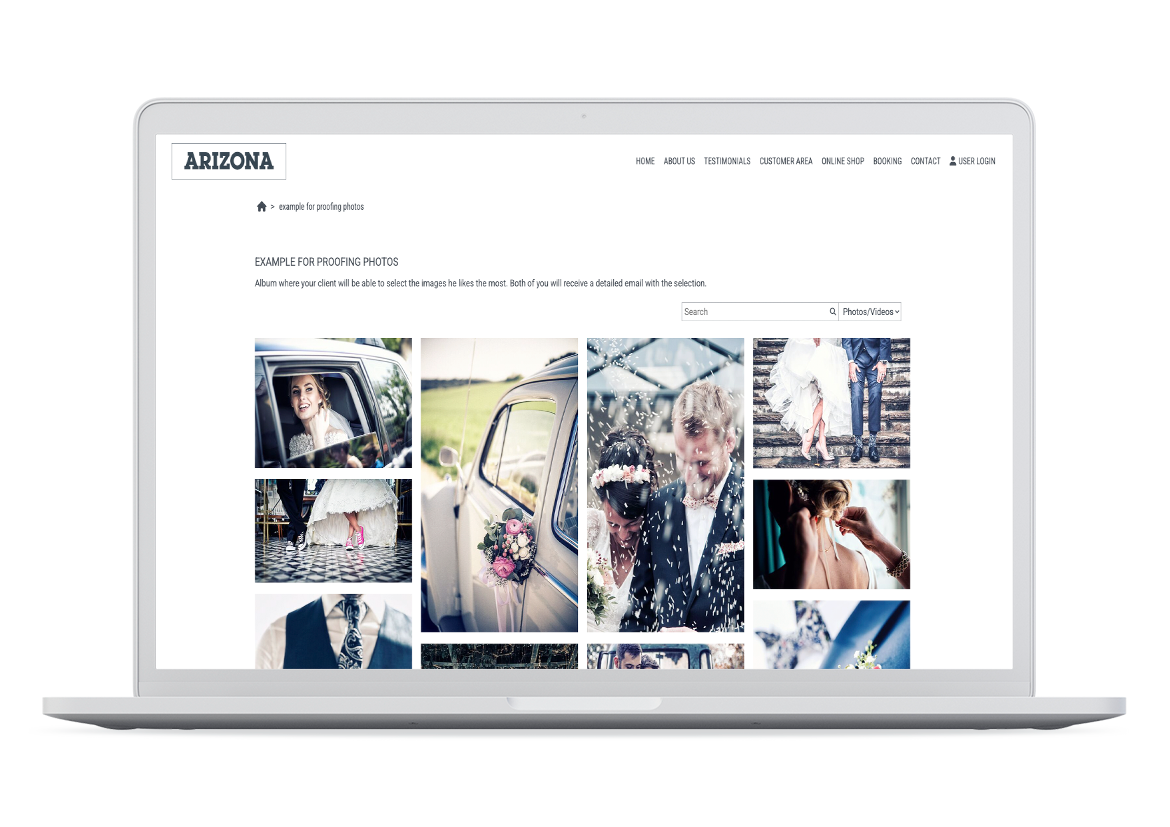
Your visual identity shouldn’t disappear once the session ends. If you’ve taken care to maintain your website, social media, emails, and your studio’s image throughout the entire process, it makes sense for the photo delivery to maintain that same level of personalization. A gallery embedded within your photography website allows the client to continue associating the images with you. This is especially important when they share the photo collection with others.
Family members, friends, or guests may come across your photos without knowing you beforehand. If they visit a personalized and professional website, they’ll also be discovering your brand and your approach to your work. It’s an opportunity for visibility that you shouldn’t let slip by.
Furthermore, presenting the photos within a carefully curated space—such as private client galleries—conveys a very different impression than simply handing over a folder of files. Your work gains context. That’s why it’s important to maintain a consistent aesthetic, organize the images properly, and provide clear instructions on the available options.
Delivering photos to clients thus becomes an extension of your online showcase. And the easier it is to identify who took those photos, the more likely viewers will remember your business when they need to hire a photographer.
Automate Tasks, but Don’t Lose the Personal Touch

Automating certain parts of the delivery process can save you many hours of work, especially when you’re managing a high volume of photo sessions. But automation shouldn’t mean a lack of warmth.
You can use tools that make it easier to select, download, purchase, or manage orders while still maintaining close communication with your clients. In fact, the ideal approach is to combine both.
With the help of private client galleries, repetitive tasks can be handled more quickly and efficiently, freeing up your time for the moments when you truly add value. For example, you can prepare messages in advance to notify clients that a gallery is available, explain how to make a selection, or remind them that access will expire soon.
You can then customize certain communications based on the client or the type of session. This way, you avoid having to write the same instructions over and over again, while the client still feels they’re receiving personalized attention.
If you’re currently spending too much time answering questions about access, selections, downloads, or orders, we also recommend our article “Client Galleries: 6 Daily Problems You Can Avoid When Delivering Photos to Your Clients,” where we specifically discuss how to resolve these types of situations.
Technology should help you do just that: spend less time on administrative tasks and have more time to take photos, serve your clients, and grow your business.
Analyze What Happens After Each Delivery

Once you’ve established a solid system for delivering photos to clients, the next step is to observe how your clients respond. Not all strategies work the same way for every photographer.
You might find that your clients buy a lot of additional photos but rarely order printed products. Or the opposite might be true: certain albums or prints perform especially well for a specific type of session. You can also analyze which packages generate the most additional orders, which products perform best, which photo shoots lead to more follow-up sales, or at what times of the year demand increases. All this information can help you make decisions.
If you notice, for example, that many clients who purchase a 10-photo package end up buying another 10, you might be able to create a more attractive, higher-tier package. If a certain product generates very few orders, you can replace it with one that better suits your audience. You may even discover significant differences between specialties. What works in wedding photography doesn’t necessarily work the same way in newborn, school, sports, or corporate photography. The key is not to view the delivery process as a fixed, unchangeable system.
Try different options, observe your clients’ behavior, and adjust your strategy. Over time, you’ll be able to build a photo delivery system that’s increasingly tailored to your audience and more profitable for your business.
Turn photo delivery to clients into a sales and customer loyalty tool
Delivering photos to clients can be simply the moment when you wrap up a photo shoot—or it can become a strategic part of your business. The difference lies in how you approach the experience.
If your clients can enjoy their photos in a professional setting, select their favorite images, expand their order, purchase products, or share the photo session with ease, you’re making much better use of all the work you’ve already done. But the benefits don’t stop at additional sales.
A well-executed photo delivery to clients can strengthen your brand, attract new reviews, generate referrals, and maintain an ongoing relationship with clients who may hire you again in the future.
With Arcadina’s client galleries, you can integrate this process into your own online business and tailor each delivery to the type of photo shoot you do. You don’t need to use the same strategy for everyone. You can decide when you simply want to deliver the photos, when it makes sense to allow clients to select their favorites, and when there’s an opportunity to offer additional photos or products.
Because the goal isn’t to sell just for the sake of selling. It’s about creating a seamless experience for your clients while making the most of every photo shoot you do.
And now we’d like to hear about your experience: Do you currently use photo deliveries to clients to generate new sales or encourage your clients to hire you again?
Arcadina goes with you
Fulfil your dreams and develop your career with us. We offer you to try our web service free for 14 days. And with no commitment of permanence.
Arcadina is much more than a website, it is business solutions for photographers.
If you have any queries, our Customer Service Team is always ready to help you 24 hours a day, 7 days a week. We listen to you.
Free trial · No card · No lock-in
Build your photography business online
Sales with no commission · Everything in one plan · 30-day free trial, no card