Stock photography: discover expert photographers in an increasingly profitable subject area
Selling stock photos remains one of the most interesting ways for photographers to earn extra income by making the most of images they’ve already taken or by creating new shoots designed to meet the needs of businesses, advertising agencies, the media and content creators. Although competition has increased in recent years, the demand for high-quality photographs continues to grow as more businesses need images for their websites, social media, marketing campaigns or digital publications.
Whether you’re taking your first steps in photography or already working professionally, stock photography can be the perfect way to diversify your income. The key lies in understanding what sort of images buyers are looking for, working with a clear strategy, and learning from those who have been successfully working in this market for years.
In this guide, you’ll discover exactly what stock photography is, how to start selling your images, what factors influence the income you can earn, and which photographs are usually in highest demand. You’ll also learn about the work of several photographers specialising in this sector to inspire you and help you learn from their experience.

Selling stock photos isn’t just about uploading images to a stock photo agency. The best results come when you understand what clients need, develop your own style and work consistently over the long term.
What is stock photography?

Stock photography involves creating images that can be purchased and used by different clients for a variety of projects. Rather than carrying out a bespoke shoot for a specific company or individual, the photographer makes their images available for sale through image banks or stock photography agencies, where any buyer can purchase a licence to use them in accordance with the agreed terms.
This model allows a single photograph to generate income repeatedly, as it can be sold to different clients without the need to redo the work. Precisely for this reason, many photographers consider stock photography an attractive source of passive income that complements other specialisms such as wedding, portrait, property, nature or product photography.
To sell stock photos, it is not enough simply to take good photographs. It is also important to understand what kind of images the market demands, to pay attention to aspects such as composition, lighting and editing, and to tag each photograph with keywords that make it easier for buyers to find it within image banks.
What is the difference between stock photography and commissioned photography?
The main difference lies in the intended use of the images. In a commissioned shoot, the photographer works for a specific client according to their particular requirements. The photographs belong to that project and are usually delivered for a specific purpose.
In contrast, in stock photography, the photographer creates images with a much wider audience in mind. Rather than catering to a single client, they aim to produce photographs that may be useful to businesses, the media, marketing agencies or content creators across various sectors.
This offers greater creative freedom and allows for the planning of shoots on themes that are in constant demand. Furthermore, the same image can be licensed multiple times, turning each photograph into an asset that can continue to generate income for months or even years.
Who buys stock photographs?
Stock photographs are used by a huge variety of professionals and businesses that need high-quality images without having to organise their own photo shoot. Among the most common buyers are advertising agencies, marketing departments, the media, publishers, graphic designers, web developers, e-commerce companies and social media content creators.
They are also a popular solution for small businesses and entrepreneurs who need to illustrate their websites, email campaigns, adverts, presentations or product catalogues.
Knowing who buys these images helps you understand which photographs are most likely to sell. The better an image meets the real needs of these customers, the greater the chances are that it will stand out amongst the millions of photographs available at the leading stock photography agencies.
Is it worth selling stock photos?

The answer is yes, but with realistic expectations. Selling stock photos is unlikely to become an immediate source of income, although it can become a very attractive supplementary income stream for photographers across various sectors. Every image you upload to a stock image bank has the potential to be sold several times over time, so the work you do today can continue to generate income for months or even years.
Furthermore, this type of photography allows you to make the most of shoots you’ve already done or to plan new shoots for commercial purposes. Many photographers make use of locations, models or settings from other jobs to create additional images which they then sell to stock photography agencies, thereby increasing the profitability of each shoot.
As with any photography-related activity, success does not depend solely on talent. A good strategy, perseverance and an understanding of market needs are equally important factors in achieving results.
Advantages of selling stock photos
One of the main advantages of stock photography is that it allows you to diversify your sources of income. Rather than relying solely on photo shoots or client commissions, you can generate a steady stream of sales thanks to a catalogue of images that remains available to thousands of buyers worldwide.
It also offers great flexibility. You can devote as much time as you see fit to creating new photographs, expanding your portfolio or experimenting with different themes without having to conform to the requirements of a specific client. This encourages the development of new styles and can open up opportunities in sectors you may not have explored before.
Another very interesting aspect is that learning to sell stock photos also helps you improve as a photographer. Analysing market trends, considering buyers’ needs and planning each shoot are skills that can subsequently be applied to other professional work.
Things to bear in mind before you start
Although selling stock photos can be profitable, there are a few things you should be aware of before you start. The first is that there is a great deal of competition. Thousands of new images are added to the major stock photo agencies every day, so to stand out you need to offer high-quality content and bring something different to the table.
Consistency also plays a key role. It is rare to achieve good results by uploading just a few photographs. Photographers who earn a steady income tend to maintain an extensive portfolio, kept up to date and organised around popular themes.
Furthermore, technical quality is essential. Images must be well-exposed, in focus, properly edited and meet the requirements set by the various stock photography agencies. It is also advisable to pay attention to details such as model or property releases where necessary, and to spend time creating titles, descriptions and keywords that make it easier for buyers to find your photographs.
If you approach this work with patience and a well-defined strategy, stock photography can become a long-term investment that complements the rest of your work as a professional photographer.
How much money can you earn from selling stock photos?

There is no single answer to this question. The income you can generate from stock photography depends on numerous factors and varies greatly from one photographer to another. Whilst some people earn a small supplementary income each month, others manage to turn this activity into a significant part of their business thanks to an extensive catalogue and a well-defined strategy.
The most important thing is to understand that selling stock photos is a medium- to long-term endeavour. Results do not usually come straight away, as images need time to gain visibility within stock photo agencies and start being downloaded by buyers. However, the larger and better your portfolio is, the more opportunities you’ll have to generate sales on an ongoing basis.
That is why many photographers view stock photography as an investment, where each new image expands the potential for future income.
Factors affecting income
The first and most important factor is the quality of the photographs. Images must be technically well executed, but they must also meet real market needs. An excellent photograph that nobody needs is far less likely to sell than a simple image that fulfils a common demand.
Specialisation can also make a big difference. Some photographers focus their work on specific sectors, such as healthcare, gastronomy, education, technology or the business world. A thorough understanding of a niche allows you to create more comprehensive and attractive collections for buyers.
Another key factor is the size of your portfolio. The more high-quality photographs you have available, the greater the chances that one of them will appear in search results and generate sales. It’s not about uploading thousands of images indiscriminately, but about building a varied, coherent and useful catalogue.
The choice of stock photography agencies where you publish your images also plays a role. Each platform has a different type of client, licensing system and terms and conditions, which is why many photographers choose to distribute their photographs across several stock image banks to increase their visibility.
Finally, market demand is constantly changing. Themes related to new technologies, sustainability, remote working, diversity or consumer habits may gain prominence over time, whilst others fall out of favour. Keeping an eye on these trends helps you create images with greater sales potential.
Why do some photographers generate recurring income?
One of the major advantages of selling stock photos is that the same image can be licensed multiple times to different buyers. This means that a photograph taken months or even years ago can continue to generate sales without the need to repeat the work, provided it remains relevant to the market.
This is where the concept of passive income comes in. Although creating, editing, organising and publishing photographs requires time and dedication, once they are added to the catalogue they can continue to generate income on a recurring basis. That said, it is important to understand that this income is neither automatic nor guaranteed. It depends on the quality of the portfolio, existing demand and the photographer’s ongoing efforts to keep it up to date.
The professionals who achieve the best results tend to view stock photography as a long-distance race. They publish new images regularly, analyse which content performs best and adapt their work to the needs of the market. It is this combination of consistency, strategy and continuous improvement that, over time, can turn a simple catalogue of images into a stable source of supplementary income.
Which stock photographs sell best?

Although virtually any subject can find buyers, there are certain types of photographs that remain in constant demand because they are frequently used by businesses, advertising agencies, digital media and content creators. Understanding these categories can help you plan your portfolio more effectively and increase your chances of selling stock photos.
That doesn’t mean you should limit yourself solely to these subjects. Often, the difference lies not in photographing a completely new concept, but in offering a more up-to-date, authentic and useful perspective than the competition. Natural images, featuring real people and everyday situations, tend to perform better than overly staged or artificial photographs.
Lifestyle photography
Lifestyle photography is one of the most popular categories within stock image libraries. It includes everyday scenes showing people enjoying their free time, working, playing sport, cooking, travelling or sharing moments with family and friends.
Companies use this type of photography to convey a sense of approachability and connect emotionally with their audience. For this reason, spontaneous, natural images featuring a diversity of ages, cultures and lifestyles are generally more well-received. The easier it is for the viewer to identify with the scene, the greater its commercial potential.
Business and work
The business world generates a constant demand for photographs for corporate websites, marketing campaigns, presentations, specialist articles and social media. Team meetings, modern offices, remote working, customer service, entrepreneurship and small businesses are some of the most sought-after subjects.
In recent years, images depicting new ways of working, collaborative spaces, self-employed professionals and the everyday use of digital tools have also come to the fore. This type of photography is particularly useful for companies across a wide range of sectors.
Health and wellbeing
Health remains one of the sectors with the greatest need for high-quality images. Clinics, insurance companies, hospitals, gyms, sports brands and food-related businesses regularly use photographs to illustrate their services and campaigns.
In addition to traditional medical images, there is high demand for photographs relating to healthy habits, physical exercise, a balanced diet, emotional wellbeing, rest and self-care. Natural scenes that steer clear of stereotypes tend to resonate better with consumers.
Technology
Digital transformation has made technology one of the fastest-growing categories within stock photography. Software companies, specialist media outlets and businesses of all sizes need images relating to artificial intelligence, cybersecurity, e-commerce, remote working, mobile devices and digital communication.
Rather than simply photographing computers or phones, buyers are looking for scenes that depict how people use technology in their daily lives or in their professional environments. This approach adds greater commercial value to the images.
Travel and nature
Tourist destinations, natural landscapes and outdoor activities remain in high demand among companies in the tourism sector, as well as the media, blogs and public bodies. However, competition in this category is also fierce.
To stand out, it may be worth showcasing lesser-known places, capturing moments with special lighting conditions or including people within the landscape to convey an experience. Photographs that tell a story tend to stand out more than purely documentary images.
Whatever subject you choose, remember that the most successful photographs usually combine good technical quality with a useful angle for the person who will be using them. Before pressing the shutter button, always ask yourself who might need that image and for what project they might use it. That change of perspective can make all the difference when it comes to selling stock photos.
How to start selling stock photos

Taking your first steps in stock photography is easier than it seems, but achieving results requires planning and consistency. It’s not enough simply to upload a few photographs to a stock image site and wait for them to start selling. As with any other photographic specialism, it’s best to work with a strategy that allows you to build an attractive portfolio tailored to the needs of the market.
Here are some of the most important things you should bear in mind before you start selling stock photos.
Choose a subject you can specialise in
Although you can photograph virtually any subject, specialising usually yields better results than trying to cover everything. Knowing a specific sector will allow you to create more comprehensive collections, identify what images clients are looking for, and build a coherent portfolio that stands out from other photographers.
For example, if you already specialise in food, property, sports or nature photography, you can draw on that experience to produce stock content related to those specialisms. In this way, you’ll make the most of your expertise, the equipment you already use and the shoots you regularly undertake.
Furthermore, specialising makes it easier to spot opportunities and create images that meet specific needs – something highly valued by those who buy photographs from stock image agencies.
Pay close attention to the technical quality of your photographs
Competition in stock photography is fierce, so technical quality is essential. Before submitting your images, check aspects such as focus, exposure, white balance, noise levels and editing. A photograph with minor flaws may be rejected by the platform or go unnoticed amongst the millions of images available.
It’s also worth paying attention to the composition and the practicality of the photograph. Often, images with space to add text or with simple compositions prove more versatile for advertising campaigns, websites or social media posts.
Remember that the aim isn’t just to create an attractive photograph, but to provide an image that can be easily used in real-world projects.
Choose your keywords carefully
An excellent photograph is unlikely to sell if buyers cannot find it. That is why one of the most important aspects of selling stock photos is to take the time to prepare the title, description and keywords for each image correctly.
Use terms that accurately describe the content of the photograph, the emotions it conveys, the people featured, the activity they are engaged in, the location, the colours or any other relevant elements. Think about how a marketing agency, a graphic designer or a journalist would search for that image and use that same language.
Good indexing can make a huge difference to the visibility of your photographs and significantly increase your chances of generating sales.
Post your photographs consistently
Many photographers give up too soon because they expect immediate results. However, building a profitable portfolio takes time. Every new photograph expands your opportunities to appear in search results and increases your chances of securing new sales.
Rather than uploading hundreds of images in a single day, it’s usually more effective to post consistently and regularly review which photos are performing best. Analysing which themes work, updating your catalogue and continuing to add relevant content will allow you to progressively improve your portfolio’s performance.
Over time, this consistency can become one of your key advantages in standing out amongst stock photography agencies and establishing a supplementary source of income.
Photographers who can inspire you to sell stock photos

One of the best ways to learn how to sell stock photos is to analyse the work of other professionals who have successfully turned their images into a source of income. Some have made stock photography a significant part of their business, whilst others have chosen to sell their photographs directly from their own website or to specialise in disciplines with high commercial demand.
Beyond the quality of their photographs, it is interesting to observe how they organise their portfolio, which themes they focus on and how they present their work. Each has developed a different strategy to monetise their images, demonstrating that there is no single path to building a sustainable photography business.
Below you’ll find a selection of photographers who may inspire you to develop your own style, discover new business opportunities and understand how a well-curated photographic archive can become an asset with great commercial potential.
1# Luis Bañeres

Luis Bañeres is a Madrid-based photographer specialising in stock photography, lifestyle photography and commercial photography for businesses. Throughout his career, he has built up an extensive portfolio featuring everyday scenes, portraits, business, health, sport and real-life situations designed to meet the needs of agencies, brands and marketing departments. His experience working with national and international clients has enabled him to create versatile images suitable for a wide range of advertising and editorial uses.
His website, created using Arcadina, perfectly reflects this specialism through a well-organised portfolio and a blog where he shares his expertise on stock photography and the process of creating this type of imagery. His website helps him to strengthen his personal brand, showcase the quality of his work and attract new clients interested in the production of photographic content for commercial campaigns.
2# Amittzi Foto Pro
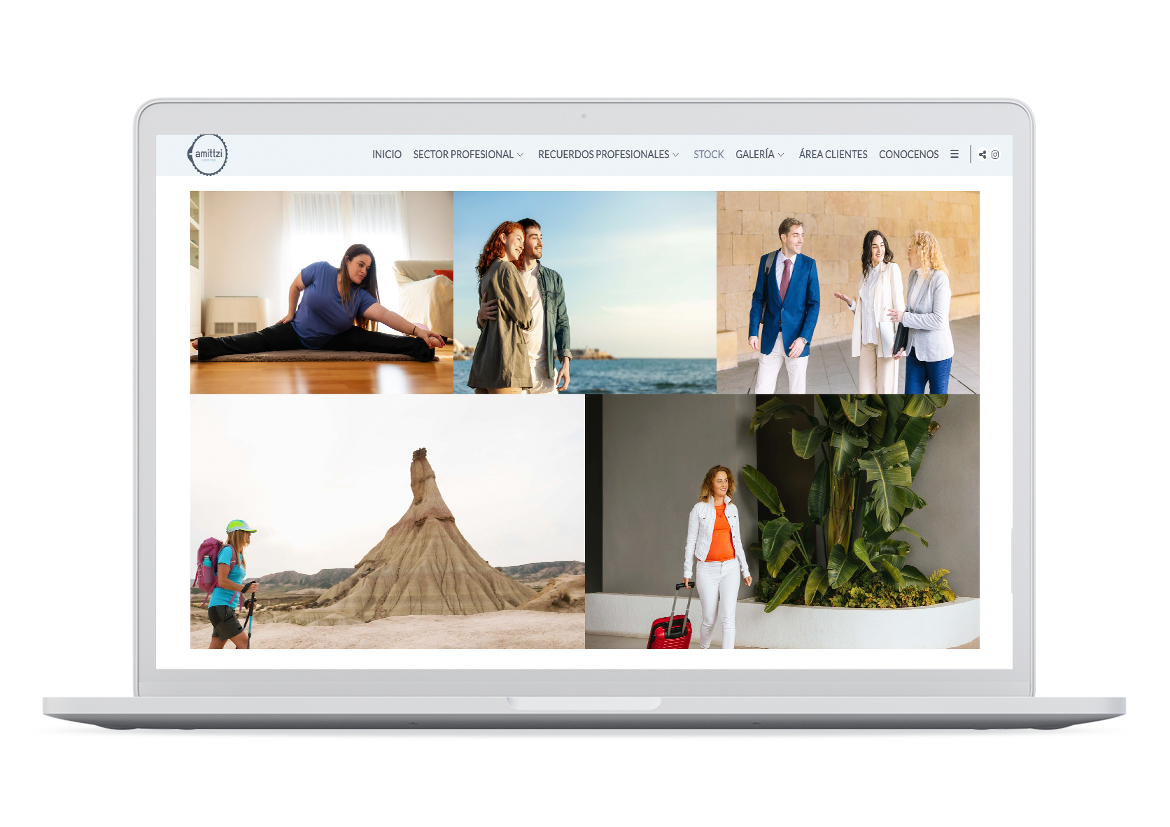
Behind Amittzi Foto Pro is a photographer specialising in lifestyle, advertising and stock photography, with a portfolio that stands out for the natural feel of its scenes and the wide variety of themes it covers. On his website, you can find collections dedicated to gastronomy, sport, tattoos, sewing, van life and small businesses, always with an intimate approach designed to depict real-life situations that companies, agencies and the media can use.
His website, developed with Arcadina, allows him to organise all these collections clearly and makes it easy for clients and collaborators to discover the breadth of his work. As well as showcasing his professional portfolio, he uses the blog to share projects, experiences and photo shoots, thereby strengthening his positioning and demonstrating how a well-structured website can become an excellent showcase for those wishing to combine stock photography with other commercial services.
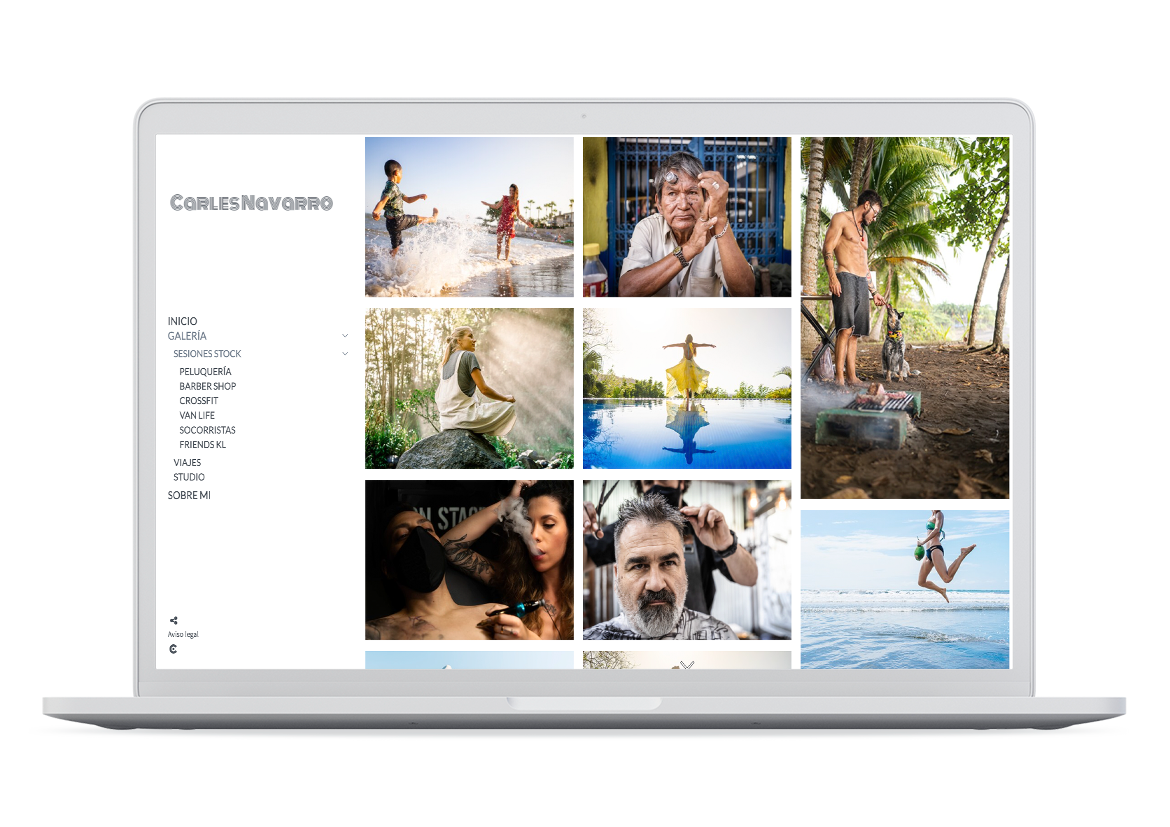
Carles Navarro is a Barcelona-based photographer specialising in lifestyle, advertising and commercial photography. His work focuses on creating authentic images that depict professions, everyday activities and lifestyles, always with a natural and meticulous approach. His portfolio features shoots related to sport, hairdressing, barbering, tourism and the business world, demonstrating a great ability to adapt each project to the needs of brands and agencies.
Through his website, created with Arcadina, he presents his various photographic collections in an organised manner, enabling potential clients to familiarise themselves with both his style and the different areas in which he works. Many of these images are designed to have a long commercial life, whether through stock photo agencies or advertising campaigns, making his website a professional showcase from which to present a strong portfolio and attract new business opportunities.
4# Fotógrafo Gourmet

Fotógrafo Gourmet specialises in food and product photography, two disciplines where visual quality is essential for capturing the client’s interest. From his studio, he creates images for restaurants, chefs, food brands and companies in the sector, paying close attention to every detail of lighting, composition and presentation to convey the appeal of each dish. His portfolio demonstrates how a well-executed photograph can become a powerful tool for communication and sales.
His website, developed with Arcadina, brings together a carefully curated selection of projects that showcase his style and expertise in commercial photography. Many of the images he produces could feature in stock photo libraries due to their timeless nature and their suitability for advertising campaigns, publications or specialist media. At the same time, the website enables him to strengthen his personal brand and demonstrate to potential clients the quality of work tailored to the gastronomic sector.
5# Xavi Arias Photo Travel
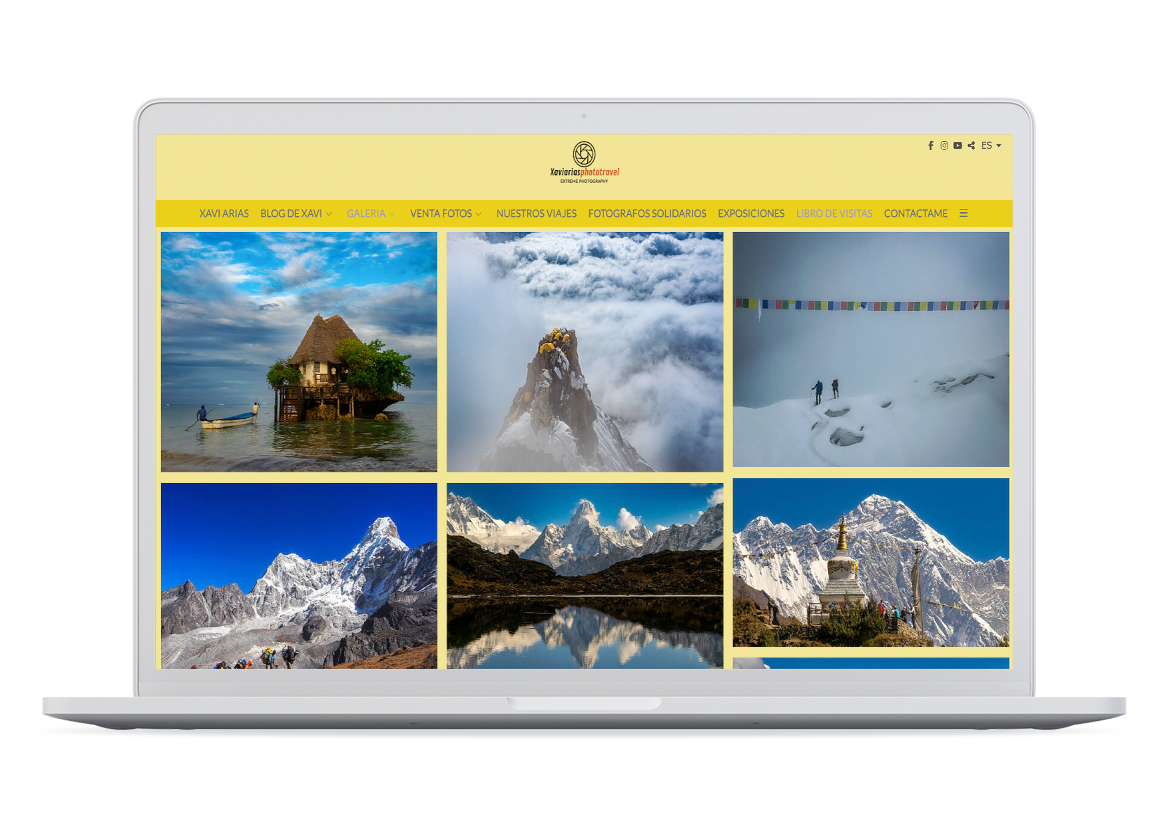
Xavi Arias is a photographer specialising in travel, nature and landscape photography, with a portfolio that invites viewers to discover destinations through a highly personal lens. His images capture the essence of each place through natural settings, urban corners and carefully composed travel scenes, conveying the beauty and character of every location. This type of photography is particularly appealing to publications, tourism promotion campaigns and projects related to the world of travel.
Through his website, created with Arcadina, he presents a selection of his best work in a visually appealing and organised manner, making it easy for visitors and potential clients to explore his various collections. Many of his photographs have great potential for commercial use as stock images or for the direct sale of licences, demonstrating how a professional website can serve as an excellent showcase to raise the profile of an extensive photographic archive and open up new business opportunities.
6# Carlos Ruiz Durante
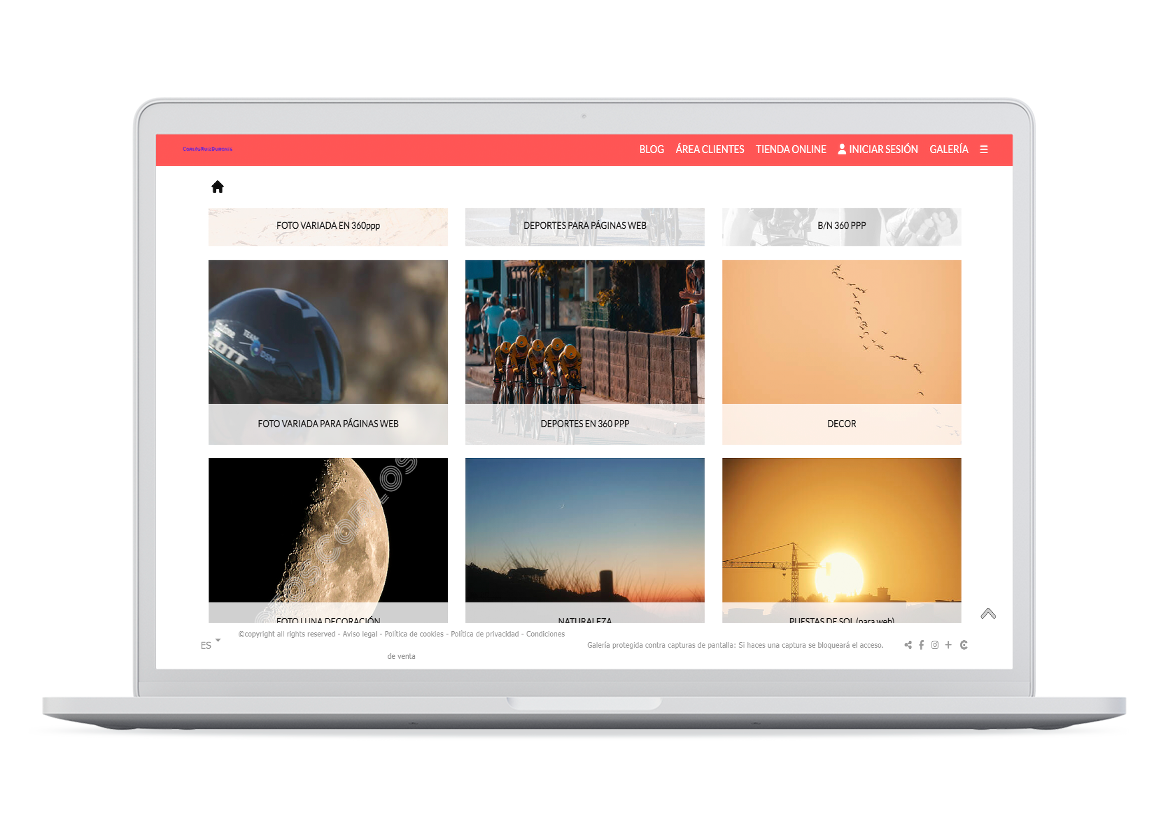
Carlos Ruiz Durante is a photographer specialising in nature, landscape and travel photography. His portfolio brings together a wide collection of images captured in different corners of the world, where light, colour and composition take centre stage. Through his photographs, he invites the viewer to discover the beauty of natural and urban environments, creating a photographic archive with a distinct artistic and documentary character.
His website, created with Arcadina, demonstrates that not all photographs with commercial potential need to be sold through stock photo agencies. In his case, he has chosen to sell his photographs directly via his own online shop, offering both digital images and prints. It is a superb example of how a well-organised photographic archive can become a supplementary source of income, whilst maintaining greater control over the presentation of the works, pricing and customer relations.
What can we learn from these stock photographers?

Beyond the quality of their images, all the photographers we’ll look at below share a number of habits and strategies that have enabled them to stand out in a highly competitive market. Analysing their approach can help you understand that selling stock photos isn’t just about having a good camera or mastering photographic technique, but also about understanding how this type of business works.
Here are some of the most interesting lessons you can apply to your own work.
Specialising makes all the difference
Although there are photographers with very varied portfolios, many of those who achieve the best results have specialised in a specific subject area. Some focus their work on the business world, others on lifestyle, gastronomy, health, nature or technology. This specialisation enables them to better understand their clients’ needs and create much more comprehensive and coherent collections.
Furthermore, working within the same sector makes it easier to spot trends, plan new shoots and build a reputation within a specific niche. In a market with millions of photographs available, specialising can be an excellent way to stand out and increase your chances of selling stock photos.
Think like a client before taking the photograph
One of the biggest mistakes when starting out in stock photography is creating images with only artistic appeal in mind. However, those who buy photographs are looking for images that help them convey a message, illustrate an article, promote a product or reinforce an advertising campaign.
That is why, before taking a photograph, it is worth asking yourself who might use it and for what purpose. Factors such as leaving space to include text, depicting everyday situations or conveying specific emotions can significantly increase the commercial value of an image.
Very often, the photographs that work best are not the most spectacular ones, but those that simply meet a real need of the buyer.
Building a comprehensive and consistent portfolio
Photographers specialising in stock photography rarely achieve good results with just a few images. They usually build their portfolio gradually, constantly adding new photographs and developing collections that are thematically linked.
A comprehensive catalogue offers more opportunities to appear in image bank searches and enables you to reach a larger number of clients. Furthermore, maintaining a consistent thematic focus conveys a more professional image and makes it easier for buyers to find several useful photographs within the same collection.
It is not a question of accumulating thousands of images indiscriminately, but of always prioritising quality and creating a portfolio designed to add value for those who will use it.
Maintaining a recognisable visual identity
Although stock photography has a clearly commercial focus, many photographers manage to ensure their images retain a distinctive style. The use of specific lighting, consistent editing, a particular way of composing scenes or the choice of certain colours make their photographs easily recognisable.
Having a visual identity not only helps you stand out from other stock photographers, but also brings consistency to your portfolio and conveys a greater sense of professionalism. Over time, that personal style can become one of the key elements that make your work stand out from the competition.
Ultimately, success in stock photography does not depend on a single image, but on the ability to build a useful, coherent catalogue designed to meet the needs of the market without compromising your own approach to photography.
How to boost sales of your photographs beyond stock image agencies

Stock image banks are an excellent tool for starting to sell stock photos and reaching buyers all over the world. However, relying solely on these platforms also means accepting their commissions, terms of use and licensing systems. Furthermore, you’re competing with millions of photographs, which makes it increasingly difficult to stand out.
For this reason, many photographers combine selling through stock photography agencies with their own sales channel.
Having a professional website allows you to showcase your images without relying on third-party algorithms, strengthen your brand and offer a much more personalised experience to your customers. Having an online shop on your own website also means having greater control over your business. You can set your own prices, organise galleries by theme, sell digital photographs or prints, and manage sales directly, without intermediaries.
If, on top of that, you use a platform designed specifically for photographers, the whole process becomes much simpler. For example, Arcadina’s public galleries for selling your photos let you create an online shop where customers can browse photographs, purchase them and download them automatically, whilst you retain control over how your images are presented and how orders are managed.
In reality, it’s not a question of choosing between stock photo agencies and your own website. Both options can complement each other perfectly. Whilst agencies help you gain visibility and reach new buyers, your website allows you to strengthen your brand, offer a better shopping experience and build a more profitable business in the long term.
Start selling stock photos today
Selling stock photos remains an excellent opportunity for photographers who wish to diversify their income and get more out of their work. Although results don’t come overnight, building a high-quality portfolio tailored to market needs can become a long-term source of supplementary income.
As you’ve seen throughout this guide, success doesn’t depend solely on taking good photographs. It’s also important to choose a specialism, maintain a consistent posting schedule, understand what buyers are looking for, and analyse the work of other photographers to keep learning and improving.
Similarly, more and more professionals are combining the sale of images through stock photo agencies with their own website, where they can showcase and market their work. This strategy allows them to increase their visibility, strengthen their personal brand and have greater control over their sales and client relationships.
Now it’s your turn. Start by creating your first stock photography portfolio, experiment with different themes and discover which ones generate the most interest among buyers. With patience, perseverance and a good strategy, you’ll be able to build a catalogue that continues to generate opportunities long after you’ve pressed the shutter button.
If, as well as selling your photographs through stock image agencies, you want to set up your own sales channel, Arcadina provides all the tools you need. Create a professional website, organise your galleries, sell digital photographs or prints directly to your customers, and manage your business all in one place. Start your free trial today and discover everything Arcadina can do for your photography business.
And you – have you ever tried selling stock photos? What has your experience been like, or what questions would you like answered? We’d love to hear from you in the comments.
Arcadina goes with you
Fulfil your dreams and develop your career with us. We offer you to try our web service free for 30 days. And with no commitment of permanence.
Arcadina is much more than a website, it is business solutions for photographers.
If you have any queries, our Customer Service Team is always ready to help you 24 hours a day, 7 days a week. We listen to you.
Free trial · No card · No lock-in
Build your photography business online
Sales with no commission · Everything in one plan · 30-day free trial, no card