
Optimise your creativity: 8 strategies for a flawless photographic workflow
When your photography business starts to take off and your workload increases, one of the biggest risks is becoming overwhelmed. At that point, creativity is no longer the problem and time management becomes the real bottleneck. To avoid this, the first strategic decision you need to make is to define a clear, structured and sustainable photography workflow. A well-designed workflow allows you to transform long hours into truly productive days. It’s not about working fewer hours, but working better. The goal is that, even if you spend ten hours in the studio, your energy is not diluted by repetitive, low-value tasks, such as answering calls in a disorderly manner, drafting contracts from scratch for each client, or dedicating an entire day to a single project due to a lack of planning.
When there is no system in place, each task requires a new decision, and that leads to wear and tear, mistakes, and delays. In contrast, an optimised photography workflow establishes clear processes for each phase of the business: from client acquisition and communication to editing, delivery, and archiving of material. This allows you to stay in control even when your workload increases. If you want your photography business to become increasingly profitable and for your hours in front of the computer or camera to have a real impact, you need to organise your workflow with a professional vision. That’s why, in this article, we’re going to share 8 practical tips for creating an efficient, scalable and results-focused photography workflow. Pay special attention to the last two recommendations: they are the ones that make the difference between working hard and working smart.
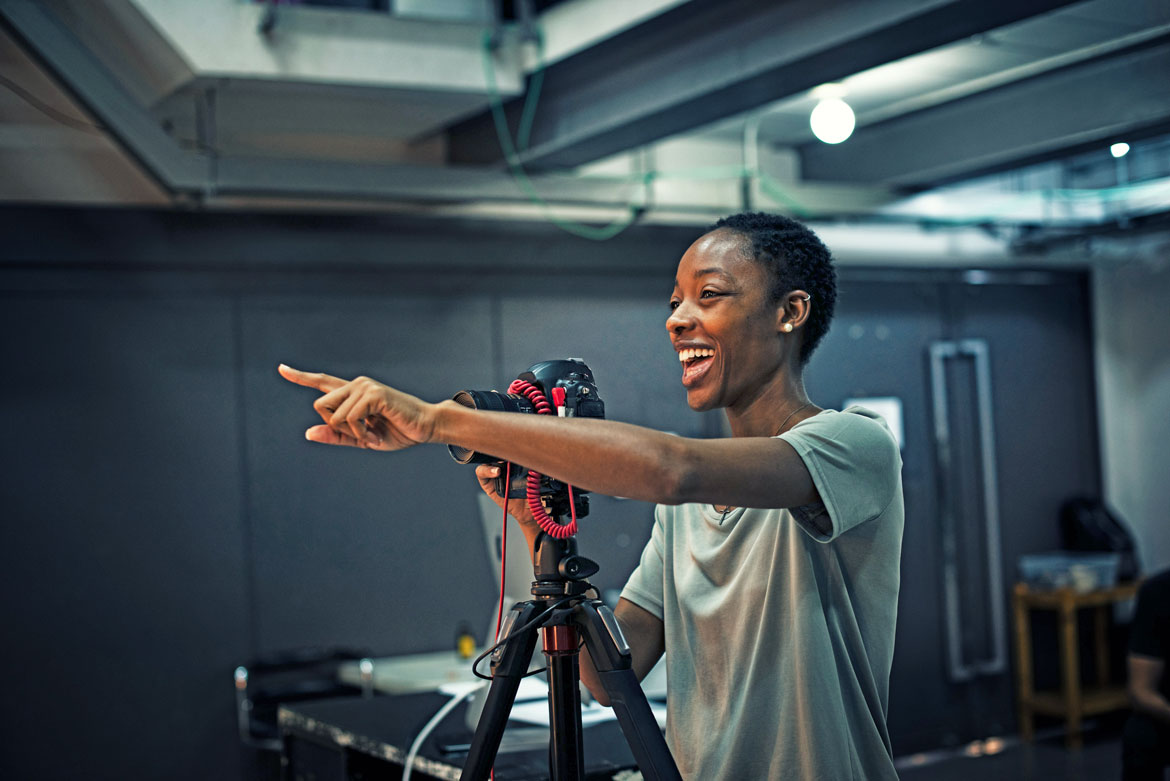
Turn your routine into results: optimise your day-to-day with a professional photography workflow.
Contenido
- Why is optimising your photography workflow key to scaling your business?
- 8 professional habits to save time and focus on your photography work
- 1# Structure your day to work more efficiently
- 2# Establish a communication system with your customers to save time and increase efficiency
- 3# Plan each photo shoot in detail so you don’t have to improvise
- 4# Optimise your editing processes to work faster and more accurately
- 5# Save time and become more organised by automating communication with your clients
- 6# Keep your equipment ready and up to date to optimise photo shoot time
- 7# Automate tasks and free up time for what really matters
- 8# Create an optimised photographic workflow for each photo shoot
- Perfect your photography workflow to save time and increase efficiency in every session
- Arcadina goes with you
- Getting started with Arcadina: a practical guide for enterprising photographers
- How to get more customer reviews? 5 key tactics for photographers
- Tools used by graduation photographers to sell more shoots
Why is optimising your photography workflow key to scaling your business?

The photography workflow can be understood as the system that supports your photography business. It is the set of processes that are activated from the moment you contact a client to the final delivery of the images. It is not limited to the moment you press the shutter button; it also includes business communication, session planning, time management, editing, file organisation, and how you present the finished work.
In theory, this process should be perfectly defined in any photography business. However, in practice, many photographers operate without a clear method, resolving each project as they go along. This often translates into endless days, repeated tasks, constant decisions, and a feeling of lack of control that ends up affecting both productivity and profitability.
When there is no structured workflow, time is wasted on unnecessary processes, energy is invested in low-value tasks and, most critically, opportunities for improvement and growth are missed. Without a well-established sequence of actions, without measuring times or evaluating results, it is very difficult to know if your way of working is really efficient or if you are simply putting out fires.
A clear and well-organised photography workflow allows you to work with greater focus, maintain a consistent standard of quality, and offer a more professional experience to your clients. It also helps you identify bottlenecks, optimise resources, and free up time for what really matters: creating and growing your photography business. Before we get into those tips, it’s important to understand more deeply what a photography workflow really is and why it makes a difference.
Beyond the photos: what your photography workflow is and why it matters
Simply put, a photography workflow is the system that organises everything that happens in your business, from the first contact with a potential client to the final delivery of the images and the completion of the project. It is not a one-off action, but a complete journey that defines how you work, how you organise yourself, and how the experience of hiring you as a photographer is lived.
It can be understood as an operational map that marks each stage of the customer relationship. Thanks to this map, you don’t improvise decisions or tasks: you know what to do, when to do it, and with what objective at each stage of the process. This allows you to stay in control, reduce errors, and work more efficiently, even when managing multiple projects at the same time.
A well-structured photographic workflow includes processes such as client acquisition and initial communication, the clear presentation of your services through portfolios, websites or informative content, and the detailed planning of each session. This planning ranges from preparing the script for the shoot to organising the equipment and working times.
The workflow continues during the photo shoot, with the technical and creative management of the shots, and extends to the post-production phase, where defined processes come into play to select, edit, classify, and archive the images. Finally, it includes the efficient delivery of the final product and follow-up, which is key to generating new business opportunities.
In short, the photographic workflow is the structure that underpins your professional activity and turns your creative talent into an organised, profitable and scalable service.
8 professional habits to save time and focus on your photography work

When planning all these actions, it is essential to adopt a mindset of continuous optimisation. It is not just a matter of defining a list of tasks, but of analysing each step with a clear dual objective: to improve the customer experience and reduce the time you need to devote to each project without sacrificing service quality. A good photographic workflow not only organises your daily operations, but also allows you to be more efficient, predictable and professional.
The key is to design processes that work systematically. When your tasks are well structured, you can offer clearer and more consistent service, respond more quickly and avoid improvisations that consume time and energy. At the same time, optimising each phase of the process allows you to free up hours of work that you can invest in creativity, training or growing your business.
It is important to understand that a workflow is not static. Once you have defined your task system, the next step is to review and refine it progressively as you put it into practice. Analysing what works, what is unnecessarily repetitive and what can be automated will help you adjust each process to get the most out of your working hours.
This approach will allow you to work with greater control, reduce operational stress, and maintain a consistent standard of quality, even when your client volume increases. Instead of reacting to each project, you will manage them methodically.
Below, we will share with you 8 practical recommendations that will help you improve your photography workflow, optimise your time, and raise the professional level of your day-to-day work.
1# Structure your day to work more efficiently
When starting a new workday, it is essential that you have a clear and structured overview of all the tasks ahead of you. Taking a few minutes at the beginning of the day to review your schedule allows you to know exactly which appointments to attend, which photo shoots to deliver, and which administrative tasks require your attention. This initial clarity reduces improvisation, prevents wasted time, and allows you to tackle each task with focus and efficiency.
The key to making this work consistently is advance planning. Taking a moment to organise your week, for example on Friday afternoons, allows you to distribute your sessions, deliveries, and administrative tasks in a balanced way. This prevents each day from becoming a constant improvisation and allows you to devote your energy to what really matters: creation and customer service.
Once you have all your tasks defined, using tools such as Google Calendar or similar applications will allow you to keep your schedule up to date and available, even from your mobile phone. This not only keeps you organised, but also makes it easier to make last-minute adjustments without losing control of your planning.
In addition, if you use your Arcadina website, you can connect your online booking system directly to your calendar. This way, each new session booked by your clients is automatically synchronised, avoiding double bookings or confusion. This tool greatly simplifies daily management and allows you to focus your time on photography and customer service.
In the following article in our help section, you will find a step-by-step tutorial on how to connect your booking system to Google Calendar or other digital calendars, ensuring that your workflow is truly efficient and professional.
2# Establish a communication system with your customers to save time and increase efficiency
When a potential customer is interested in your services, one of the first challenges is to clearly explain how you work and answer their initial questions. There are multiple communication channels you can use for this: e r phone calls, emails, WhatsApp messages, creating an information dossier, service sections on your website, articles on your blog, among others.
Each of these methods has its advantages, but the goal should always be the same: to inform your customers completely and efficiently, minimising the time you spend answering repetitive queries. Although direct communication such as phone calls or WhatsApp can be useful, relying exclusively on these methods can be inefficient and take up hours of your day that you could spend on production or managing other projects.
A much more effective strategy is to make the most of the digital tools at your disposal. For example, Arcadina’s websites allow you to create comprehensive service sections, with an online portfolio, detailed descriptions, customer reviews, and information pages that automatically answer frequently asked questions. By providing all this information in a clear and accessible way, users can understand your services for themselves, significantly reducing the need for direct contact to clarify doubts.
What’s more, this approach not only saves you time, but also increases customer acquisition: many people looking for photographers would not contact you if they couldn’t find comprehensive information on your website. In this way, you combine operational efficiency with a marketing strategy that attracts customers in an autonomous, professional and scalable way.
3# Plan each photo shoot in detail so you don’t have to improvise
Not all photo shoots are approached in the same way: some are simple and flexible, while others, such as newborn shoots or shoots with multiple costume changes, require much more precise planning. For these types of complex shoots, it is essential to have a detailed script that outlines the shoot from start to finish. Without this guide, it is easy to waste time, improvise excessively or even fail to get all the shots you planned due to time constraints.
The key is to spend time beforehand organising the day of the shoot. This includes defining the order of the sets, establishing approximate times for each shot, and anticipating any necessary breaks or adjustments. By documenting all this information in a script, you will have a clear roadmap to follow on the day of the shoot. This will allow you to work with confidence, avoid unnecessary improvisation, and ensure that no important details are overlooked.
In addition, a well-crafted script serves as a practical reference: you will be able to assess in real time whether the planning is working and make adjustments on the fly without compromising the efficiency of the session. Over time, these scripts become a strategic tool: they serve as a basis for planning future similar sessions, streamline preparation, and allow you to replicate procedures that have proven successful.
Planning your photo shoots in detail not only ensures that you make the most of every minute of the shoot, but also improves the quality of your work, reduces stress, and allows you to offer a professional and organised experience to your clients. A well-structured script is therefore an investment of time that translates into faster, more reliable, and more consistent results.
4# Optimise your editing processes to work faster and more accurately
Within your photography workflow, editing photos is one of the most time-consuming tasks if not organised properly. Post-production is essential to delivering a quality final product, but it requires a balanced approach: spending unlimited hours perfecting every detail does not always translate into greater perceived value for the client. Many photographers invest too much time in meticulous adjustments that their clients, in most cases, do not notice or appreciate.
The key is to define in advance the level of perfection you want to achieve for each type of delivery. This will allow you to work more efficiently, focusing on what really impacts image quality and customer experience, without falling into the trap of unnecessary perfection that slows down the entire process. Organising and planning your editing sessions helps you reduce downtime, avoid distractions, and maintain a consistent and productive workflow.
Another key aspect to consider is the cost of your time. The more time you spend editing, the lower the actual profit from your work will be, especially if your rates do not reflect those additional hours. That is why it is advisable to set clear limits on each project: define how much time you will invest in post-production and adjust your prices so that your profitability is not compromised.
Optimising editing hours does not mean sacrificing quality, but rather managing your time strategically. A planned workflow, with clear goals for perfection and defined delivery times, will allow you to deliver high-quality photographs, keep customers satisfied, and ensure that every hour of your work truly contributes to the profitability of your business.
5# Save time and become more organised by automating communication with your clients
From the first contact with a client interested in your services to the completion of their photo shoot, constant communication is key. Throughout this process, you will send numerous emails for different purposes:
- Before they become a customer: to inform them about your types of photo shoots, availability of dates, follow up if they are undecided, send quotes, contract terms and conditions, and any clarification necessary for them to make an informed decision.
- Once confirmed as a customer: communicate dates and details of the session, send reminders beforehand, notify them when the photographs have been sent, inform them about future promotions or new services, and maintain professional contact to build loyalty.
Managing these emails manually can be extremely time-consuming and take away from valuable time that could be spent on creation and direct customer service. The most effective solution is to create predefined email templates that address each of these points. With these, you only need to customise the specific details for each customer and send the message, which greatly simplifies the process and ensures consistent and professional communication.
Our websites make this task easier by allowing you to send personalised emails and WhatsApp messages directly from the Management Panel. In addition, you can create your own templates tailored to your style and type of customers, thus optimising your workflow and reducing the time spent on administrative tasks.
This way, communicating with your customers becomes a quick, orderly, and professional process, while increasing customer satisfaction and improving the efficiency of your photography business. In the following article in our help section, we show you step by step how to set up these templates and automate your messages.
6# Keep your equipment ready and up to date to optimise photo shoot time
For a photographer, the equipment and software they use on a daily basis are not just tools: they are extensions of their creativity and productivity. Having the right equipment and optimised software not only allows you to capture and edit professional-quality images, but also improves efficiency, saves time, reduces technical frustrations and ensures impeccable service for customers.
Before tackling a day of photo shoots, it is essential to spend time preparing both your physical and digital equipment. This includes several key aspects:
- Equipment maintenance: clean lenses with specific cloths and use compressed air to remove dust and particles that can affect image quality. Check the camera sensor and, if you detect recurring spots, consider professional cleaning.
- Updates: keep your camera’s firmware up to date to take advantage of performance improvements and new features.
- Accessory organisation: prepare charged batteries, formatted memory cards, and all the accessories you need, placing them in a specific location to avoid wasting time during the session.
- Computer optimisation: ensure that your computer equipment is up to date, organised, and has sufficient storage space. Your computer should be an efficient extension of your studio, capable of handling file editing and management without delays or interruptions.
These habits not only ensure that each session runs smoothly, but also allow you to focus on the creative side of your work rather than solving last-minute technical problems. In other words, ready equipment and an organised digital environment transform your workflow, reduce downtime and enhance the quality of the service you offer your clients.
7# Automate tasks and free up time for what really matters
Once you have completed the photo shoot and finished all the editing processes, it might seem that your job is simply to send the images to the client. However, simply sharing a download link means missing out on important opportunities to generate new revenue and build customer loyalty.
The end of a project should not just be the delivery of the product, but the beginning of a cycle of interaction that can lead to future sales. To take advantage of this potential, it is advisable to implement systems that automate part of this process and offer a more professional and complete experience to the client. For example, public or private sales galleries allow your clients to purchase additional prints, derivative products, or even photographs from other sessions, without you having to intervene directly in each transaction. This not only increases your income, but also reinforces the perception of your professionalism.
If you integrate an online session booking system into your website, your customers will be able to manage new appointments quickly and independently. This functionality reduces the administrative burden, avoids the need for constant email exchanges or phone calls, and makes it easier for customers to hire you again without friction.
Together, these tools allow you to transform the final delivery phase into a strategic process that saves time, generates new business opportunities, and improves the customer experience. In this way, you not only deliver a high- r quality product, but you also build long-term relationships and increase the profitability of each customer who passes through your studio.
In addition, having a system that generates contracts and invoices almost automatically will allow you to significantly reduce the time spent on administrative tasks, freeing up valuable hours to focus on the creative and productive side of your business.
Private customer galleries
Although we have mentioned it before, it is worth emphasising again: private client galleries offer much more than just viewing photos from the session. Thanks to them, your clients can:
- Select the images that will make up their album.
- Download the retouched photographs.
- Purchase copies or prints in different products and special formats.
- Choose additional photographs according to their preferences.
- Share the gallery link with family or friends.
- Purchase pre-determined packs quickly and easily.
The possibilities are virtually endless, and each of these options represents an opportunity to increase your revenue and improve the customer experience. By offering an organised, accessible and visually appealing system, you not only make it easier to purchase additional products, but also reinforce the perception of professionalism of your service.
A well-designed private gallery is not just a space to display photos: it is a strategic sales and loyalty tool that transforms the final delivery into an opportunity to generate more value for both your customers and your business.
>> Delivering images to customers: the secret to increasing your sales
Public customer galleries
Something similar happens with public galleries. If you like to capture landscapes, document trips, explore nature or create stock photographs in your spare time, you can now sell these images independently of your regular sessions through your online shop.
The great advantage of this system is twofold: on the one hand, you will have virtually no involvement in the sales process; on the other, interested customers can make their purchases at any time and from any device: mobile, tablet or PC. This turns your photographs into a passive source of income, making the most of your creativity without adding extra workload to your daily schedule.
Furthermore, offering your images through public galleries allows you to reach a much wider audience, increase your visibility and professionalise your online presence, turning each photo into a scalable business opportunity.
Booking calendar
To further automate tasks and save time, there is nothing better than implementing a booking calendar on your website. With it, your customers can check your available schedules, select the day and time that suits them best, and make the payment directly from the platform, without you having to intervene in the entire process.
>> 8 advantages of Booking that will make this Arcadina service irresistible
But the possibilities don’t end there. You can also offer bookings without a specific date and time, perfect for special sessions such as newborn shoots or as gifts at any time of the year. This type of booking allows your customers to purchase flexibly and ensures you advance income, while simplifying your schedule management and optimising your workflow.
With this functionality, your website is no longer just a showcase for your work, but becomes an automated sales tool that works for you 24 hours a day, facilitating bookings, payments and session organisation in a professional and efficient manner.
Contracts
If you already have a booking calendar, another tool that will save you time, offer a more comprehensive service and protect your business is the ability to generate contracts directly from your website. This feature uses templates endorsed by professional associations, ensuring that your agreements are clear, legal and professional.
With this solution, your clients will receive all the information about their contract by email and will be able to sign it digitally, eliminating the need for physical exchanges or complicated manual procedures. In addition, this helps you keep an organised and secure record of all your sessions, strengthening the trust and professionalism of your service.
If you want to know all the details and learn how to implement this feature to optimise your workflow, be sure to check out the following article on our blog.
>> You can now create and send contracts to your customers from Arcadina!
Invoices
Another tool that will allow you to optimise your photography workflow is the ability to generate invoices directly from your management panel. With this feature included in the Manager Plan, you can quickly and easily issue documents for the sale of your services and photographs, without the need to duplicate tasks or rely on external systems.
In addition to saving you valuable time in administrative management, this option allows you to keep all your business information centralised and organised, making it easier to track customers, sales and payments. By having your invoices and records in one place, your financial management becomes clearer, more efficient and more professional, freeing you up to focus on what really matters: the creation and production of your photographs.
>> Optimise and control your expenses with Arcadina’s invoicing system
8# Create an optimised photographic workflow for each photo shoot
When defining your photography workflow, it is important to bear in mind that not all sessions are managed in the same way. Although at first glance the processes may seem similar, the reality is that each type of session requires a tailored approach, especially when client profiles differ. For example, the steps to follow in a wedding reportage will not be the same as in a pre-communion session, both in terms of preparation, taking photos and post-production.
For this reason, although it may take more time at first, it is advisable to create a specific work plan for each type of session. This involves clearly defining the stages: from initial communication with the client, planning the day of the session, and equipment logistics, to the editing and final delivery processes. Each workflow must take into account the particularities of the project, the estimated times, and the client’s needs, thus ensuring a more professional and efficient service.
Once you have all your plans defined and in place, you will notice a significant reduction in the execution times for each process. By knowing what the next step is at all times, you eliminate doubts, improvisation, and delays, and your workday becomes much more organised and predictable. In addition, having clear workflows for each type of session allows you to improve the client experience, as each interaction is conducted in a professional, orderly, and consistent manner.
In short, taking the time to plan and adapt your workflows from the outset is an investment that translates into efficiency, less stress and a more profitable and professional photography business.
Perfect your photography workflow to save time and increase efficiency in every session
If you set out to improve your photography workflow, not only will you offer your clients a much more organised service, where every detail is under control, but you will also gain valuable hours each week. These extra hours can be used to do more sessions and increase your income, or, at certain times of the year, to rest and take care of yourself, balancing work and well-being.
Don’t put it off any longer, now is the ideal time to take a break, analyse how your business has been doing and implement strategic improvements that will allow you to fine-tune the results of your digital photography business. Optimising your photography workflow is one of the most effective ways to increase your productivity, reduce operational stress and prepare your studio for a more profitable and organised year.
If you don’t yet have a professional Arcadina website or want to explore all the solutions we offer for photographers, we invite you to try our services free of charge for 14 days. This will allow you to see how our tools, from online bookings to sales galleries and contract and invoice automation, can help you optimise your workflow, save time and take your photography business to the next level.
Today we want to share with you the testimony of Enrique Medrano from Tonos Fotógrafos, a fantastic photographer and friend who knows very well what it means to have a correct workflow in his various photographic businesses.
And to finish this article that we think you should read carefully before the end of the year, we would like to ask you a question: Have you used any kind of photographic workflow so far? We’d love to read your answer in the comments.
Arcadina goes with you
Fulfil your dreams and develop your career with us. We offer you to try our web service free for 14 days. And with no commitment of permanence.
Arcadina is much more than a website, it is business solutions for photographers.
If you have any queries, our Customer Service Team is always ready to help you 24 hours a day, 7 days a week. We listen to you.

Good points about improving workflow — a lot of photographers underestimate how much organization affects the final result. I like how the article breaks things down into practical steps instead of just theory.