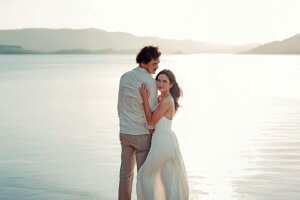
Boudoir photography: what it is and strategies to fill your calendar with sessions
Boudoir photography is an intimate, elegant photo session, usually in lingerie or suggestive clothing, designed to help the person being photographed look and feel good about their body: it suggests rather than shows explicitly. To fill your calendar with boudoir sessions, you need to explain clearly what it is (and what it isn’t), show carefully curated examples on your website, build trust from the very first contact and deliver the photos with complete discretion, for example in a password-protected private gallery. Below you’ll find the most common challenges and how to solve them, several boudoir photographers worth following and tips for the session itself.
Boudoir shoots are one of the most creative and emotional specialties in portrait photography. They celebrate the real beauty and natural sensuality of everyday people, far from the unattainable stereotypes of advertising, and they offer a sophisticated, elegant and deeply personal experience. It’s not just about taking pictures: it’s about changing the way someone sees themselves. However, even though many photographers are truly passionate about this specialty, selling boudoir photo sessions can be a real challenge. It’s an intimate, exclusive session where mastering light and posing isn’t enough. You have to communicate the emotional value of the service, build trust from the first message and design an experience your client will want to live.
The problem is that many professionals don’t know how to promote it and simply post beautiful images on social media, with no strategy behind them. That’s where the frustration begins: inquiries that never turn into bookings, empty calendars and the feeling that boudoir “doesn’t sell.” The reality is different: boudoir does sell, and it sells very well, when you know how to do it. In this guide we explain exactly what boudoir photography is and where it comes from, which styles exist, the most common obstacles to selling it, how to set your prices and how to prepare each session step by step.
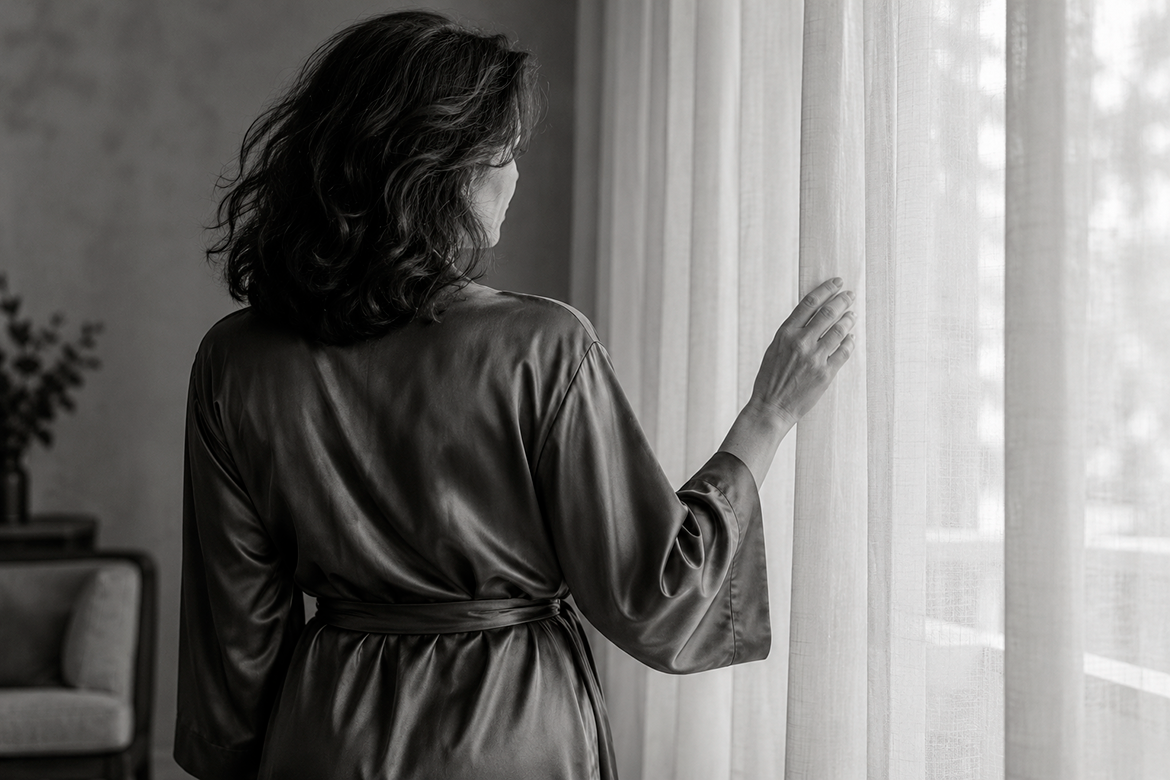
Captivate, move and sell: the art of offering boudoir from your website.
Boudoir photography: what it is and why more and more people are choosing it
In boudoir shoots, the goal goes far beyond getting pretty pictures. It’s about capturing the essence, attitude and natural sensuality of the person in front of the camera, and their unique way of expressing themselves. That’s why the photographer needs to work with sensitivity, elegance and an artistic eye capable of highlighting what makes each client special.
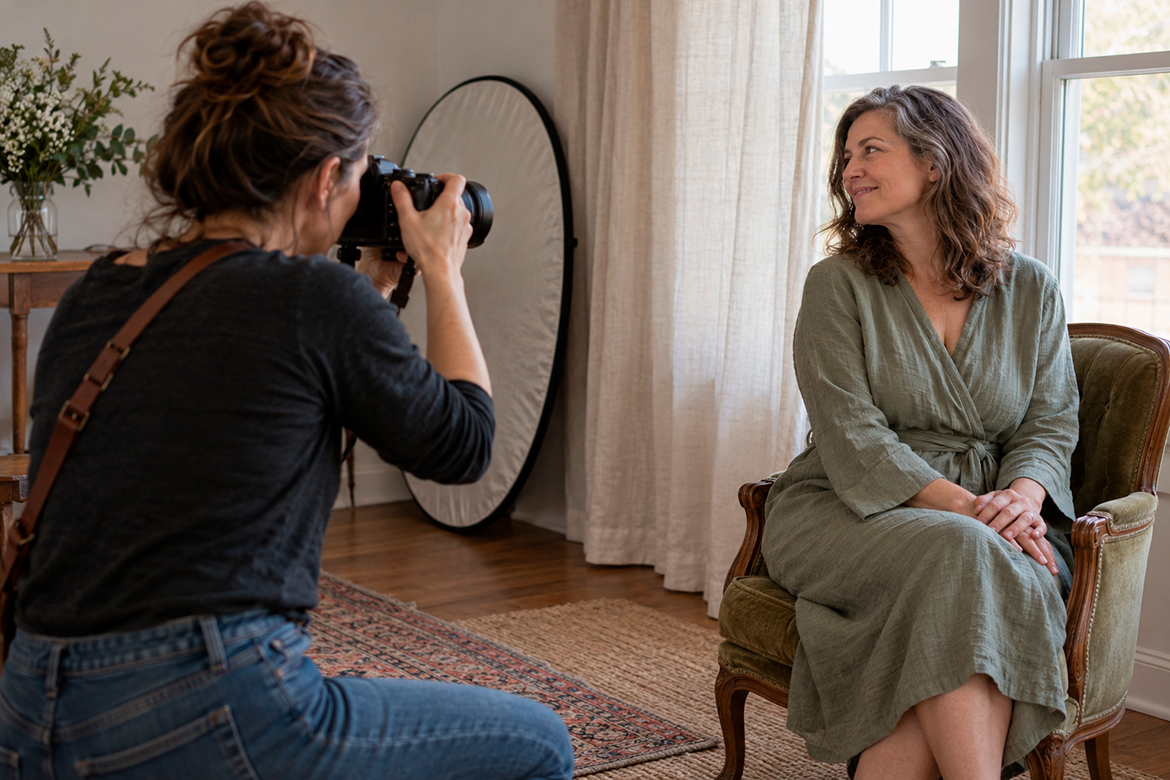
Unlike other kinds of portraits, most boudoir clients aren’t professional models. Many arrive feeling insecure, embarrassed or afraid they won’t know how to pose, and that’s where the photographer’s role becomes decisive. It’s essential to:
- Direct clearly and gently.
- Advise on wardrobe, makeup and styling.
- Create a safe, intimate atmosphere.
- Build trust from the very first minute.
When someone feels truly comfortable, the magic happens: their confidence shows in the image, and the result is powerful and natural.
So why are more and more people taking the plunge? Because boudoir photography is no longer reserved for lingerie models. Today it’s chosen by women who want to celebrate a milestone birthday, a period of change, a pregnancy, a recovery or simply making peace with their own body. It’s also chosen by people looking for a very personal gift for their partner before the wedding or for an anniversary.
For many clients, the most valuable part isn’t just the photos but the experience: time devoted entirely to them, with hair and makeup and someone guiding them to see themselves as they never have before. Thanks to this evolution, boudoir sessions have become a form of self-affirmation and empowerment, open to anyone who wants to look and feel extraordinary.
The origin and meaning of the word boudoir
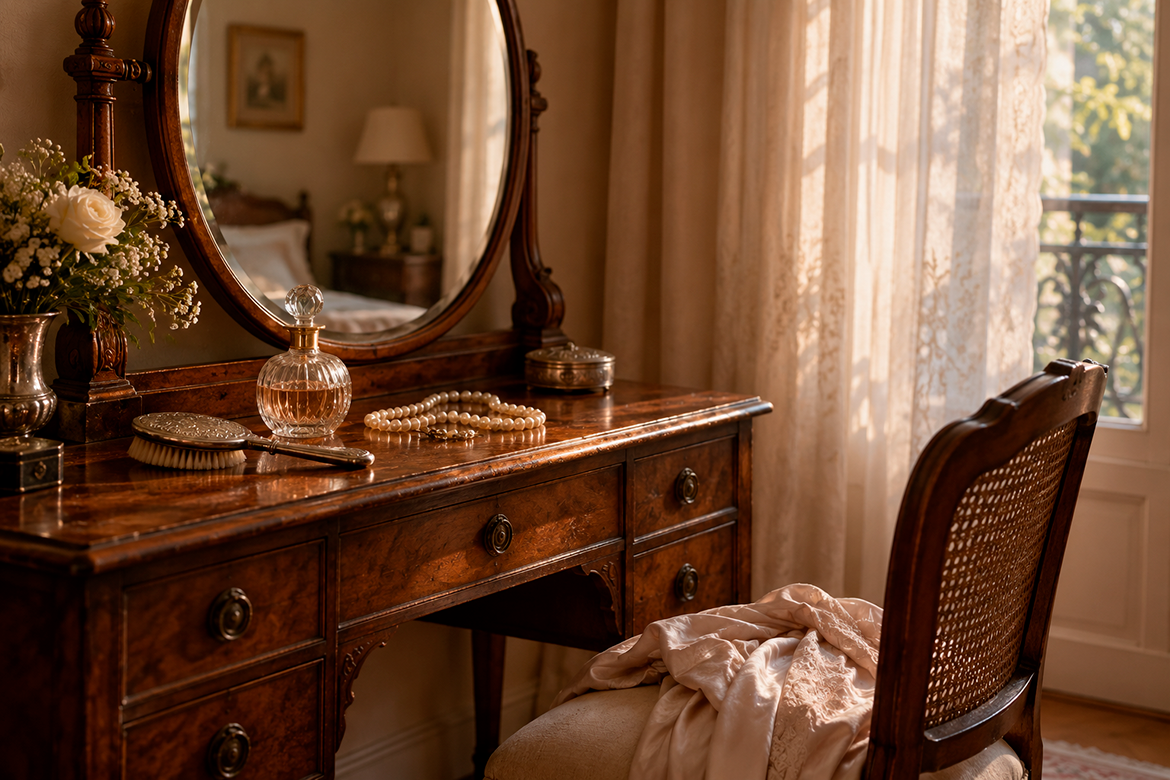
The word boudoir comes from French and refers to a lady’s private dressing room. In the 18th and 19th centuries, it was the private room where women got ready, dressed, read or received only their closest confidants. An intimate, feminine space, away from prying eyes. Interestingly, the word comes from the verb bouder, which means something like “to sulk” in French: it was the corner a woman retreated to when she wanted to be alone.
That sense of intimacy is exactly what boudoir photography captures. Its earliest precedents date back to the early 20th century, with portraits of women in their private parlors that already played with suggestion and elegance. By the mid-century, pin-up illustrations and photographs had popularized a sensual yet lighthearted aesthetic that still inspires many vintage-style sessions today.
The term “boudoir portrait” as we use it today is much more recent. According to the book Digital Boudoir Photography by John G. Blair, it was coined in the early 1980s by an American photography studio to describe a type of shoot they didn’t want to call “sexy” or “erotic.” They were looking for a word that conveyed elegance and respect, and they found it in the French dressing room. That origin perfectly explains the essence of this specialty: boudoir was born precisely to set itself apart from explicit photography. That’s why, when you explain your service, telling clients where the word comes from is a very useful tool. It helps them understand they’re going to have an intimate, carefully crafted experience designed for them, not a daring shoot they don’t feel ready for.
And if your website is available in more than one language, there’s an extra advantage: the word boudoir is used as is in English, Spanish, Italian and Portuguese, so your international clients will recognize the service instantly.
What sets boudoir apart from erotic or nude photography
This is the most common question clients have, and also the one that holds back the most sales. Boudoir photography suggests rather than shows explicitly. Its purpose is for the person to look beautiful, elegant and confident; the images are for them or, at most, for their partner. Erotic photography, on the other hand, aims to be directly provocative, and artistic nude photography usually conveys a more conceptual or transgressive message, meant to be exhibited.
In practice, the difference shows in several details:
- What’s revealed. In boudoir, suggestion rules: lingerie, an oversized shirt, a sheet, a pose that hides more than it shows.
- The framing. Close-ups and details (hands, lips, a gaze, the curve of a shoulder) are far more common than explicit full-length shots.
- The light and the atmosphere. Soft light, warm tones or black and white, and spaces that evoke a dressing room: a bed, an armchair, a window.
- The focus. The client is the focus, not the body as an object. Expression and attitude matter as much as the clothing.
This doesn’t mean you can’t offer artistic nude photography if it’s part of your work. What matters is presenting it as a separate service, with its own gallery and its own description. If you mix both styles, many potential boudoir clients will think your work is too daring for them and leave without asking.
It’s also a good idea to make it clear on your website and in your pre-session consultation that the client decides at every moment how far she wants to go. She can start fully clothed and remove items only if she feels comfortable, or never do so at all. Explaining this from the start takes away a huge amount of pressure and is probably the argument that wins the most bookings.
The most popular types of boudoir sessions
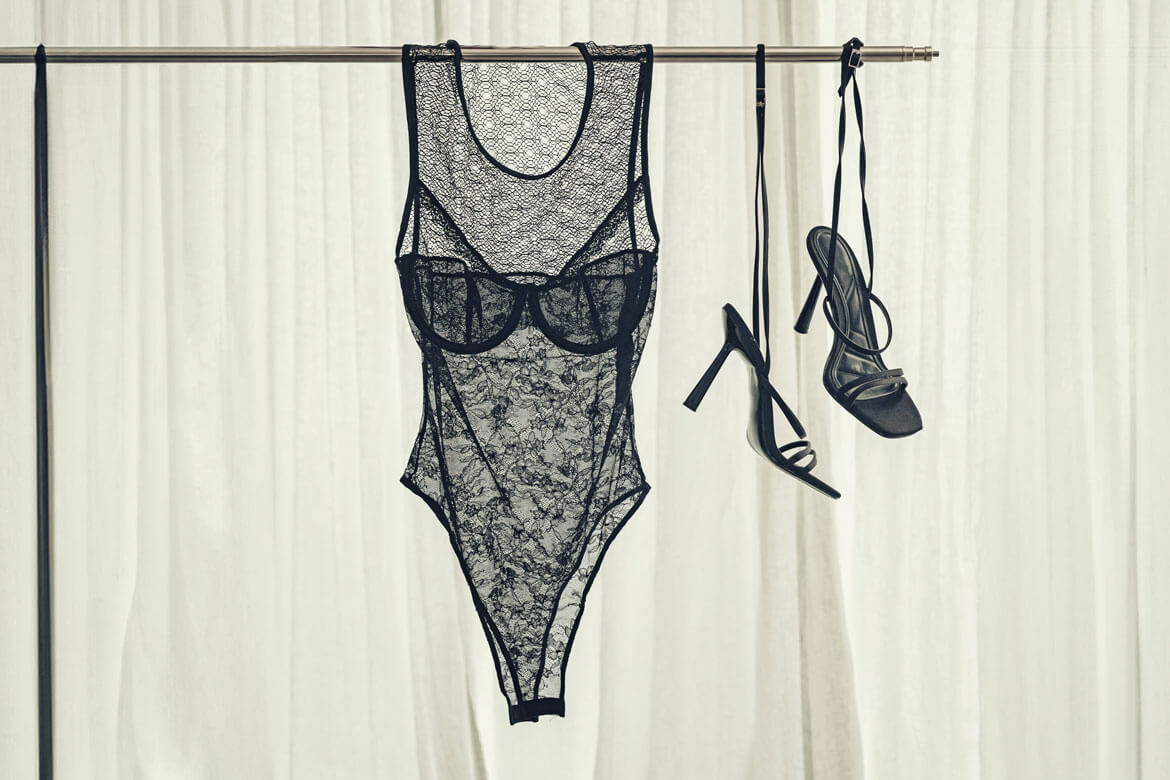
Boudoir has evolved enormously and today it’s a highly customizable experience. There’s no longer a single format: it has diversified to suit different tastes, budgets and stages of life. These are the most requested variations:
- Classic boudoir in a studio or hotel. The traditional format: lingerie, a bed or armchair and soft light. It’s the easiest to control and to sell as a first experience.
- Outdoor boudoir shoots. Nature, urban locations, charming houses or boutique hotels. It requires more planning, but the images are very different.
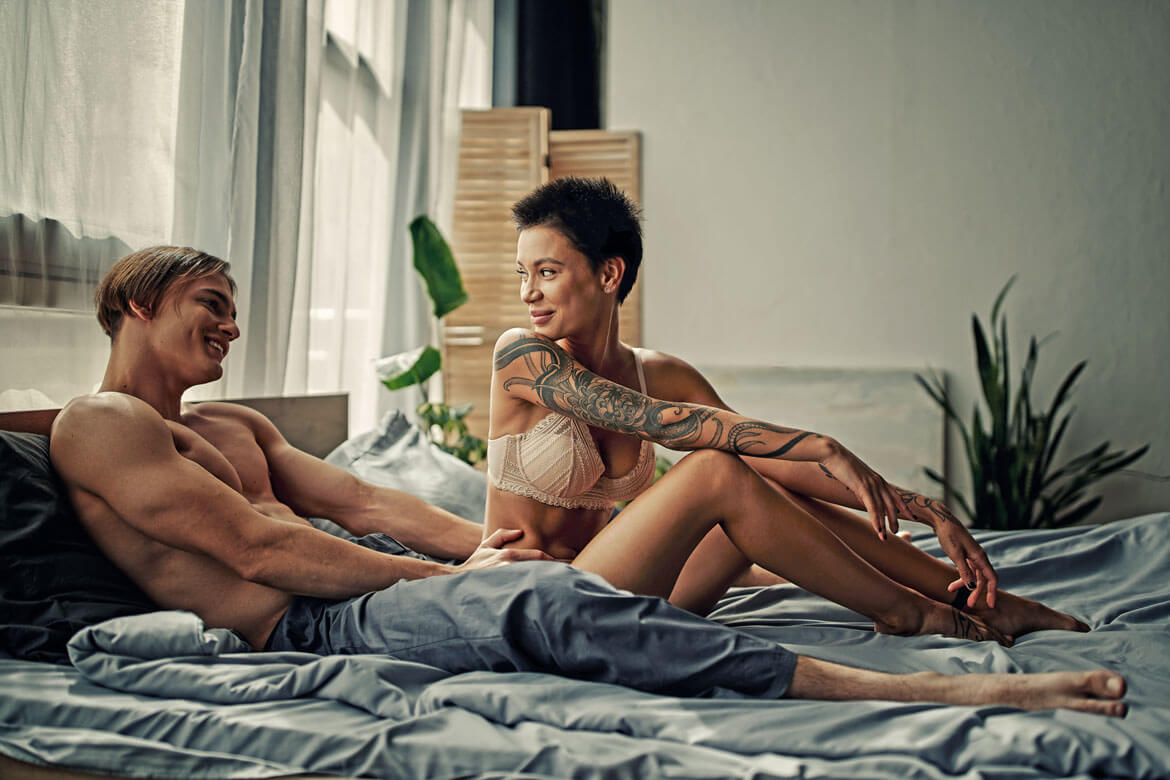
- Couples boudoir session. An intimate, fun experience that works very well as an anniversary gift or alongside an engagement shoot.
- Maternity boudoir. To celebrate the beauty of pregnancy with a more sensual approach than a traditional maternity session.
- Male boudoir. An increasingly popular option for men who take care of their image and want a sophisticated photo experience.
- Bridal boudoir. Very common as a gift from the bride to her partner on the wedding day, often delivered as an album.
- Themed boudoir. Vintage, pin-up, editorial, glam or inspired by a specific era.
- Boudoir as a gift. For birthdays, anniversaries or bachelorette parties, with gift certificates the recipient can redeem whenever they like.
Offering several options has a clear commercial advantage: each one attracts a different client profile and lets you create packages at different prices. A client who isn’t ready for a solo session might be willing to do one as a couple, and someone who has already done a classic session might come back a few years later for an outdoor boudoir shoot.
That said, you don’t need to offer everything from day one. Start with the option that best fits your style and your workspace, and add new variations as you build up examples to show on your website.
Boudoir photography styles: find your own
Beyond the type of session, every boudoir photographer has their own way of telling the story. Defining your style helps you stand out, attract the clients who are right for you and keep a consistent gallery. These are the most recognizable styles:
- Light and airy. Pale tones, white sheets, lots of natural light and a fresh, delicate feel. It comes across as natural and tends to appeal to first-time boudoir clients.
- Dark and moody. Dark backgrounds, strongly directional side light and deep shadows. It’s more dramatic, mysterious and elegant.
- Black and white. A classic that never fails. It removes distractions, softens the skin and gives images a timeless, sensual feel.
- Vintage and pin-up. Inspired by the 1940s and 1950s: garter belts, seamed stockings, red lips and poses with a touch of humor.
- Editorial or fashion. More studied poses, careful styling and a magazine look. Perfect for clients who want to feel like a model for a day.
- Fine art. Carefully planned compositions, plays of light and shadow and a result close to painting.
You don’t have to master them all. In fact, the best approach is to specialize in one or two and show them clearly. A client looking for a light, natural boudoir session won’t book if your gallery only shows dark, dramatic images, even if you can do both.
To find your style, review your best portraits and look at what they have in common: the light you choose, the colors, the way you edit. That common thread is your signature. Once it’s clear, name it on your website. Phrases like “natural, light-filled boudoir” or “elegant black-and-white boudoir” help clients know what they’ll receive, and they also help Google understand what you offer.
What are the biggest challenges for boudoir photographers?
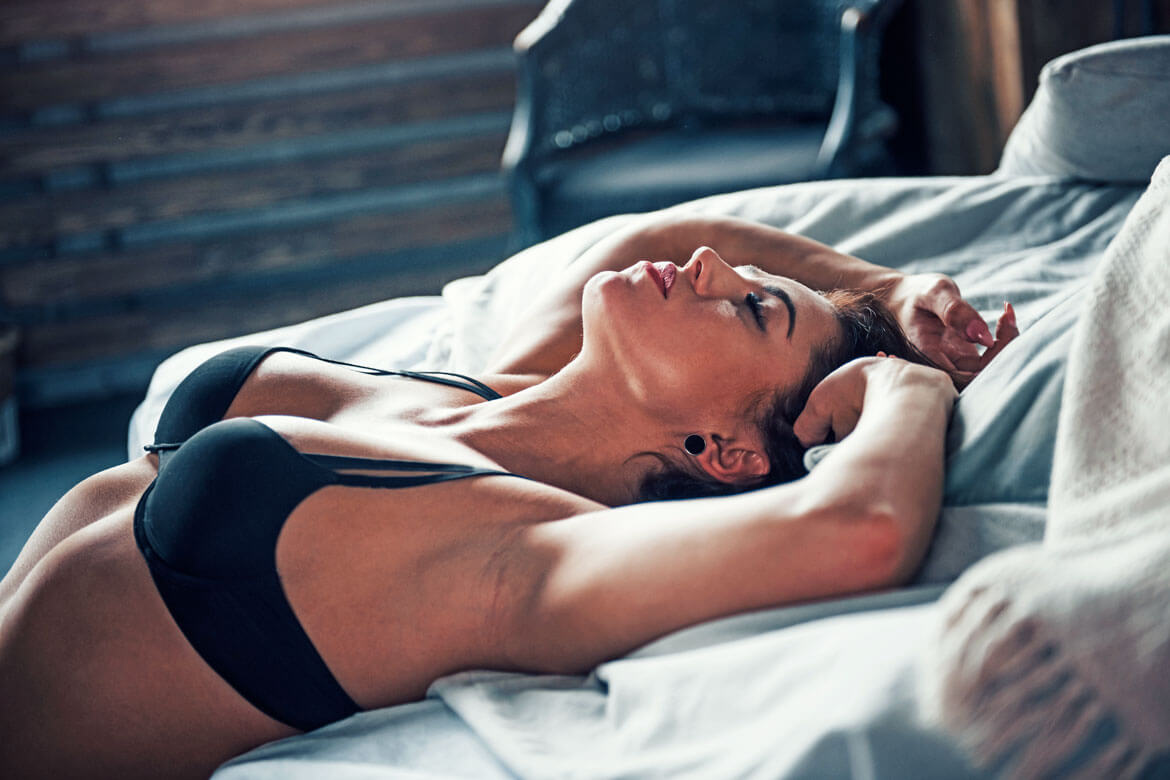
When a photographer takes on a new specialty, it’s normal to run into doubts, early mistakes and obstacles that slow down the flow of clients. In boudoir photography, these setbacks tend to be even more pronounced, because it’s a very intimate, emotional and delicate discipline. To keep this from happening to you, and to help you sell boudoir sessions consistently and profitably, let’s go over the most common problems and, most importantly, how to solve them.
The goal is for your potential clients to understand exactly what experience you offer and the real value they’ll get. Because in boudoir sessions you don’t just sell photographs: you sell self-esteem, confidence and an experience that changes the way people see themselves in the mirror.
That’s why, besides creating striking images that connect with your ideal audience, you need to convey confidence, professionalism and empathy at every step. It starts with the copy on your website, continues with the way you reply to the first inquiry, carries on through the session and ends when you deliver the photos. If just one of those steps fails, trust suffers and the client hesitates.
The good news is that almost every obstacle has the same root cause: a lack of information. The client isn’t quite sure what boudoir is, doesn’t know whether your style suits her, doesn’t know how to contact you without feeling exposed or doesn’t know what will happen to her photos. And what people don’t know, they imagine, almost always worse than it really is.
Below we take a detailed look at the four main obstacles photographers face when they want to work in boudoir, and how to overcome them so your calendar stops being empty.
Your clients don’t really understand what a boudoir shoot involves
One of the biggest challenges in boudoir photography is that many potential clients don’t know exactly what a boudoir shoot involves. They like the idea and they’re curious, but they aren’t sure what happens, how they should pose, what to wear, whether it’s “too daring” for them or whether it suits their style. That lack of information turns into doubt, and doubt usually ends in a lost opportunity.
If you want more women to find your website and become real clients, you have to make the experience very easy to understand. Remember that, for most of them, this will be the first time they’ve considered an intimate session just for themselves.
This is where your photography website plays a key role: it should be your best tool for communication and trust. To achieve that, you need to show:
- A carefully curated selection of your best boudoir images.
- A diversity of bodies, ages and styles, so everyone can see themselves in your work.
- The artistic approach that defines your work: sensual, elegant, subtle, daring…
- Your usual aesthetic: locations, lighting, lingerie, styling…
But images don’t explain everything. Pair them with copy that walks through the experience step by step: what the consultation is like, how long the session lasts, whether hair and makeup are included, how many outfit changes there are, and when and how the photos are delivered. The more questions you answer before clients ask them, the fewer barriers will stand between them and a booking.
The clearer and more visual your message, the easier it will be for clients to picture themselves having the experience with you. When a woman sees herself reflected in your portfolio, the path to booking becomes much shorter.
Many people confuse boudoir with overly explicit photography
Another common problem is that some clients confuse boudoir photography with erotic or full nude shoots. Although some photographers offer both types of sessions, it’s essential to make it very clear that they are two completely different experiences. Boudoir aims to highlight beauty, elegance and sensuality in a subtle way, while full nude photography takes a much more explicit approach. Mixing both types of images without distinguishing them creates confusion and mistrust.
That’s why, if you offer both services, organize them clearly and separately on your website: a dedicated portfolio for boudoir and another for nudes, clear descriptions of each session and examples that reflect the style and experience of each one.
Otherwise, many women who might be interested in a boudoir session will rule out your service simply because they can’t find clear information or because they fear what you offer is too daring for them.
Language matters too. Words like “elegant,” “intimate,” “suggestive” or “self-esteem” convey a very different idea than “sexy” or “provocative.” Review your copy, your gallery titles and even the names of your packages with that in mind.
And pay special attention to the first images people see when they open your boudoir gallery and the ones you share on social media. Those create the first impression. Choose photos that suggest more than they show, with expressive faces and confident attitudes. A carefully organized website builds trust and helps your clients make the decision to book with peace of mind.
You offer boudoir for men, but you can’t attract male clients
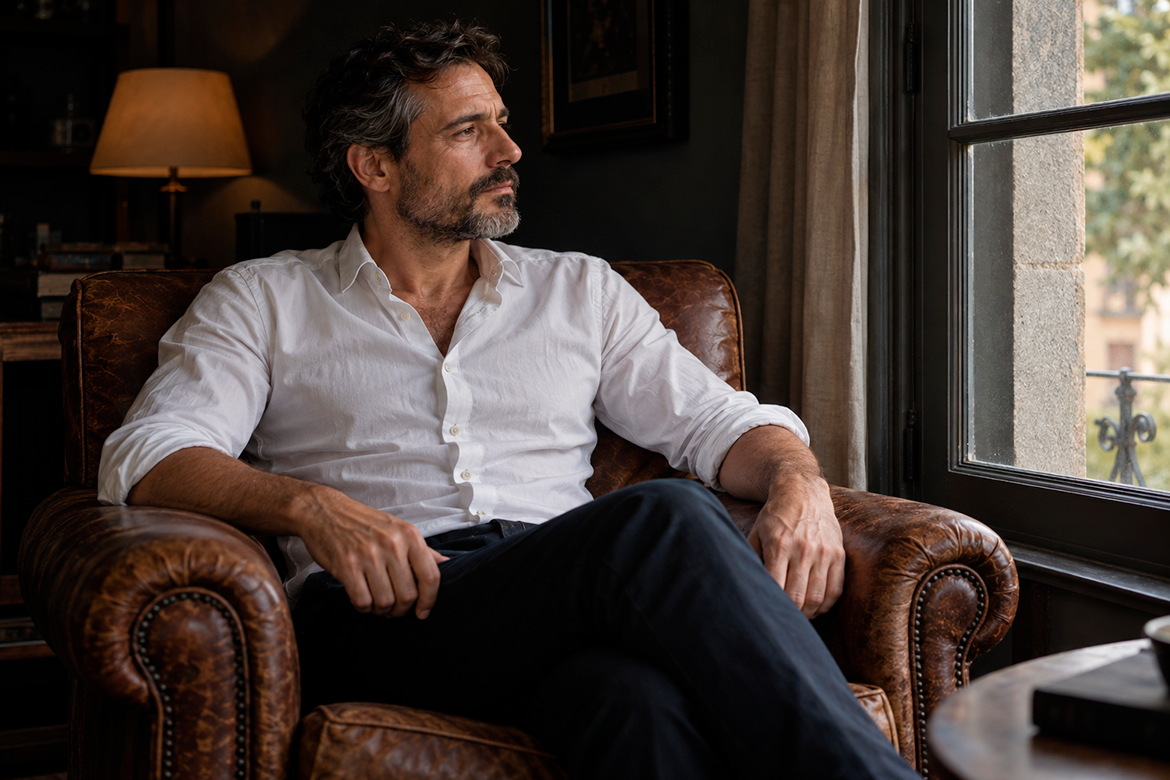
Boudoir shoots for men are increasingly popular, especially among men who take care of their image and are looking for a sophisticated photo experience. Couples boudoir sessions have also become well established, letting both partners keep intimate, creative and very personal memories. However, this audience is often reluctant to contact a photographer unless they clearly see that the photographer specializes in male boudoir or couples.
A lack of visual references and specific information creates doubt and insecurity. If a man visits your website and everything, from the photos to the copy, is written for women, he’ll most likely assume the service isn’t for him, even if it’s on your price list.
That’s why, as in the previous cases, your website plays a decisive role. Showing a selection of polished, authentic and representative images of boudoir for men or couples not only conveys professionalism but also helps those interested identify with your work and book with confidence.
A few keys to attracting this audience:
- Create a dedicated male boudoir gallery and another for couples, separate from your women’s boudoir.
- Write copy that isn’t addressed only to women, or create a specific service page for men.
- Adapt the vocabulary and styling: open shirts, suits, jeans, more contrasty light.
- Show that the session can be a gift for a partner, just like women’s boudoir.
The clearer and more specific the information you share, the easier it will be to attract an audience that would otherwise pass you by. A strong online presentation can make the difference between an empty session slot and a calendar full of happy clients.
Discretion and speed are key to getting clients to contact you
Another of the most common barriers for clients interested in a boudoir shoot is the need for speed and discretion when contacting the photographer. Many value a first contact that is quick, confidential and professional, because it’s an intimate experience that requires trust from the start. If you take days to reply, the client will very likely have second thoughts and never write again.
But the importance of easy communication doesn’t end once the session is booked. After that, there are many details to coordinate: wardrobe, makeup, hair, location, decor and the style of the session. At each of these steps, clarity and speed remain essential for her to feel safe and supported.
Discretion also affects delivery. Many clients don’t want to receive their photos as email attachments or risk anyone else seeing them by mistake. They need to know that only they will have access and that no image will be published without their express permission.
That’s why having a fast, reliable and well-organized communication system (email, a business WhatsApp account, clear forms or a booking platform) can make the difference between a hesitant client and a confirmed booking. When communication conveys confidence, many more women decide to book a boudoir shoot, knowing they’ll be supported throughout the process.
Fast, discreet and friendly service doesn’t just make booking easier: it improves the whole experience and reinforces how professional and empathetic your service feels. And a happy client is your best advertising, because boudoir spreads a lot by word of mouth among friends.
Boudoir challenges and how to solve them at a glance
| Challenge | How to solve it |
|---|---|
| Clients don’t understand what a boudoir shoot involves | A page on your website that explains it step by step, with examples, FAQs and what the session includes |
| Boudoir is confused with erotic or overly explicit photography | A curated portfolio that suggests rather than shows, and copy that talks about self-esteem and elegance |
| It’s hard to attract male clients | A dedicated male boudoir gallery and language that isn’t addressed only to women |
| Clients want discretion and speed | Password-protected private galleries, online delivery and a direct channel such as WhatsApp Business |
Keys to selling more boudoir photo sessions from your website
When it comes to building trust with your boudoir clients, there are two essential elements: showing them what their boudoir shoot will look like and offering a fast, completely discreet way to communicate. Add to that two other key moments that are often overlooked: the booking and the delivery of the photos.
At Arcadina we offer several solutions that make managing this type of session much easier. The first is the ability to create as many web galleries and sub-galleries as the types of sessions you offer, fully integrated into your photography website. That way, visitors immediately discover that you do boudoir shoots and can appreciate the delicacy, elegance and sensuality of your images.
The second is WhatsApp Business, which lets you answer questions quickly, discreetly and professionally. This channel doesn’t just make the first contact easier: once the session is booked, it also helps you coordinate wardrobe, makeup, location and dates, or let your client know that her private gallery is ready.
And to complete the picture, you can rely on online booking, delivery in password-protected private galleries and contract and invoice management, all from the same service.
Thanks to these tools, many of the problems that hold back boudoir bookings can be solved easily. What matters is that every step of the client’s journey, from discovering your website to receiving her photos, conveys the same feeling: she’s in good hands.
Create an irresistible image gallery to showcase your boudoir shoots
With the galleries you can create on your photography website, you’ll be able to organize and display your work in a clear, professional and appealing way. A well-structured system improves navigation and helps each client easily find the service they’re looking for.
If, besides boudoir sessions, you also offer children’s, family or couples shoots, it’s essential to keep each type of work visually separate. Imagine a mother interested in a family session coming across boudoir photos in the same gallery: she’ll most likely feel confused or uncomfortable. And the other way around: a client interested in boudoir will see you as less specialized if your website mixes everything together.
Your ideal client profile will include many women interested in boudoir who don’t yet know what style you shoot or whether they’ll connect with your approach. Some will prefer something elegant and artistic; others, something more daring; others, a natural, emotional session. Your gallery has to help them decide.
To achieve that, every photograph should convey your personal signature and reflect the experience you offer. A well-thought-out selection doesn’t just show your talent: it lets future clients picture themselves starring in their own images. A few useful guidelines:
- Less is more: 20 or 30 excellent images are more convincing than 100 good ones.
- Open with photos that suggest more than they show and where you can see the expression.
- Include a diversity of bodies and ages.
- Only publish images with the client’s express permission.
With Arcadina you can choose from several gallery layouts, design the structure that best fits your style and let visitors view images in full size. If you’re still not sure how to choose the photos for your boudoir galleries, we recommend this article:
>> Photography portfolio: what it is, how many photos to include and 7+1 steps to create it
Organize your styles in sub-galleries and open the door to male boudoir
Within your boudoir photography section itself, it’s a great idea to organize your different options into sub-galleries: classic boudoir, couples, male, maternity, themed, studio or outdoor. If you also offer artistic nudes, give them their own space too. That way every visitor quickly finds the type of session that suits them, and your website comes across as organized and specialized.
This visual segmentation strengthens your positioning as a specialist photographer. Each sub-gallery works as a marketing tool in itself, because it shows your versatility without mixing audiences or styles. In addition, themed boudoir galleries help you attract profiles who may not have known these sessions were for them. A man who discovers your male boudoir section, or a couple who sees examples of joint sessions, may feel encouraged to get in touch.
Also think about how those galleries look on mobile. Today a large share of visits come from smartphones, and in boudoir even more so: many clients browse privately, on their phones. Make sure your boudoir photos keep their full quality on small screens and that navigating between sub-galleries is easy.
Finally, well-optimized galleries improve your online visibility. Use descriptive titles, such as “Couples boudoir” or “Male studio boudoir,” and add a short text to each gallery explaining what that session includes. In such a specific niche, that specialization will help you rank better in search engines and stand out from the competition.
Explain on your website what boudoir sessions involve
For some clients, a boudoir session is exactly what they need at this stage of their lives. Others want to do one but have reservations and worry the images will be too explicit. For these clients, the gallery isn’t enough: they need to read how everything works.
That’s why, in addition to a gallery with only boudoir photos, it’s a good idea to create a dedicated boudoir service page. It’s the place to explain how the session works and answer the most pressing questions. A good boudoir service page should include:
- What boudoir means to you. Your definition, in your own words and style.
- What the experience is like. The consultation, hair and makeup, session length and number of outfit changes.
- What each package includes. Number of photos, retouching, album or prints and delivery times.
- How you guarantee privacy. Delivery in a private gallery and use of images only with permission.
- Frequently asked questions. What to wear, whether posing experience is needed, what if I don’t like how I look…
- A clear call to action. A button to book or to message you on WhatsApp.
Testimonials from other clients are especially powerful in boudoir. Reading that another woman arrived nervous and left delighted dispels many fears. Always ask permission to publish them and, if the client prefers, use only her first name or an initial.
This page is also a great ally for SEO. If you title it, for example, “Boudoir photography in [your city]” and complete it with your copy, your galleries and your FAQs, you’ll have a much better chance of showing up when someone in your area searches for this service on Google.
WhatsApp Business: the fastest, most discreet way to communicate with your boudoir clients
Another Arcadina solution for building trust with your boudoir clients is WhatsApp Business. With it, when a client visits your website and browses your boudoir gallery, she’ll always see a WhatsApp icon to contact you instantly.
Who doesn’t use WhatsApp these days? Although email is still very common for business communication, many people prefer the speed and closeness of instant messaging, especially when it comes to personal questions or organizing an intimate session like boudoir photography. It’s a familiar, convenient and discreet channel: the client writes from her phone, whenever she wants, without filling out long forms.
With WhatsApp Business you can:
- Answer initial questions about the session, pricing or availability.
- Advise on wardrobe, makeup, location and photo style.
- Send a reminder of the date and time a few days before the session.
- Let her know that her private boudoir gallery is ready.
This direct communication doesn’t just make logistics easier: it reinforces the perception of professionalism and closeness and increases the chances that visits to your website turn into confirmed bookings.
A tip: prepare quick replies for the most common questions, but always personalize the greeting and sign-off. In such an intimate specialty, the client needs to feel she’s talking to a person, not an answering machine. And manage your hours, too: making it clear when you reply is more professional than answering at any time of day or night.
If you’re already an Arcadina customer, don’t wait any longer to activate WhatsApp on your website. And if you have any questions about setting it up.
Online booking: let clients book without having to explain themselves
For many people, the hardest step isn’t deciding they want a boudoir session but asking for it. Calling or writing an email explaining what they want can feel awkward. That’s why letting clients book directly from your website is one of the best ways to remove friction at the decisive moment.
With Arcadina’s online booking, your client can see your available dates and times and book her session without having to talk to anyone if she doesn’t want to. It’s an advantage for you too: your calendar stays organized, you avoid back-and-forth messages to find a date and you have all the booking information in one place.
A few ideas to make the most of it for boudoir:
- Create a different session type for each option (classic, couples, male, outdoor), with its own length and description.
- Set aside specific time slots for boudoir, for example in the morning, when the studio is quieter and the natural light is better.
- Leave time between sessions for the consultation, makeup and preparing the space.
- Place the booking button on your service page and at the end of your boudoir gallery, right when the client is most convinced.
Combining online booking with WhatsApp works especially well. Some clients need to ask questions before deciding, while others prefer to book directly and talk afterward. Offering both options lets you serve both profiles without losing either.
Think about gift certificates, too. Many people discover boudoir because someone gives it to them as a gift, and simple online booking makes it easy for them to redeem their session without any hassle.
Deliver boudoir photos in a password-protected private gallery
The delivery is as important as the session. After trusting you with something so intimate, the client needs absolute certainty that only she will see her photos. That’s why, in boudoir photography, you should forget about sending images as email attachments, through social media or via download links that anyone could forward.
The most professional solution is a password-protected private gallery. Only the client has access, she can view her photos calmly from any device and you control at all times what’s shown and for how long. Plus, opening a beautifully presented gallery, with your branding and design, is a much more special experience than downloading a zip file.
To make the delivery live up to the session:
- Send the access details through a private channel, such as WhatsApp or a personal email, never to shared accounts unless the client authorizes it.
- Give the gallery a neutral name, without words like “boudoir” or “lingerie,” in case someone else sees it.
- State clearly how long it will be available and recommend that she save a copy.
- If the session includes photo selection, explain how to choose her favorites for retouching or the album.
Private delivery is also a selling point. Mention it on your service page and in your first conversation: knowing from the start how she’ll receive her photos is very reassuring and removes one of the biggest doubts before booking.
And if the client wants a printed album as a gift, the private gallery is the perfect place for her to review it and confirm the selection before you order it.
Contracts and image release: peace of mind for you and your client
In any photo session it’s important to put the terms in writing, but in boudoir it’s essential. A good contract protects the client, who knows exactly what she’ll receive and what will be done with her images, and it protects you as a professional.
A boudoir session contract should include, at a minimum:
- What the session includes: length, number of photos, retouching, album or prints and delivery time.
- Price, payment method, deposit and cancellation or rescheduling terms.
- How and where the photos will be delivered.
- Your commitment to confidentiality.
- The image release, with clear and separate options.
This last point deserves special attention. A generic “I agree” checkbox isn’t enough. Ideally, the client should be able to choose independently whether or not she authorizes you to use her photos on your website, on social media, in contests or in advertising, and whether her face can be shown. Many will agree to you publishing a detail of her hands or a photo from behind, but not a recognizable portrait. And it should be clear that she can change her mind later.
With Arcadina’s billing and contract tools, you can prepare your contracts and invoices without leaving your account and keep all of each client’s documents organized.
As with any legal document, we recommend having a professional review your contract template and image release clause to make sure they comply with the data protection laws in your country.
How much to charge for a boudoir photo session
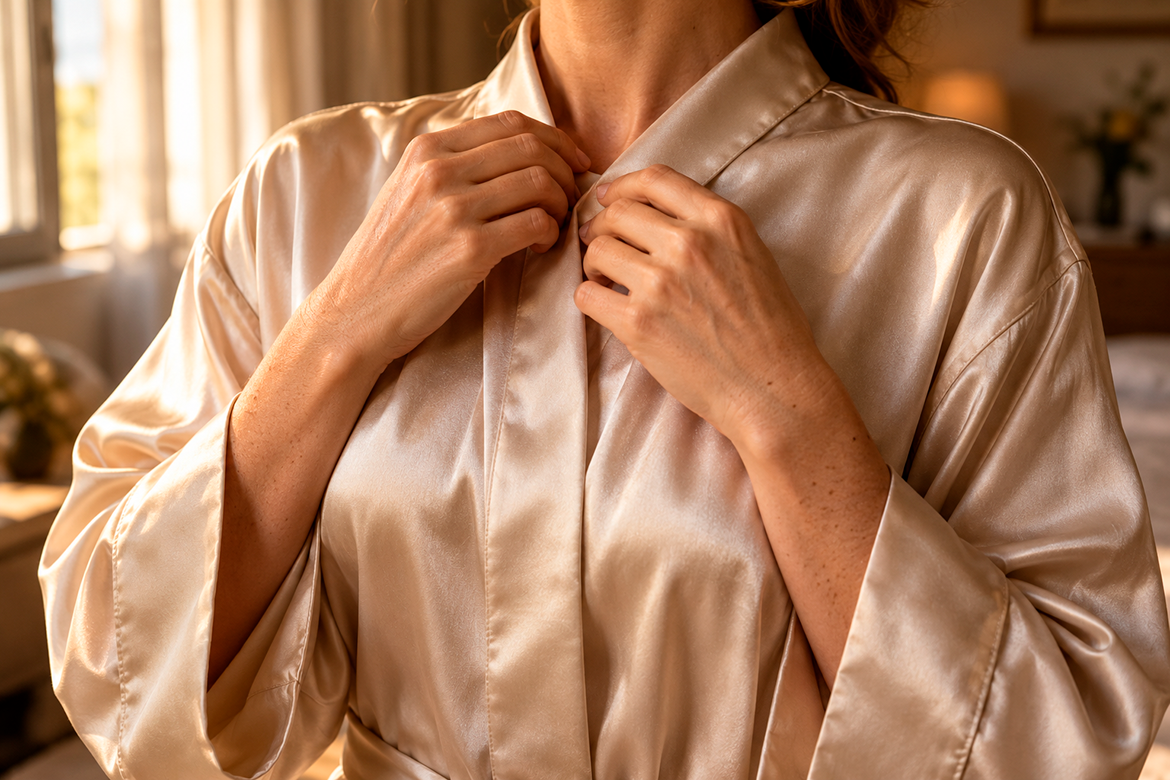
It’s one of the questions photographers starting out in this specialty ask most, and also one of the hardest to answer with a fixed figure. The price of a boudoir photo session varies widely depending on the city, the photographer’s experience, what the package includes and the type of client you’re targeting. What we can tell you is that boudoir shouldn’t be sold as just another portrait session.
A boudoir session requires more preparation than most shoots: a consultation, wardrobe advice, coordination with hair and makeup, preparing the space, a session that often lasts several hours, careful retouching and private delivery. All that work, and above all the experience the client has, must be reflected in the price.
Competing on price in boudoir is usually a bad idea, too. A client who is going to bare more than her body in front of the camera isn’t looking for the cheapest photographer, but for the one who inspires the most trust. A price that’s too low can convey exactly the opposite of what you want: little experience or little care.
So before setting your rates, research what other boudoir photographers in your area with a similar style and level charge. Not to copy them, but to know the range your market moves in and decide where you want to position yourself.
You should also decide whether to publish your prices on your website. Showing at least a “starting at” price filters out inquiries that don’t fit your offer and saves time for both sides. And, in such an intimate specialty, it spares clients from having to ask something that may feel awkward.
How to calculate the price of your boudoir sessions
A profitable price isn’t set just by looking at the competition. Always start from your own numbers. A simple method is to add up three blocks:
- Direct session costs. Hair and makeup artist, hotel room or location rental, travel, props you need to buy, album or print production.
- Your time. Count every hour, not just the session itself: consultation, messages, preparation, culling, retouching and delivery. In boudoir, the total work often adds up to several times the length of the session. Multiply those hours by what you want to earn per hour.
- Your fixed costs, spread out. A share of your studio, gear, software, website, insurance, training and advertising. Divide them by the number of sessions you do per year.
To that total, add your profit margin and any applicable taxes. The result is your minimum price: below that figure, every session costs you money even if your calendar is full.
Then compare that number with the market. If it’s well above what other photographers in your area charge, see whether you can cut costs or whether your offer justifies a higher price: a more complete experience, a very recognizable style or a high-quality album. If it’s below, you’re probably undervaluing your work.
Finally, review your prices at least once a year. As you gain experience, improve your portfolio and fill your calendar, it’s natural for your rates to go up. And remember that it’s easier to sell a high price with a good gallery and a clear service page than with a price list and no context.
Packages, albums and gift certificates to sell more
Instead of a single price, most boudoir photographers work with two or three packages. It’s a very effective strategy: the client compares, better understands what she’s getting and often chooses the middle option. A typical structure would be:
- Basic package. A short session, one outfit change and a small number of retouched photos in a private gallery.
- Mid-range package. Hair and makeup, several outfit changes, more photos and some prints.
- Complete package. Everything above, plus a special location or outdoor session, all the selected photos and a high-quality album.
The album deserves special attention. In boudoir it’s often the star product, because it’s an intimate, very personal gift, ideal for a wedding or an anniversary. An elegantly designed box or album, discreet on the outside, increases the perceived value of the session and your average order value.
Gift certificates are another great opportunity. Many boudoir sessions aren’t bought by the person being photographed but by her partner or friends, and dates like Valentine’s Day, the holidays or Mother’s Day multiply sales. Prepare an attractive gift certificate with a generous expiration date and promote it a few weeks in advance.
With Arcadina’s online store you can sell your services, gift certificates, prints and photo products from your website, with no sales commissions. That way, anyone who wants to give a boudoir session as a gift can buy it at any time, without waiting for you to reply.
And don’t forget post-session sales. When the client sees her photos in the private gallery, it’s the perfect moment to offer her more images, prints or an upgrade to a larger album.
7 outstanding boudoir photographers to inspire you
You already know the theory: what boudoir photography is, which styles exist, what holds clients back and how to make your website your best sales ally. Now it’s time to see how professionals who already make a living from this specialty put it into practice. There’s no better way to understand boudoir than to look closely at other photographers’ work.
We’ve selected 7 boudoir photographers who work with Arcadina and stand out for the quality of their images and the way they present this service. We didn’t choose them just for their photos. We also looked at how they organize their galleries, how they explain the experience and how they build trust at first glance. Each has their own vision: some studios are dedicated exclusively to boudoir while others combine it with weddings, newborn or First Communion photography; some also offer it for couples and others pair it with training for other photographers.
As you browse their websites, don’t stop at the aesthetics. Pay attention to details like these:
- How they separate boudoir from the rest of their services.
- Which images they choose to open each gallery.
- What words they use to describe their sessions.
- How they invite clients to take the first step.
Those small details are what turn a visit into a booking.
It’s not about copying anyone, but about getting inspired and discovering what fits your way of working. You might find a lighting approach you hadn’t tried, an idea for a themed session or a clearer way to describe your service. And if you’re still looking for your style, seeing such different approaches will help you define it.
These are the boudoir photographers we recommend keeping an eye on:
1# Feelboudoir: a website that addresses fears before the session
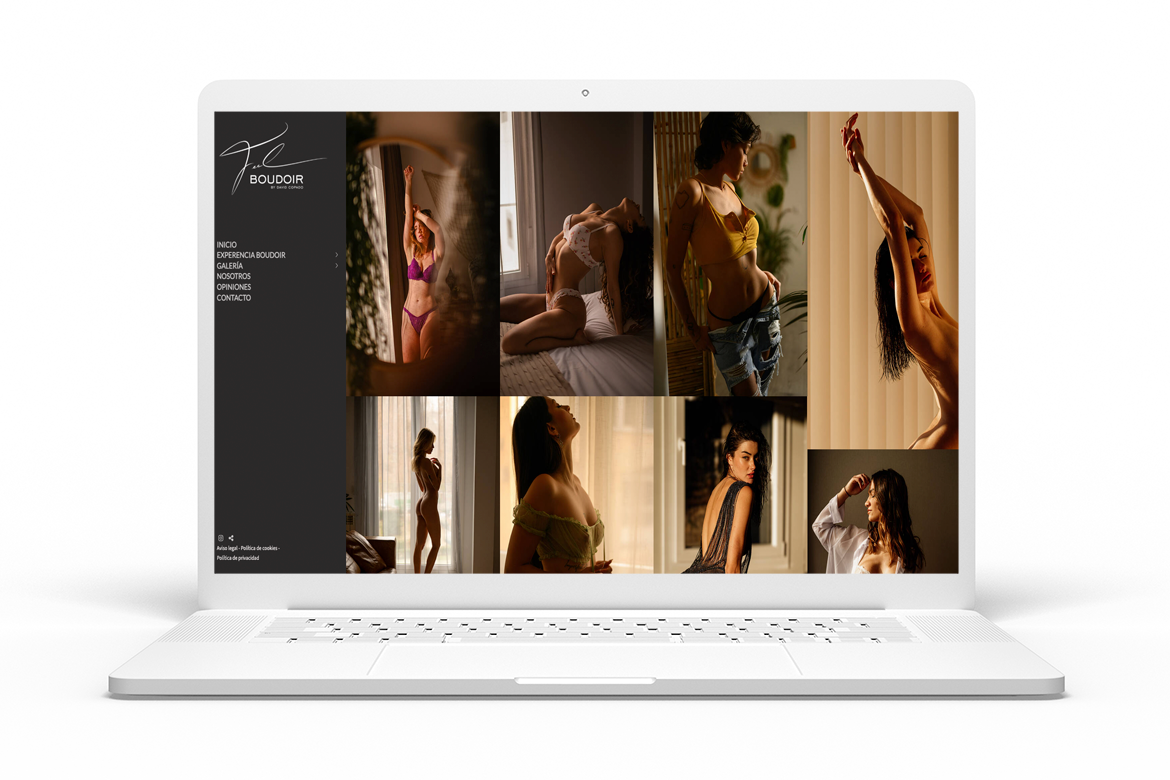
Feelboudoir is a studio dedicated exclusively to boudoir photography, working between Madrid and Ciudad Real, in Spain. There are no First Communions, weddings or newborns competing for space here: the entire project revolves around a single specialty, and you can tell from the name alone. Its starting point is that a boudoir session isn’t just something to give as a gift, but also something to do for yourself, as a way to reconnect with your own body and gain confidence.
The most interesting part of their approach is the way they present the service. The “Experiencia Boudoir” (Boudoir Experience) page raises, in the first person, the three questions almost every client asks before booking: “I don’t know how to pose,” “What should I wear?” and “I don’t feel confident about my body.” And it calmly answers each one: there will be guidance on every pose, clients can bring their own lingerie or use the studio’s wardrobe, and the light and angles are chosen to flatter each person.
It then describes the day of the session, which lasts about two hours, with some time at the start to talk and choose the looks, and closes with the delivery: a private gallery where the client picks her favorites and downloads the edited photos. Right below, a contact form captures anyone who’s already convinced.
The rest of the website follows the same logic. A portfolio with their best images, a section dedicated to the studio, a reviews page and direct access to WhatsApp and Instagram from the menu. It’s a very clear example of something we’ve repeated throughout this article: when questions are answered before the client even asks them, booking becomes much easier.
2# Estudio Boudoir: separate galleries for solo and couples sessions
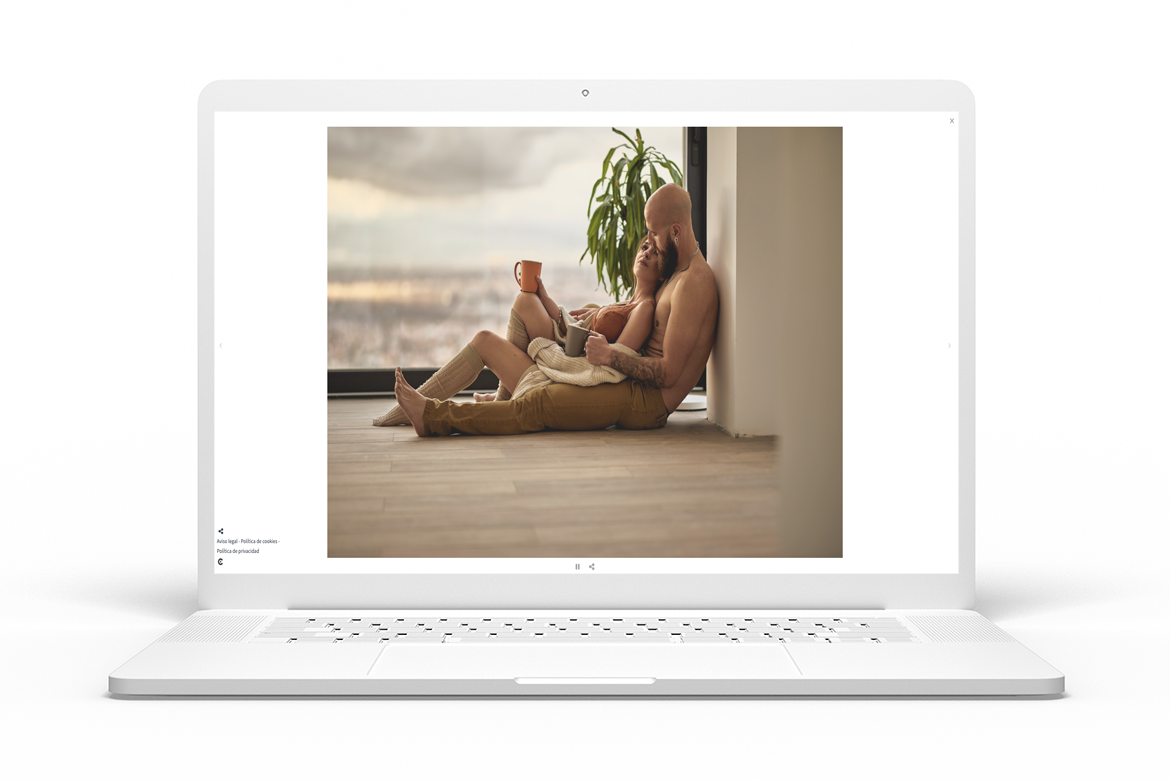
Behind Estudio Boudoir are Estela and Raúl, a photographer couple who, in addition to intimate sessions, have experience in advertising, fashion and wedding photography. That background shows in their composition and careful styling. However, for their boudoir work they decided to create a separate project, with a domain name that makes it clear from the browser bar what they do. In fact, their website is one of the boudoir examples we feature on Arcadina’s examples page.
If you’re wondering how to organize a boudoir portfolio, this is a great model. The gallery is divided into three sections: a selection of their most representative images, solo sessions and couples sessions. This separation lets each visitor go straight to what interests them and, above all, makes visible an option many couples didn’t even know existed. Their photographs favor suggestion: they hint at far more than they show.
The content surrounding the galleries is very complete, too. The “Nosotros” (About Us) page puts faces to the photographers, which is essential when someone is going to share such a personal session with you. Reviews from other clients reinforce trust, and the blog, with categories such as news and session examples, keeps the website alive and adds content that helps with SEO.
For those who prefer to ask before deciding, the WhatsApp button is always within reach. It’s a simple combination of galleries, warm copy and instant contact that proves you don’t need a huge website to come across as professional.
3# Maru Serra: boudoir with a personal signature and training for other photographers
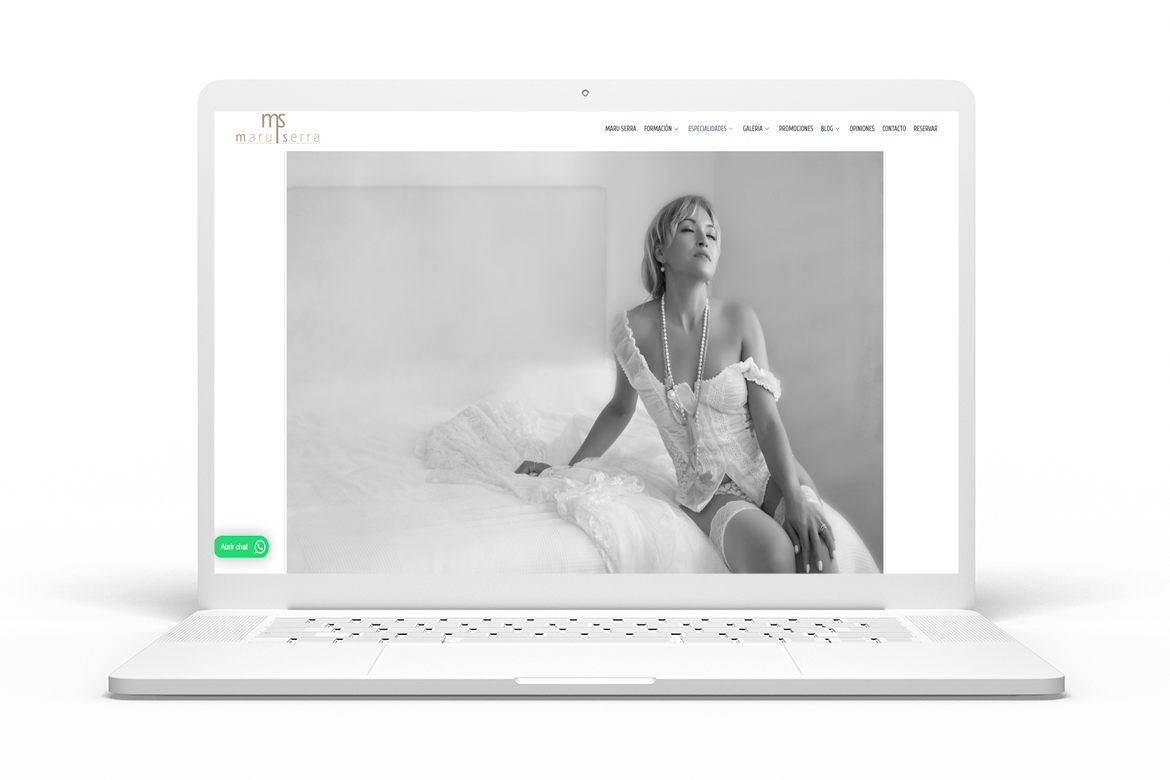
“I don’t photograph what I see, I photograph what I feel.” That’s how Maru Serra introduces herself. She’s a photographer from Valencia, Spain, and an Arcadina ambassador, and her studio covers First Communion shoots, children’s photography, babies and maternity, families, holiday sessions and a genre closely tied to her hometown: portraits of falleras, the women who take part in Valencia’s famous Fallas festival. Such a wide-ranging career shows that boudoir can easily coexist with family photography, as long as each service has its own place.
And that’s exactly what she does on her website. Within the specialties section, boudoir photo sessions have their own page, separate from the image gallery. That way, a future client first reads what the experience is like and then sees the results. A gallery of the studio also lets clients get to know the space before setting foot in it, a small detail that’s very reassuring for first-timers.
But Maru doesn’t just take photos: she teaches, too. Her school includes a boudoir photography course where she shares with other professionals how to direct this type of session, along with a course on children’s and First Communion photography. If you’re just starting out in this specialty, it’s well worth a look.
As for tools, her website brings together almost everything we’ve been recommending. It has a section to book a session directly, a promotions section for specific campaigns, client reviews and a blog. All of this turns her website into both a showcase and a sales tool that works for her.
4# Sara Alarcón Fotografía: boudoir presented as a “Woman” session
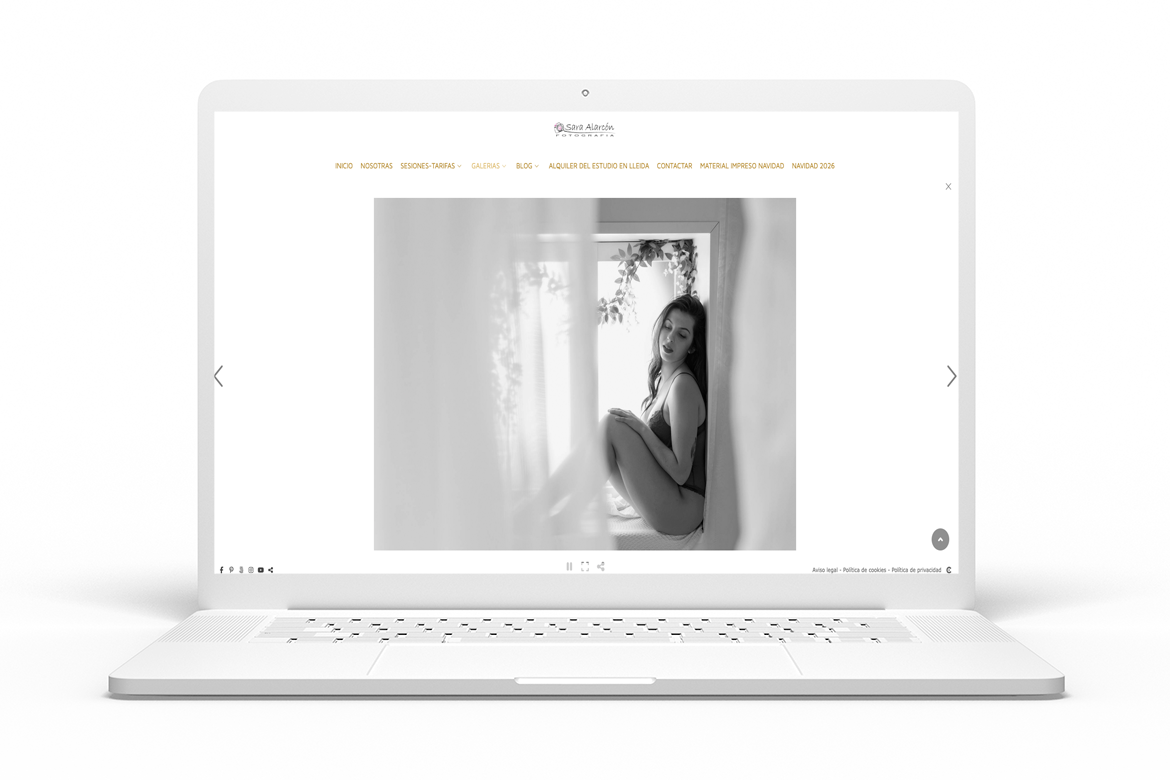
Sara Alarcón works in Lleida, Spain, together with her all-female team, as the “Nosotras” (About Us) section of her website shows. Her specialty is maternity and newborn photography, both in the studio and outdoors, but her catalog goes much further: children’s sessions, smash cake, mommy and me, First Communions, pets and corporate photography. She also rents out her Lleida studio to other professionals, a smart way to get more out of the space.
Sara’s case is very useful for anyone who wants to introduce boudoir without putting off their regular clients. Instead of putting it front and center, she presents it as “Sesiones Woman,” a friendly name that puts the focus on the woman rather than the lingerie. This service appears in her sessions and pricing section, with its own page, just like her other shoots. Prices are visible, which saves a lot of awkward questions.
The corresponding gallery includes both the word boudoir and the city in its title. It’s a simple touch with a lot of value for local SEO, because it helps her show up when someone in the area searches for this type of session.
Her blog completes the strategy with categories such as “Sesión beauty” (beauty session) or “Regala una sesión” (give a session as a gift), which tie in with boudoir as a gift. On top of that, there’s a printed products page to sell albums and prints, plus direct access to WhatsApp, which makes the first contact easier for anyone still on the fence.
5# Vicente Esteban: more than three decades of studio portraiture
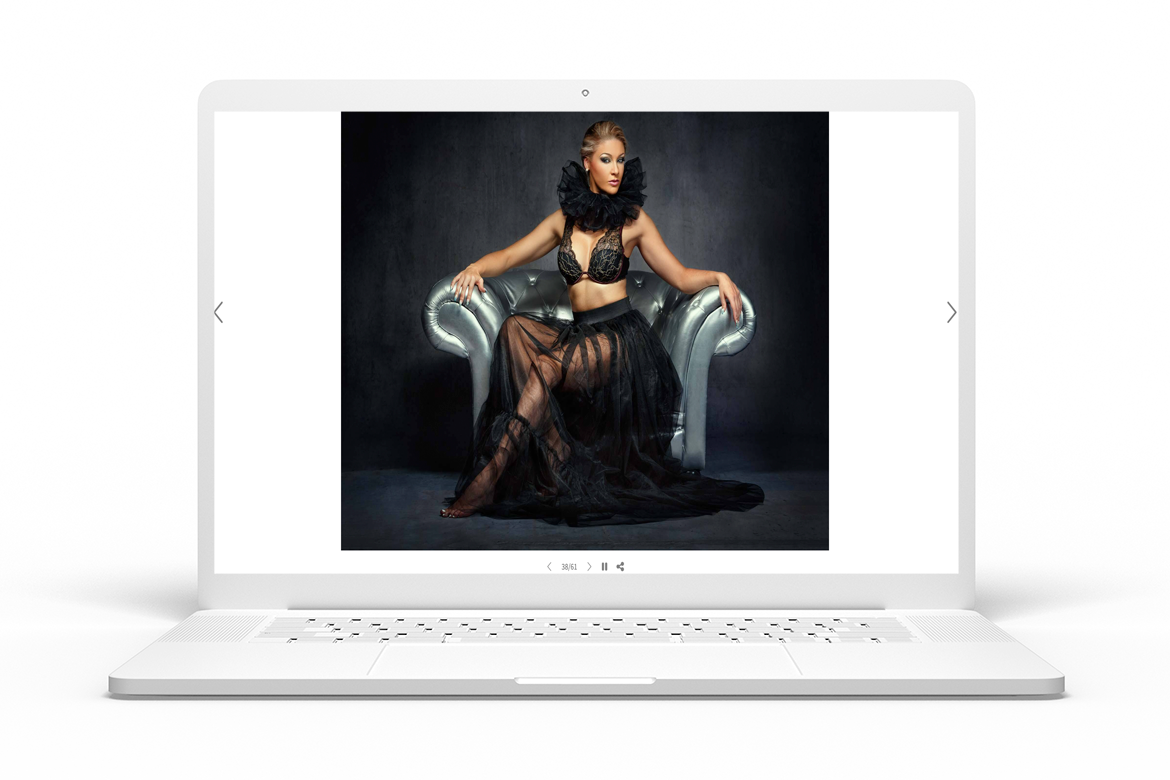
Born in Elda, in the province of Alicante, Spain, Vicente Esteban has spent more than thirty years behind the camera. He explains that his passion for light, composition and human beauty led him to specialize in studio photography, portraiture and artistic nudes. His studio also covers First Communions in the studio and outdoors, maternity, newborns, families, smash cake, corporate photography, advertising and pets, and he takes part in charity projects and exhibitions.
That experience with lighting is the foundation of his boudoir work. In the services menu, the boudoir photo session has its own page, at the same level as newborn or maternity, which makes it clear it’s a full business line for the studio and not something occasional. On the homepage, boudoir and nudes also appear as two separate entry points, so each visitor can choose what they want to see. He also offers couples sessions and shares his knowledge through a course on studio portrait and nude lighting.
His website is one of the most complete on this list in terms of business solutions. It’s available in Spanish and English, has a section for booking a session online and an online store, and includes a client area where each person can access their photos.
A reviews page, a blog with categories by session type and an always-visible WhatsApp button round out the package. The entire client relationship, from the first inquiry to the final delivery, happens in one place.
6# Fotograma Vitoria: boudoir within a wedding studio
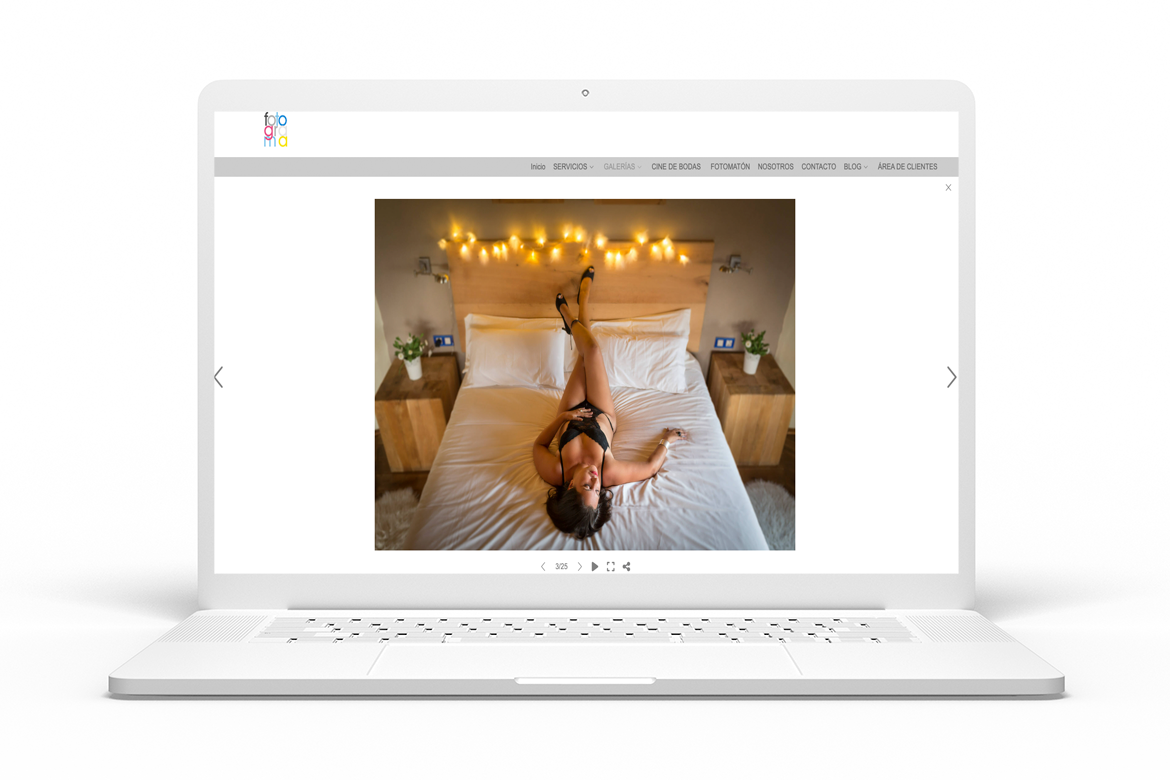
Fotograma Vitoria is a team of photographers and videographers from Álava, in Spain’s Basque Country, with more than 30 years of wedding experience, who travel wherever they’re needed. Their motto, “Compartimos emociones” (We share emotions), sums up their way of working well. In addition to wedding photography and wedding films, they cover engagement shoots, First Communions, maternity, children, families, portfolio shoots and pets, and they offer a photo booth service for celebrations.
Within a catalog so focused on big events, boudoir finds its place as a dedicated gallery, next to the portfolio shoots. It’s a very logical placement: someone looking for a personal portfolio shoot discovers they can also have a more intimate experience. And for a wedding studio, boudoir is a natural extension of the business: many brides choose it as a gift for their partner before the big day, and engagement shoots can be the gateway to a couples session.
Their boudoir gallery features images that hint with elegance, in line with the polished style of the rest of their portfolio.
On the management side, their website includes a client area for delivering shoots privately, their own blog and service pages for their flagship products, such as First Communions and wedding films. They’ve also connected their social media profiles (Facebook, Instagram, LinkedIn and Pinterest) and added WhatsApp access to answer inquiries right away. It’s a great reference for wedding studios considering adding boudoir to their offer.
7# 2nphoto: from maternity to boudoir in the same studio
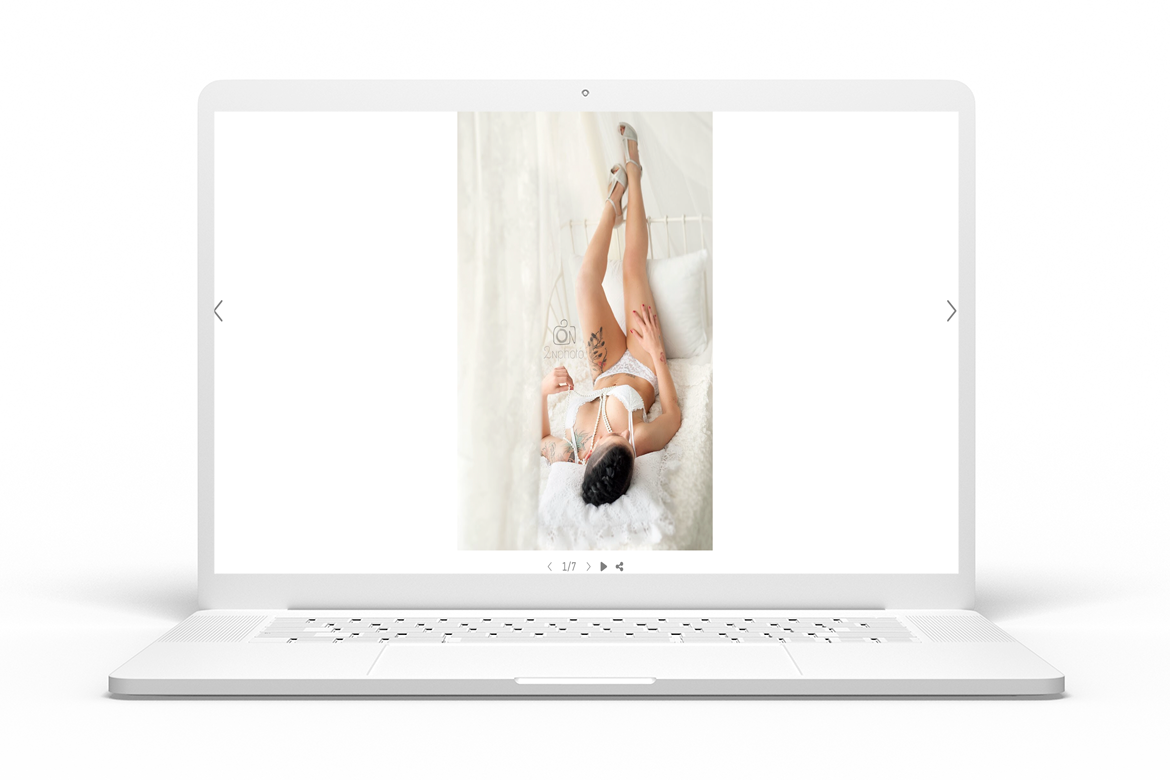
Nacho and Marisa have been a couple since they were 17 and make up the 2nphoto team, a studio they opened more than a decade ago in Hospitalet de Llobregat, near Barcelona. Their main specialty is maternity and newborn photography, to which they add first-year milestone sessions, smash cake, children’s sessions, mommy and me, First Communions, holiday campaigns and weddings. They also offer training through courses, workshops and one-on-one classes, and provide free parking for their clients, a very practical touch.
Their case shows that boudoir can be a natural extension of maternity photography. The boudoir gallery appears in the menu next to the maternity gallery, and that’s no coincidence: a client who trusts them to photograph her pregnancy or her baby already knows the studio, knows how they work and has the confidence to consider a more intimate session a few years later. It’s a clear example of how to retain a client across different stages of her life.
All their galleries are organized by session type, which keeps boudoir from mixing with children’s content.
As for tools, the website has a client area for deliveries, a booking button on the homepage and WhatsApp for quick questions. Their social media presence is also very varied, with Facebook, Instagram, YouTube and TikTok linked from the header.
How to prepare a boudoir photography session step by step
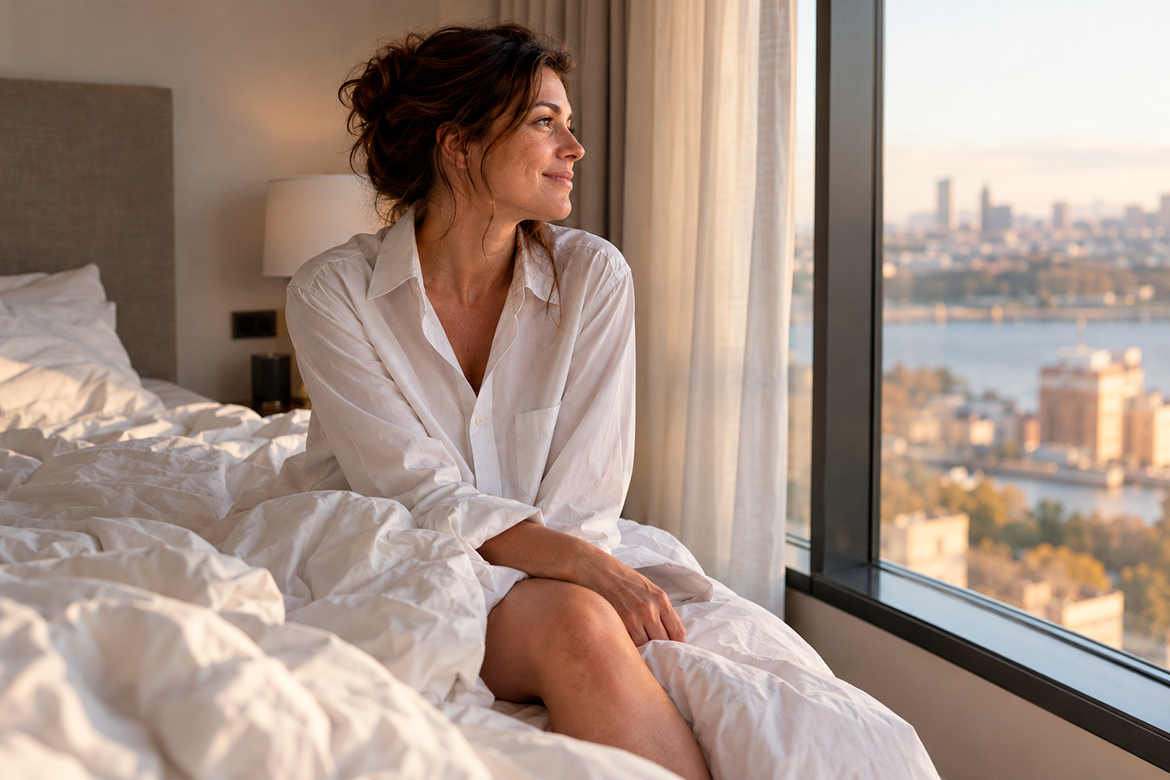
As we’ve seen, the work of boudoir photographers consists of creating intimate, elegant images that enhance the beauty of the person being photographed and make them feel more confident. Many clients come to a session because they’re in a good place and want a different experience in front of the camera. Others, on the contrary, seek it out precisely to make peace with their body.
In both cases they have something in common: most don’t know how to pose and aren’t sure what to wear. That’s why it’s so important for the photographer to give good advice, direct the session with warmth and confidence and convey trust at all times.
The quality of a boudoir photo session is largely decided before it begins. The better you prepare it, the fewer surprises there will be and the more relaxed the client will feel, which is what truly makes the difference in the photos. A relaxed client poses better, laughs naturally and trusts your direction.
And although most bookings today are still from women coming on their own, more and more men and couples want to have this experience. The tips below work for all of them, with small adjustments to wardrobe and posing direction.
To help you organize everything, at Arcadina we’ve put together this 10-step guide to make your boudoir shoots a success, from the first meeting to the final retouch.
1# The consultation: the starting point of every boudoir session
If there’s one step you should never skip, it’s this one. The pre-session consultation, in person or by video call, is when the client gets to know you, loses some of her nerves and starts to trust you. For you, it’s the chance to understand what she’s looking for and plan the session around her.
During that conversation, it’s a good idea to talk about:
- The reason for the session. A wedding gift isn’t the same as a personal celebration or a milestone birthday. The reason affects the style, the number of photos and the delivery format.
- The style she likes. Show her your gallery and ask her to share references that inspire her.
- Her limits. Which parts of her body she likes, which ones she’d rather not highlight and how far she wants to go.
- Wardrobe and location. How many outfit changes she’ll make, what she already has and what she needs to get.
- The practical details. Date, time, hair and makeup, what to bring and how the delivery will work.
Listen more than you talk. Many clients will tell you about their insecurities if you give them space, and that information is gold when choosing poses, light and framing that flatter them.
Afterward, send her a written summary of everything you agreed on, a short wardrobe guide and the contract. Having everything clear before the day of the session eases nerves and avoids surprises. And if the client arrives on the day knowing exactly what’s going to happen, half the work is already done.
2# Choose the best location for each boudoir session
Boudoir photography shoots are usually associated with indoor spaces: a charming hotel room, your studio or even the client’s own home. In these spaces you can play with different settings, such as the bed, an armchair, a window or simply a plain backdrop.
Each option has its advantages:
- Studio. You control the light, temperature and privacy, and your props are close at hand. It’s the most comfortable option for first-time clients.
- Hotel. It adds a touch of luxury and a getaway feel. Look for spacious rooms with large windows, neutral colors and a statement bed.
- The client’s home. It’s very personal and she feels secure in her own surroundings, although the decor doesn’t always cooperate.
- Outdoors. More and more photographers and clients are taking boudoir into nature or charming locations: a forest, a riverbank, a quiet beach or the garden of an old house.
Outdoors, sensuality blends more spontaneously with the landscape, but privacy is essential. Choose secluded spots and quiet times of day and, if it’s an estate or private property, always get the necessary permits. Bring warm clothes or a robe for the client between shots.
Whatever the location, scout it beforehand if you can. Check where the light comes from at the time of the session, which corners work best and what you’ll need to remove from the frame. Always choose based on the style your client wants and the light you’ll have, not just on how pretty the place is.
3# Make sure your gear is right for boudoir photography
You don’t need a huge amount of gear to do great boudoir photography, but you do need the right gear. Lenses matter most: choose fast lenses, such as primes with wide apertures (a 50mm f/1.8 or an 85mm f/1.4, for example). They’ll let you work in low light, focus precisely on the eyes or a detail and blur the background to create that bokeh effect so typical of boudoir.
A 35mm can be very useful in small spaces, such as a hotel room, to show the setting. And a macro lens or a 100mm will help with detail close-ups: hands, lips, the lace of a garment.
As for lighting, if you can’t use natural light, go for large, soft sources such as softboxes or octaboxes, and use reflectors to fill in shadows. One or two well-placed lights are usually enough.
If the session is in your studio or in a home with unflattering decor, a neutral backdrop placed next to the bed or armchair will help you eliminate distracting elements.
And there’s one gear detail that’s often forgotten: silence and comfort. Turn on your camera’s silent shutter if it has one, bring a spare battery and memory card so you don’t interrupt the session, and have a robe and a blanket ready so the client is comfortable between outfit changes. These small gestures make a big difference in the results.
4# Use natural light whenever possible to create a more intimate atmosphere
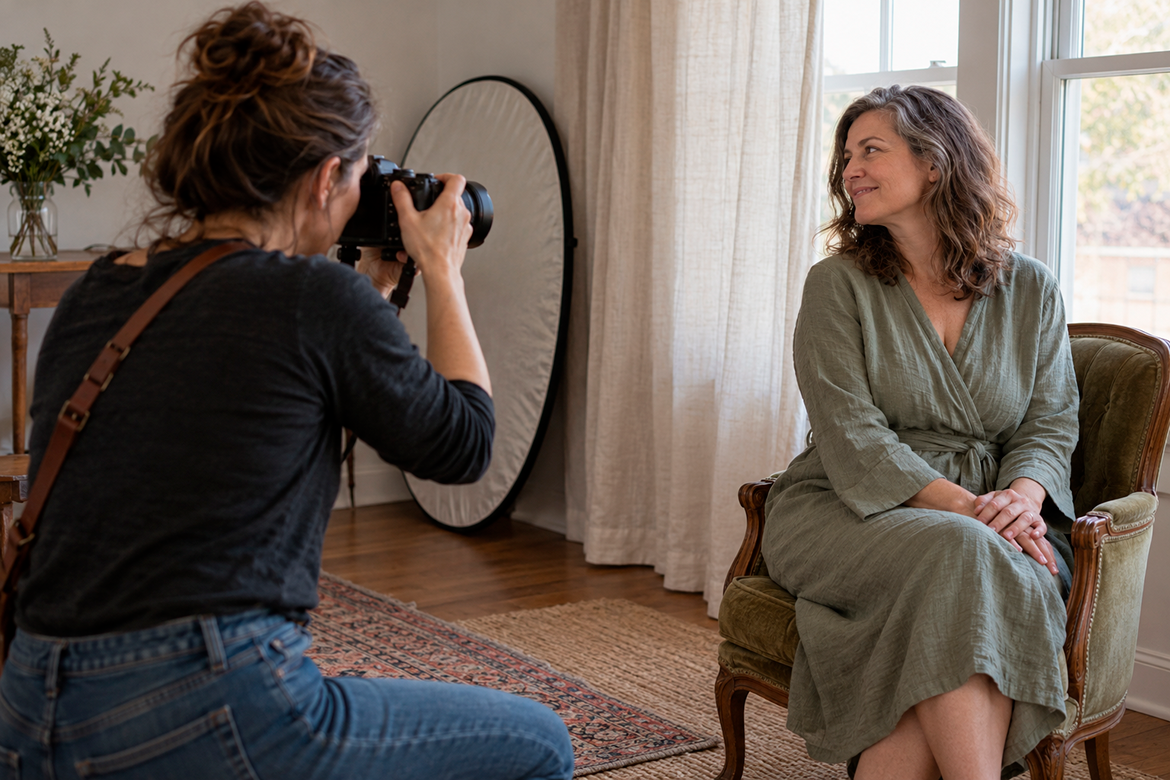
Light is the great ally of boudoir photos. If you have a choice, soft natural light coming through a large window will almost always beat artificial light: it adds warmth, wraps the skin and creates an intimate, romantic atmosphere. Early morning and mid-afternoon light are especially flattering.
A few ways to make the most of it:
- Side light. Position the client sideways to the window to sculpt the body with soft light and shadow.
- Backlight. With the window behind her, you get silhouettes and a very suggestive glow, perfect for hinting without showing.
- Diffused light. A white curtain or sheer acts as a natural diffuser and softens the skin.
- Slit light. A nearly closed window or a door left ajar creates very dramatic beams of light, ideal for a dark and moody style.
But you won’t always have big windows, and the client won’t always be able to come at the perfect time. In those cases, as we saw in the previous step, softboxes and reflectors will let you simulate window light indoors: as soft, warm and indirect as possible.
Avoid harsh, direct flash without a diffuser and overhead lights, which create unflattering shadows under the eyes. And watch out for mixed color temperatures: combining window light with a warm lamp can produce strange skin tones. If you mix them, do it on purpose as a creative choice.
5# Advise your clients on the importance of hair and makeup
When planning the session, there are some points worth nailing down so there are no surprises on the day of the boudoir shoot. Makeup and hair, along with wardrobe, are essential for the client to look her best and be happy with the results.
The makeup and hair style will depend on the look you want to bring out, the client’s personality and the location of the session. A light, natural boudoir session, which calls for fresh makeup and loose, softly waved hair, is not the same as a vintage one, with red lips, bold eyeliner and a period updo.
It’s not about telling her exactly how to do her hair, but about guiding her. You can show her examples from previous sessions or fashion references that match what you’ve discussed.
Some useful recommendations to share with her:
- Makeup a little heavier than everyday makeup, because the camera softens it.
- Avoid very shiny products or ones with sunscreen, which can reflect the flash.
- Moisturize well in the days before and avoid waxing or shaving right the day before, to prevent redness.
- Have well-groomed nails, especially if you’ll be doing close-ups of her hands.
- Don’t try a new haircut or color right before the session.
Ideally, include the services of a professional hair and makeup artist you regularly work with in your packages. For the client it’s a luxury and part of the experience; for you, it’s a guarantee that the results will be what you expect and that the makeup will work well on camera.
6# Wardrobe and accessories: what to wear to a boudoir session
What to wear is probably every client’s number one question. If she doesn’t have a clear idea, do the same as with makeup: show her part of your boudoir portfolio so she can see which pieces work and which might flatter her most. And send her a short wardrobe guide after the consultation.
Fine lingerie is the most common choice, but it’s not the only one. Depending on the style of the session, these can work very well:
- An oversized men’s shirt or chunky knit sweater.
- Silk or lace robes and kimonos.
- Bodysuits and lingerie sets in solid colors.
- Garter belts and stockings for a vintage style.
- Sporty underwear for a more casual boudoir session.
- A sheet or a large piece of fabric, which offers endless possibilities.
Recommend that she bring two or three options she feels truly comfortable in, preferably in solid colors rather than bold prints, and in her actual size: a garment that’s too tight leaves marks and one that’s too big isn’t flattering. It’s also a good idea for her to avoid tight clothing in the hours before the session to prevent marks on the skin.
The clothing should match the location of the session. A black lace set looks stunning in a dark, elegant room, while white or nude tones work better in a bright space.
Accessories offer plenty of possibilities, because the client can interact with them, which helps her relax: heels, long pearl necklaces, earrings, a lipstick, gloves, hats or a tie. For male boudoir, open shirts, suits, suspenders or jeans work very well.
7# Take care of the decor and props
The space and decor are also part of the pre-session advice. If the session is in a hotel, you can suggest a list of hotels where you’ve already worked or whose rooms you know suit the style you’re going for. Having that list ready conveys professionalism and saves a lot of time.
If the session is at the client’s home, ideally visit beforehand to check the light and decor and suggest a few adjustments: removing personal items from the frame, swapping the bedding for something more neutral or clearing the corner by the window.
In the studio or outdoors, a few props will give the session a more refined touch:
- White or neutral bedding and pillows in different textures.
- A large mirror, which allows for very interesting compositions with reflections.
- An armchair or a wooden chair with character.
- Flowing fabrics, a boa or a feather fan for a vintage style.
- Candles, dried flowers or a breakfast tray to set the mood.
That said, don’t overdo the props: the client must remain the star. Every object you add should have a purpose, whether it’s giving her something to interact with or reinforcing the story of the photo.
When advising on these topics, steer clear of very bold colors in the decor and accessories, which steal the spotlight and alter skin tones. A hotel room with large windows and a white comforter may be the best option for a hassle-free session.
8# Boudoir poses: learn to direct people who aren’t models
For a boudoir session to go well, especially with clients who have no posing experience, the most important thing is to build a bond of trust and know how to direct. Nobody relaxes if they don’t know what to do with their hands.
Start the session with simple poses in which the client feels comfortable, ideally in the outfit she feels most confident in. Little by little, as she loosens up, you can suggest more elaborate poses. Some boudoir poses that work well for almost everyone:
- Sitting on the edge of the bed, sideways, with the body turned toward the light.
- From behind, looking over the shoulder.
- Lying face down, propped on the elbows, with the feet crossed in the air.
- By the window, leaning on the frame and looking outside.
- Kneeling on the bed, with the weight on the heels and the back straight.
Direct with specific, positive phrases (“lower your chin a little,” “relax your shoulders,” “put your weight on this leg”) and don’t hold back on sincere compliments. Showing her a photo on the camera screen when something works is the best way to build her confidence. You can also bring a gallery of reference poses on your tablet so she better understands what you’re suggesting.
To get creative, also take shots that aren’t expected: close-ups of the hands, the lips or a gaze lost out the window. These details often become the client’s favorite photos and the easiest to publish with her permission, because they don’t show her face.
And never touch the client to position her without asking permission first. It’s better to demonstrate the pose yourself.
9# Ideas for creative, different boudoir sessions
The most typical boudoir shoot is of a woman alone in a bedroom, but sessions evolve with people’s tastes, and offering different ideas can open new doors for you. These are some examples you can promote on your photography website:
- Couples shoots. They can be a variation on couples sessions or even engagement shoots.
- Maternity boudoir sessions. If you already do maternity sessions, you can get started in this specialty with more sensual shoots for expectant mothers.
- Male boudoir photography. These sessions are starting to trend and are a great opportunity to break into a new market.
- Themed boudoir: in addition to the dressing-room atmosphere, you can suggest a theme that suits this type of image, such as the Roaring Twenties, classic Hollywood or pin-up style.
- Water boudoir: by a pool, in a bathtub or at the water’s edge. The results can be stunning.
- Birthday boudoir: to celebrate turning 30, 40 or 50 with a session that becomes a gift to yourself.
- Girlfriends’ boudoir: several friends who decide to do it together and then have their individual sessions. It works very well as a bachelorette party.
These ideas are also perfect for your social media and newsletters. A themed campaign on specific dates, such as Valentine’s Day or International Women’s Day, with an original concept and a limited number of spots, can fill your calendar for a month.
That said, before launching a new idea, do at least one or two test sessions so you have examples to show. An original idea without photos to back it up is hard to sell, however good it is.
10# Retouch your boudoir photos naturally
When the boudoir photo session ends, post-production begins. In this type of image, where close-ups abound, small skin retouches and correcting minor blemishes are almost inevitable.
It’s also common to subtly enhance the eyes or lips and, if the client wears her hair down, add a touch of shine and volume. On top of that come the usual portrait adjustments: exposure, contrast, tones and color, always consistent with your style.
However, in boudoir retouching has a very clear limit: the client has to recognize herself. The goal of the session is for her to look beautiful just as she is, not to turn her into someone else. Slimming the waist, changing the shape of the body or removing features that are part of her identity, such as moles, scars or stretch marks, can be offensive and undo all the self-esteem work of the session. It’s best to ask about this during the consultation and respect her decision.
Some guidelines for natural boudoir retouching:
- Soften the skin while preserving its texture.
- Remove what’s temporary (redness, clothing marks, small blemishes) and respect what’s permanent.
- Keep a consistent editing style across the whole gallery.
- Use black and white for the images that call for it, not as a way to rescue photos.
Finally, remember that you should ask permission to publish photos from every session, but in boudoir it’s essential to have prior written consent. If the client agrees, show her the images you’d like to use before publishing them.
Frequently asked questions about boudoir photography
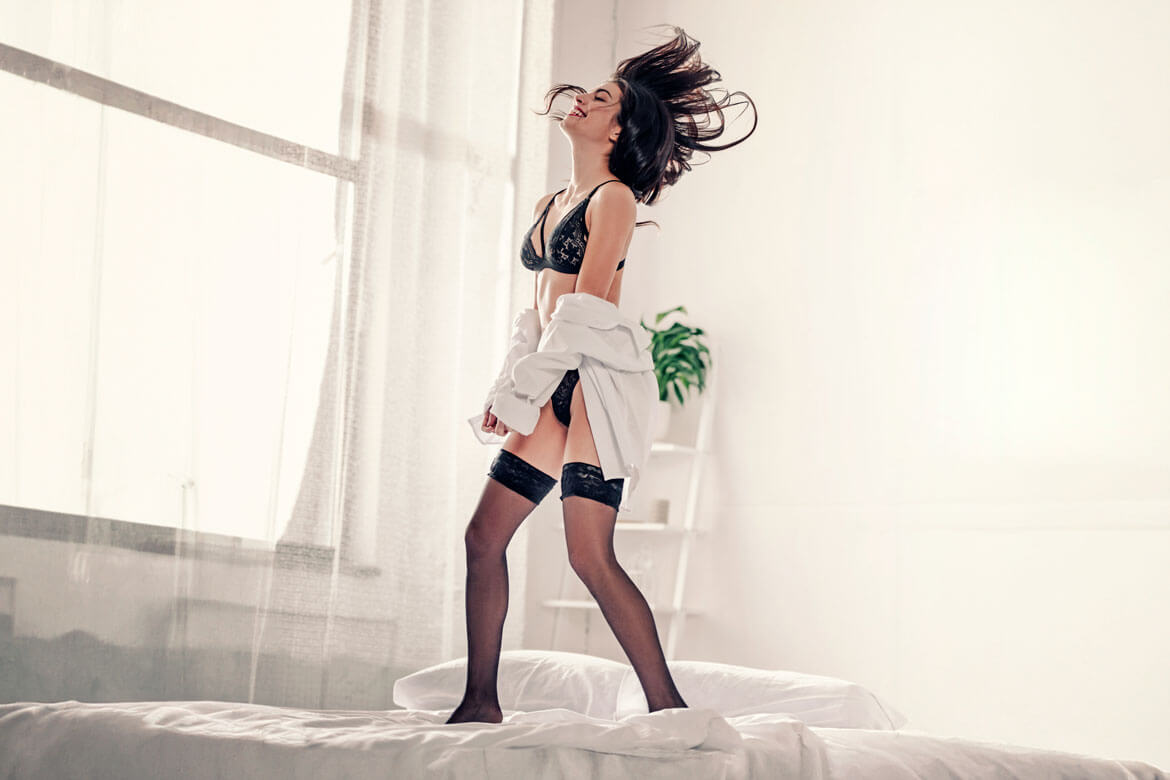
What is boudoir photography?
An intimate, elegant photo session, usually in lingerie, designed to help the person being photographed look and feel good. The key is to suggest rather than show explicitly, which is what sets it apart from erotic photography.
What do you wear to a boudoir session?
Lingerie, an oversized shirt, knitwear, sheets or a bodysuit are the usual choices. The client should bring two or three options she feels comfortable in, and the photographer should send her a wardrobe guide beforehand.
How do you deliver boudoir photos discreetly?
In a password-protected private gallery that only the client can access, and never through social media or as email attachments. If you want to use any photo in your portfolio, always get her written permission.
Is boudoir only for women?
No. Male and couples boudoir are also in demand; to attract these clients, it helps to have separate galleries for each type of session and not to write your website copy only for women.
How do you get more boudoir clients?
By explaining the service clearly on your website, showing a consistent portfolio, sharing client reviews (with their permission) and replying quickly and discreetly to inquiries, for example through WhatsApp Business.
Sell more boudoir shoots with Arcadina’s business solutions
Boudoir photography is a beautiful and very profitable specialty, but it only takes off when the client understands what she’s going to experience, trusts you from the first message and knows her photos will be safe. Everything we’ve covered in this guide points in that direction: explaining clearly what boudoir is and isn’t, showing a consistent portfolio, replying quickly and discreetly, setting prices that reflect the value of the experience and taking care of every detail of the session and the delivery.
If your goal is to showcase your work and sell more boudoir shoots, you need a photography website with solutions designed for your business. With Arcadina, you have everything you need in a single service:
- Galleries and sub-galleries to display your boudoir portfolio in an organized way, separate from the rest of your services.
- WhatsApp integrated into your website to answer inquiries instantly and with complete discretion.
- Online booking so your clients can choose a date and book without having to explain themselves.
- Online store to sell sessions, gift certificates, prints and albums with no commissions.
- Password-protected private galleries to deliver photos securely and elegantly.
- Billing and contracts to put the terms and image release in writing.
And if you’re not yet one of the hundreds of photographers who trust Arcadina, we invite you to try our services free for 30 days, with no credit card and no commitment. You’ll discover how our tools can help you optimize your website, improve your clients’ experience and fill your calendar with boudoir sessions.
And one last question before we go: do you know any other Arcadina boudoir photographer we should add to this list? We’d love to hear about them in the comments.
Arcadina goes with you
Fulfil your dreams and develop your career with us. We offer you to try our web service free for 30 days. And with no commitment of permanence.
Arcadina is much more than a website, it is business solutions for photographers.
If you have any queries, our Customer Service Team is always ready to help you 24 hours a day, 7 days a week. We listen to you.
Free trial · No card · No lock-in
Build your photography business online
Sales with no commission · Everything in one plan · 30-day free trial, no card